


The SSC CGL stands for Staff Selection Commission Combined Graduate Level, a national-level government exam conducted by the Staff Selection Commission (SSC) to recruit graduates for Group B and Group C posts in various ministries, departments, and organisations under the Government of India. Every year, the release of the SSC CGL notification attracts lakhs of aspirants who are looking for stable central government jobs with good salary, job security, career growth, and departmental exposure. Through the SSC CGL exam, candidates get opportunities to work in prestigious departments such as Income Tax, CBIC, CBI, Enforcement Directorate, CAG, CSS, Ministry of External Affairs, and several other central government offices.
Key Information on SSC CGL Exam
| Parameter | Details |
| Full Form | Staff Selection Commission – Combined Graduate Level |
| Conducting Body | Staff Selection Commission (SSC) |
| Exam Level | National |
| Post Type | Group B and Group C posts |
| Minimum Qualification | Bachelor’s degree from a recognised university |
| Age Limit | 18–32 years, varies by post |
| Mode of Exam | Computer-Based Test (CBT) |
| Number of Tiers | 2: Tier 1 and Tier 2 |
| Tier 1 Duration | 60 minutes |
| Tier 2 Duration | 2 hours 30 minutes |
| Selection Process | Tier 1 → Tier 2 → Document Verification |
| Official Website | ssc.gov.in |
In simple terms, SSC CGL is a recruitment exam for graduates who want to work in central government departments. The exam checks a candidate’s ability in Quantitative Aptitude, Reasoning, English, General Awareness, Computer Knowledge, and post-specific subjects.

What are the basics of SSC CGL exam?
The SSC CGL exam is a national-level recruitment exam for graduates seeking Group B and Group C government jobs. Candidates must have a bachelor’s degree and clear Tier 1 and Tier 2 computer-based exams for selection.
1. Eligibility & Selection: Does Your Resume or College Grade Matter?
One of the most common beginner doubts is whether college marks or CVs dictate selection.
- Education: You only need a Bachelor’s degree in any stream to apply. Whether you graduated with a 1st division or a 2nd division (like a standard B.Com degree), your graduation percentage does not matter.
- 100% Merit-Based: The selection process has removed interviews entirely. Your final selection is based purely on your Tier 2 exam score. The government does not look at your CV, resume, or extracurricular activities.
- Age Limit: Generally 18 to 32 years, depending on the post, with standard category age relaxations (e.g., +3 years for OBC, +5 years for SC/ST).
2. The Exam Pattern: How Long Does It Take?
The entire recruitment cycle—from the release of the notification to final document verification—usually takes 6 to 12 months.
- Tier 1 (The Screening Test): A qualifying stage consisting of 100 objective questions. You have 60 minutes (with strict 15-minute sectional timers) and a 0.50 negative marking penalty. Tier 1 scores do not count toward your final job ranking.
- Tier 2 (The Merit Stage): The ultimate deciding factor. Paper 1 is compulsory for all posts and tests advanced subjects alongside a mandatory Computer Knowledge module and a Data Entry Speed Test (Typing Test).
3. The Syllabus & Preparation Reality Check
A common question is how SSC CGL compares to exams like CA, CLAT, or JEE.
- Stable Syllabus: Unlike professional exams like CA, the SSC CGL syllabus does not change frequently with legal amendments. Unlike JEE, it does not test highly complex scientific theories. It focuses on 10th-grade Quantitative Aptitude (Maths), English Comprehension, General Intelligence & Reasoning, and General Awareness.
- The Reality of Competition: Coaching institutes only contribute to 10-20% of your success. To clear it on your first attempt, you need 10 to 12 months of consistent self-study and rigorous mock testing. Without a disciplined strategy, it is easy to fall into a 3 to 4-year preparation trap.
4. Career Opportunities: What Posts Can You Get?
Clearing the exam offers powerful central government roles. While any graduate can apply for general posts, certain degrees give you a specific edge:
- Top General Posts: Income Tax Inspector (CBDT), Assistant Section Officer (ASO in MEA/CSS), Excise Examiner (CBIC), and Sub-Inspector (CBI/NIA).
- The B.Com Advantage: If you have a Commerce background, you have a natural advantage for specialized, high-paying finance roles like Assistant Audit Officer (AAO), Assistant Accounts Officer, Auditor, and Accountant.
SSC CGL 2026 Eligibility Criteria
Before applying, candidates must check the complete SSC CGL eligibility criteria. SSC accepts applications provisionally, which means your eligibility is verified later during document verification. If a candidate fails to meet the eligibility conditions, the candidature can be cancelled.
Educational Qualification
The basic SSC CGL qualification is a Bachelor’s degree in any discipline from a recognised university. Candidates from BA, B.Com, B.Sc, B.Tech, BBA, and other graduation streams can apply for most posts.
A few posts have specific subject requirements:
| Post | Educational Requirement |
| Junior Statistical Officer (JSO) | Bachelor’s degree with at least 60% marks in Mathematics at Class 12 level, OR Statistics as a subject in graduation |
| Statistical Investigator Grade II | Bachelor’s degree with Statistics as a core subject in all years of graduation |
| Assistant Audit Officer / Assistant Accounts Officer | Bachelor’s degree required; Commerce or Finance background is desirable but not mandatory |
Final-year graduation students can also apply, but they must complete their degree before the document verification stage.
Age Limit
The SSC CGL age limit depends on the post. Most posts fall between 18 and 32 years.
| Age Category | Posts |
| 18–27 years | Assistant Section Officer, Inspector posts, Sub-Inspector CBI, and other selected posts |
| 20–30 years | Sub-Inspector NIA and selected departmental posts |
| 18–30 years | Tax Assistant, UDC, Statistical Investigator Grade II |
| 18–32 years | Junior Statistical Officer, Assistant Audit Officer, AAO |
Reserved category candidates get age relaxation as per government rules:
| Category | Age Relaxation |
| OBC | 3 years |
| SC/ST | 5 years |
| PwBD | 10–15 years, depending on category |
Nationality
Candidates must be Indian citizens. Subjects of Nepal and Bhutan, Tibetan refugees who settled in India before 1962, and persons of Indian origin who migrated from select countries may also be eligible with valid certificates.
SSC CGL 2026 Selection Process
SSC CGL follows a two-tier selection process. Candidates first appear for Tier 1, then shortlisted candidates move to Tier 2. After Tier 2, SSC conducts document verification and post-specific checks wherever required.
| Stage | Type | Purpose |
| Tier 1 | Objective CBT | Qualifying stage to shortlist candidates for Tier 2 |
| Tier 2 | Objective + skill/post-specific components | Merit-deciding stage |
| Document Verification | Offline/official verification | Verifies educational, category, age, and identity documents |
| Physical Standards Test | Offline | Applicable only for selected Inspector and Sub-Inspector posts |
Tier 1 is qualifying in nature. This means Tier 1 marks are used only to shortlist candidates for Tier 2. Final merit and post allotment are based mainly on Tier 2 performance, post preferences, category, and vacancy availability.
SSC CGL 2026 Exam Pattern
The SSC CGL 2026 exam pattern includes Tier 1 and Tier 2 computer-based exams. These stages test candidates on Quantitative Aptitude, Reasoning, English, General Awareness, Computer Knowledge, Statistics, and Finance/Economics, depending on the post.
Understanding the exam pattern is important because it helps candidates plan time management, section-wise preparation, mock test strategy, and revision.
SSC CGL Tier 1 — Qualifying Exam
Tier 1 is an objective computer-based test. It includes 100 questions for 200 marks, and candidates get 60 minutes to complete the paper.
| Subject | Number of Questions | Maximum Marks |
| General Intelligence & Reasoning | 25 | 50 |
| General Awareness | 25 | 50 |
| Quantitative Aptitude | 25 | 50 |
| English Language & Comprehension | 25 | 50 |
| Total | 100 | 200 |
Important points:
- Each correct answer carries 2 marks.
- 0.5 marks are deducted for every wrong answer.
- There is no sectional time limit.
- Tier 1 score is not counted in the final merit list.
- Tier 1 is used to shortlist candidates for Tier 2.
SSC CGL Tier 2 — The Merit-Deciding Exam
Tier 2 is the most important stage of SSC CGL because final selection depends on Tier 2 performance. It is conducted in multiple papers depending on the post category.
Paper I — Compulsory for All Candidates
| Module | Subject | Questions | Marks | Duration |
| Section 1 | Mathematical Abilities | 30 | 90 | — |
| Section 1 | Reasoning & General Intelligence | 30 | 90 | — |
| Section 2 | English Language & Comprehension | 45 | 135 | — |
| Section 2 | General Awareness | 25 | 75 | — |
| Section 3 | Computer Knowledge Module | 20 | 60 | — |
| Total | — | 150 | 450 | 2 hrs 30 mins |
Paper II — For Junior Statistical Officer Posts
Paper II is for candidates applying for Junior Statistical Officer posts. It includes Statistics with 100 questions for 200 marks. The duration is 2 hours.
Paper III — For Assistant Audit Officer and Assistant Accounts Officer Posts
Paper III is for AAO and Assistant Accounts Officer posts. It includes General Studies, Finance, and Economics with 100 questions for 200 marks. The duration is 2 hours.
Negative Marking in Tier 2
| Paper | Negative Marking |
| Paper I | 1 mark for every wrong answer |
| Paper II | 0.5 marks for every wrong answer |
| Paper III | 0.5 marks for every wrong answer |
A DEST, or Data Entry Speed Test, is also conducted for Tax Assistant posts as a qualifying component.
SSC CGL Syllabus 2026 — Subject-wise Breakdown
The SSC CGL syllabus covers all important subjects asked in Tier 1 and Tier 2. These include Quantitative Aptitude, General Intelligence and Reasoning, English Language, General Awareness, and Computer Knowledge.
A clear understanding of the syllabus helps candidates identify high-weightage topics, plan revision, and avoid wasting time on irrelevant areas.
Quantitative Aptitude
Quantitative Aptitude tests a candidate’s ability to solve mathematical questions quickly and accurately. Most questions are based on Class 10 level concepts, but the speed requirement makes this section challenging.
Key topics:
- Number System and Simplification
- Percentage, Profit & Loss, Discount
- Ratio & Proportion, Mixture & Alligation
- Time & Work, Pipes & Cisterns
- Time, Speed & Distance
- Simple Interest and Compound Interest
- Algebra: identities, linear equations, quadratic equations
- Geometry: triangles, circles, polygons
- Mensuration: area, volume, surface area
- Trigonometry: ratios, heights and distances
- Data Interpretation: tables, bar graphs, pie charts, line graphs
- Statistics: mean, median, mode, standard deviation
Arithmetic topics like Percentage, Profit & Loss, Ratio, and Time-Distance usually carry strong weightage across SSC exams. Candidates should master these topics first.
General Intelligence & Reasoning
Reasoning tests logical thinking, pattern recognition, and problem-solving skills. This section is scoring if candidates practice regularly.
Key topics:
- Analogy
- Classification and Series
- Coding-Decoding
- Blood Relations
- Direction Sense
- Puzzles and Seating Arrangement
- Mathematical Operations
- Venn Diagrams
- Syllogism
- Statement and Conclusion
- Mirror Image
- Paper Folding
- Embedded Figures
- Matrix-based questions
Coding-Decoding, Analogy, and Series are among the most consistent topics in both Tier 1 and Tier 2.
English Language
English in SSC CGL tests grammar, vocabulary, reading comprehension, and sentence usage. Tier 2 English is more detailed than Tier 1 and carries significant weight in final selection.
Key topics:
- Reading Comprehension
- Cloze Test
- Fill in the Blanks
- Synonyms and Antonyms
- Idioms and Phrases
- One Word Substitution
- Spotting Errors
- Sentence Improvement
- Sentence Rearrangement
- Active and Passive Voice
- Direct and Indirect Speech
- Para Jumbles
For Tier 2, vocabulary and comprehension carry more weight. Candidates who read editorials and revise vocabulary daily can improve this section faster.
General Awareness
General Awareness includes static GK and current affairs. It is a high-scoring section because most questions are factual.
Key topics:
- History: Ancient, Medieval, Modern Indian History
- Geography: India and World Geography
- Polity: Constitution, Parliament, Judiciary, Governance
- Economy: basic concepts, Indian economy, budget terms
- Science: Physics, Chemistry, Biology
- Static GK: books and authors, awards, sports, important days
- Current Affairs: last 6 months before the exam
History, Polity, Science, government schemes, Union Budget, and important national events are frequently asked areas.
Computer Knowledge
Computer Knowledge is a compulsory module in Tier 2 Paper I. It tests basic awareness of computers and digital systems.
Key topics:
- Basics of Computer: hardware, software, input/output devices
- Operating Systems: Windows concepts
- MS Office: Word, Excel, PowerPoint
- Internet and Networking
- Browser, Email, LAN, WAN
- Keyboard Shortcuts
- Memory and Storage: RAM, ROM, hard disk
- Cybersecurity basics: virus, firewall, password safety
- Binary and Number Systems
This section has 20 questions for 60 marks in Tier 2. It is generally manageable for candidates with basic computer knowledge.
SSC CGL 2026 Salary
SSC CGL posts fall under Pay Level 4 to Pay Level 8 of the 7th Pay Commission. The in-hand SSC CGL salary depends on the post, pay level, city of posting, allowances, deductions, and department.
| Pay Level | Posts | Approx. In-Hand Salary in Metro City |
| Level 8 | ASO CSS/MEA, AAO, Assistant Accounts Officer | ₹80,000–₹85,000/month |
| Level 7 | Inspector CBIC/CBDT, AEO, Sub-Inspector CBI | ₹75,000–₹80,000/month |
| Level 6 | JSO, Statistical Investigator Grade II, SI NIA | ₹60,000–₹65,000/month |
| Level 5 | Auditor, Accountant, Junior Accountant | ₹50,000–₹54,000/month |
| Level 4 | Tax Assistant, UDC | ₹43,000–₹46,000/month |
In addition to salary, SSC CGL employees receive central government benefits such as DA, HRA, TA, CGHS health coverage, NPS pension contribution, annual increments, and promotion opportunities.
SSC CGL Posts & Departments
SSC CGL recruits candidates for multiple posts across central government departments. Post allotment depends on final merit, category, vacancy, eligibility, and post preference.
| Post | Department | Pay Level |
| Assistant Section Officer | CSS, Ministry of Finance and other ministries | Level 8 |
| Assistant Section Officer | Ministry of External Affairs | Level 8 |
| Inspector, Central Excise | CBIC | Level 7 |
| Inspector, Income Tax | CBDT | Level 7 |
| Assistant Enforcement Officer | Directorate of Enforcement | Level 7 |
| Sub-Inspector | CBI | Level 7 |
| Inspector | Central Bureau of Narcotics | Level 7 |
| Junior Statistical Officer | Ministry of Statistics | Level 6 |
| Statistical Investigator Grade II | MoSPI | Level 6 |
| Sub-Inspector | NIA | Level 6 |
| Auditor | CAG, CGDA and other departments | Level 5 |
| Accountant / Junior Accountant | CAG and other departments | Level 5 |
| Tax Assistant | CBDT and CBIC | Level 4 |
| Upper Division Clerk | Various departments | Level 4 |
| Assistant Audit Officer | CAG | Level 8 |
| Assistant Accounts Officer | CAG | Level 8 |
Candidates should fill post preferences carefully after checking job profile, salary, location, promotion scope, physical requirements, and department type.
How to Prepare for SSC CGL 2026
SSC CGL can be cleared with a focused preparation SSC CGL study plan if candidates follow the syllabus, practice daily, analyze mock tests, and revise consistently. A 3-month strategy can work for Tier 1 if your basics are clear and you study with discipline.
Month 1: Build Concepts
The first month should focus on understanding concepts. Do not rush into full-length mock tests before building the basics.
Quantitative Aptitude: Start with Arithmetic topics such as Percentage, Ratio, Profit & Loss, Time-Speed-Distance, and Time & Work. These topics cover a large portion of the Quant section.
Reasoning: Practice Analogy, Series, Coding-Decoding, Blood Relations, and Direction Sense. These topics are scoring and appear regularly.
English: Focus on vocabulary and grammar rules. Read one editorial daily and solve Synonyms, Antonyms, Idioms, and Error Spotting questions.
General Awareness: Divide Static GK into History, Polity, Geography, Science, and Economy. Study one topic daily and revise short notes regularly.
By the end of Month 1, your goal should be to complete the major topics once with basic conceptual clarity.
Month 2: Practice + Speed Building
Month 2 should focus on applying concepts and improving speed.
Quant: Solve 30–40 mixed questions daily. Focus on reducing calculation time and improving accuracy.
Reasoning: Attempt 20–25 questions daily with a timer. In the actual exam, Reasoning should ideally be completed within 12–15 minutes.
English: Solve 2–3 Reading Comprehension passages every week. Practice Cloze Test and Para Jumbles every alternate day.
General Awareness: Follow current affairs daily for 15 minutes. Revise static GK every 3–4 days.
Section-wise mock tests: Start attempting topic-wise and sectional tests. After every test, check where you lost marks and revise those topics.
By the end of Month 2, aim for more than 80% accuracy in Reasoning and English, and more than 60% accuracy in Quant.
Month 3: Mock Tests + Revision
Month 3 should focus on full-length mock tests, error analysis, and repeated revision.
Full-length mock tests: Attempt at least 20–25 Tier 1 mock tests in this month. Give each mock with a 60-minute timer and no interruption. Candidates should attempt the SSC CGL Mock Test regularly in Month 3 to improve speed, analyze mistakes, revise weak topics, and build complete Tier 1 exam readiness.
Error analysis: After every mock, spend 30–45 minutes reviewing wrong answers. Note the topic, mistake type, and reason for error.
Revision cycles: Every 4–5 days, revise topics where you are making repeated mistakes. Keep a short notes sheet for GK, formulas, and vocabulary.
Target score: In the last 2 weeks, aim for a consistent score of 145–155 out of 200. Candidates scoring in this range are generally better placed to comfortably clear the SSC CGL Cut off and advance to Tier 2.
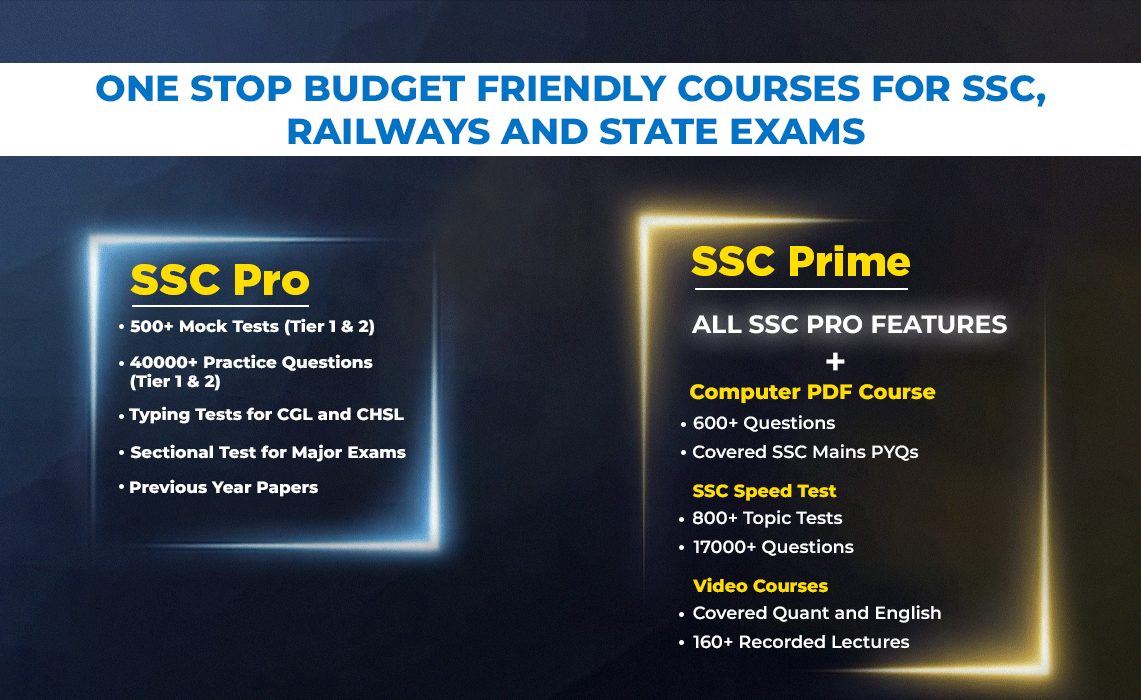
Candidates who want to follow this SSC CGL preparation roadmap with structured guidance can explore the Best online coaching for SSC CGL to prepare with mock tests, topic-wise tests, PYQs, video lessons, revision plans, and performance analysis for Tier 1 and Tier 2.
Join our exclusive Telegram group for expert guidance, personalized tips, and real-time solutions to boost your SSC exam prep. [Click here to join now!]
| Other Blogs of SSC CGL | |
| SSC CGL Notification | SSC CGL Syllabus |
| SSC CGL Study Plan | SSC CGL Exam Pattern |
| SSC CGL Cut Off | SSC CGL Preparation Strategy |
| SSC CGL Previous Year Question Papers | |
FAQs on SSC CGL Exam
Is SSC CGL conducted every year?
Yes, SSC CGL is conducted every year by the Staff Selection Commission. SSC releases the exam calendar and official notification containing tentative details, including application deadlines and the SSC CGL Exam Date for both Tier 1 and Tier 2 phases.
What is the age limit for SSC CGL 2026?
The SSC CGL age limit varies by post. Most posts have an upper age limit of 27, 30, or 32 years. Reserved category candidates get age relaxation as per government rules.
Can final-year students apply for SSC CGL 2026?
Yes, final-year students can apply for SSC CGL 2026. However, they must complete their graduation before the document verification stage.
Which posts offer the highest salary through SSC CGL?
The highest-paying SSC CGL posts are generally at Pay Level 8. These include Assistant Section Officer, Assistant Audit Officer, and Assistant Accounts Officer. The starting in-hand salary in metro cities can be around ₹80,000–₹85,000 per month.
Is SSC CGL Tier 1 qualifying in nature?
Yes, SSC CGL Tier 1 is qualifying in nature. Tier 1 marks are not counted in the final merit list. Final selection is based mainly on Tier 2 marks.
How many attempts are allowed in the SSC CGL Exam?
There is no fixed attempt limit in SSC CGL. Candidates can apply as long as they meet the required age limit, educational qualification, and other eligibility conditions.
Is there negative marking in SSC CGL Tier 1 and Tier 2?
Yes, SSC CGL has negative marking. Tier 1 has a deduction of 0.5 marks for every wrong answer. Tier 2 Paper I has a deduction of 1 mark for every wrong answer, while Papers II and III have a deduction of 0.5 marks.
What is the difficulty level of the SSC CGL Exam?
SSC CGL Tier 1 is usually moderate in difficulty. Quant and Reasoning are mostly based on Class 10 level concepts, while General Awareness requires regular revision. Tier 2 is more challenging because it decides final selection.
Can candidates prepare for SSC CGL in 3 months?
Yes, candidates can prepare for SSC CGL Tier 1 in 3 months with a focused plan. The best approach is to build concepts in Month 1, practice and improve speed in Month 2, and attempt full-length mocks with revision in Month 3.
- Sign Up on Practicemock for Updated Current Affairs, Topic Tests and Mini Mocks
- Sign Up Here to Download Free Study Material
Free Mock Tests for the Upcoming Exams
- IBPS PO Free Mock Test
- RBI Grade B Free Mock Test
- IBPS SO Free Mock Test
- NABARD Grade A Free Mock Test
- SSC CGL Free Mock Test
- IBPS Clerk Free Mock Test
- IBPS RRB PO Free Mock Test
- IBPS RRB Clerk Free Mock Test
- RRB NTPC Free Mock Test
- SSC MTS Free Mock Test
- SSC Stenographer Free Mock Test
- GATE Mechanical Free Mock Test
- GATE Civil Free Mock Test
- RRB ALP Free Mock Test
- SSC CPO Free Mock Test
- AFCAT Free Mock Test
- SEBI Grade A Free Mock Test
- IFSCA Grade A Free Mock Test
- RRB JE Free Mock Test
- Free Banking Live Test
- Free SSC Live Test