


Do you dream of securing a permanent government job in Indian Railways? The RRB Group D exam is your golden ticket to a stable career. But as you know, the competition is huge and, if you want to stand out from that competition, then you are required to do a lot of study and preparation. After an in-depth analysis, we have found that life science is one of the most important subjects because it can give you at least 10-12 marks in the exam. Many students from non-science backgrounds get scared of difficult biological names like “Mitochondria” or “Xylem.” But they don’t know that they don’t need to be a doctor to answer these questions. The exam asks very simple things about our own body, plants, and diseases. For example, “Which vitamin helps in blood clotting?” or “What is the powerhouse of the cell?” These are facts you can easily memorize. To help you prepare for this subject effectively, we have provided the most important and repeated Life Science questions for RRB Group D exam in a free PDF.
Why is Life Science Important for RRB Group D?
In the General Science section (25 questions), Life Science is one of the most important subjects. Below, we have provided some tips that will help you know why it is so important.

- Highest Weightage: Out of 25 questions, you can expect 10 to 12 questions from Biology alone.
- No Calculation: Unlike Physics, there are no formulas here. You either know the answer or you don’t. It saves time.
- Daily Life Relevance: It covers topics like Nutrition, Diseases, and the Human Body, which are easy to relate to and remember.
Download Free PDF of Biology for RRB Group D
We have prepared a comprehensive PDF containing exam-level questions. We have chosen questions that cover the unique mix of Human Anatomy, Botany, and Vitamins that the RRB Group D mostly asks. Download it, save it, and practice these questions to build your confidence.
Which vitamin is also known as “Ascorbic Acid”?
(a) Vitamin A
(b) Vitamin B
(c) Vitamin C
(d) Vitamin D
Answer: (c) Vitamin C
Logic: Vitamin C is Ascorbic Acid. Its deficiency causes Scurvy. It is found in citrus fruits like lemons and oranges.
Which part of the cell is called the “Powerhouse of the Cell”?
(a) Nucleus
(b) Mitochondria
(c) Ribosome
(d) Lysosome
Answer: (b) Mitochondria
Logic: Mitochondria generate energy (ATP) for the cell, just like a power plant generates electricity for a city.
In the human body, the digestion of protein begins in which organ?
(a) Mouth
(b) Stomach
(c) Small Intestine
(d) Large Intestine
Answer: (b) Stomach
Logic: Digestion starts in the mouth for carbohydrates, but protein digestion begins in the stomach with the help of the enzyme Pepsin.
Which tissue in plants is responsible for the transport of water?
(a) Xylem
(b) Phloem
(c) Stomata
(d) Cortex
Answer: (a) Xylem
Logic: Remember: Xylem = Jal (Water) and Phloem = Food (Phal). Xylem carries water from roots to other parts of the plant.
The “Universal Donor” blood group is:
(a) A Positive
(b) B Positive
(c) AB Positive
(d) O Negative
Answer: (d) O Negative
Logic: O Negative blood has no antigens, so it can be given to anyone. AB Positive is the universal recipient.
Which gland in the human body is known as the “Master Gland”?
(a) Thyroid
(b) Pituitary
(c) Adrenal
(d) Pancreas
Answer: (b) Pituitary
Logic: The Pituitary gland, located in the brain, controls the functioning of almost all other endocrine glands.
Rickets is a disease caused by the deficiency of:
(a) Vitamin A
(b) Vitamin D
(c) Vitamin K
(d) Iron
Answer: (b) Vitamin D
Logic: Vitamin D, also called the Sunshine Vitamin, is essential for strong bones. Its deficiency causes weak and soft bones in children.
The basic structural and functional unit of the Nervous System is:
(a) Nephron
(b) Neuron
(c) Brain
(d) Spinal Cord
Answer: (b) Neuron
Logic: Neurons transmit nerve signals in the body. Nephron is the unit of the kidney, not the nervous system.
Which of the following is a viral disease?
(a) Typhoid
(b) Cholera
(c) Tuberculosis (TB)
(d) Dengue
Answer: (d) Dengue
Logic: Dengue is caused by a virus transmitted by mosquitoes. Typhoid, Cholera, and TB are bacterial diseases.
In human beings, the sex of the child is determined by:
(a) The Mother’s Chromosome
(b) The Father’s Chromosome
(c) Both Parents
(d) Nutrition of Mother
Answer: (b) The Father’s Chromosome
Logic: The mother has XX chromosomes and the father has XY. If the father contributes Y, the child is a boy; if X, the child is a girl.
Tips to Master Life Science for RRB Group D
We know that the syllabus of biology is very vast, and it can be difficult if you cover everything. To clear RRB Group D, you need a smart strategy. You should focus only on the topics that are frequently asked in the exam. Here are 5 simple and practical tips to help you master Life Science and score full marks:
- Memorize the Vitamin Chart: This is the easiest 1 mark in the exam. Make a table of Vitamins (A, B, C, D, E, K), their chemical names (like Retinol, Calciferol), and the diseases caused by their deficiency. Stick it on your wall.
- Understand Human Systems: Focus on the Digestive, Respiratory, and Circulatory systems. You don’t need deep details, just the key organs. Example: The Heart pumps blood, the kidneys filter waste, and the Stomach digests food.
- Plant Transport (Xylem vs. Phloem): Questions on plants are tricky but limited. Just remember the difference between Xylem (Water) and Phloem (Food), and understand the basics of photosynthesis.
- Diseases & Causes: Create a list of common diseases and categorize them by type: Bacterial (e.g., TB, Cholera), Viral (e.g., Polio, Dengue), and Protozoan (e.g., Malaria). RRB loves asking “Which of these is a bacterial disease?”
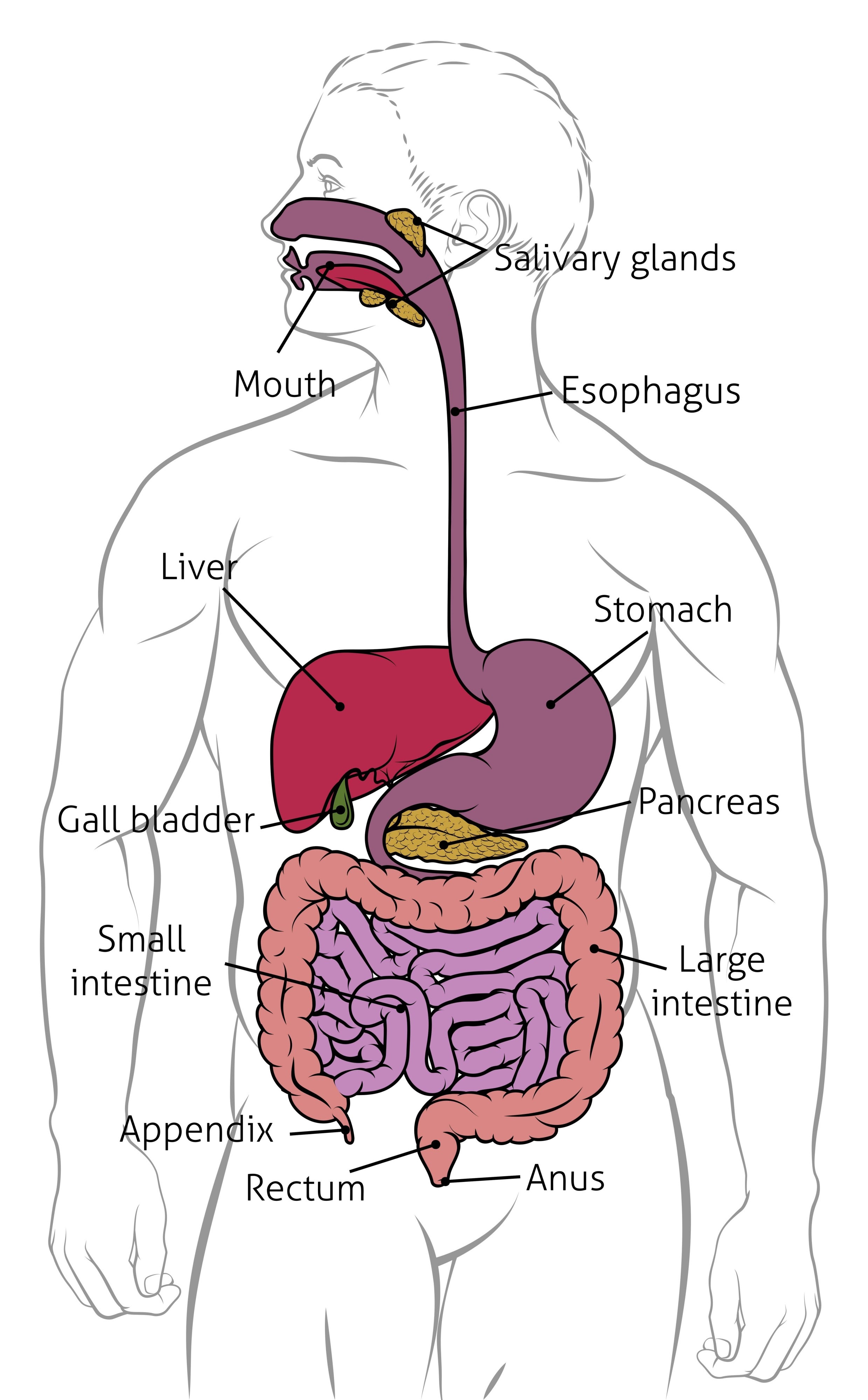
- Use Diagrams: Biology is visual. Don’t just read text. Look at simple diagrams of the Cell, Heart, or Eye. Visual memory is much stronger and helps you recall answers instantly in the exam hall.
For Example: If you go through the diagram provided below, then you can easily learn the body parts, such as how they look, where they are placed, and so on. This will help you learning these things easily, quickly, and remember them for a longer time.
Join our exclusive Telegram group for expert guidance, personalized tips, and real-time solutions to boost your SSC exam prep. [Click here to join now!]
FAQs: Life Science Questions for RRB Group D
No. It is based on the 10th standard CBSE syllabus. The questions are direct and factual. If you read the NCERT books, it is very easy.
You can expect the highest weightage in Science from Biology, around 10 to 12 questions.
No, the exam is multiple-choice (MCQ). You just need to identify the correct part or function (e.g., identifying the “Voice Box” as the larynx).
Rarely. You might see one question on the scientific name of Man (Homo Sapiens) or Mango (Mangifera Indica), but focus more on human anatomy and diseases.
- Sign Up on Practicemock for Updated Current Affairs, Topic Tests and Mini Mocks
- Sign Up Here to Download Free Study Material
Free Mock Tests for the Upcoming Exams
- IBPS PO Free Mock Test
- RBI Grade B Free Mock Test
- IBPS SO Free Mock Test
- NABARD Grade A Free Mock Test
- SSC CGL Free Mock Test
- IBPS Clerk Free Mock Test
- IBPS RRB PO Free Mock Test
- IBPS RRB Clerk Free Mock Test
- RRB NTPC Free Mock Test
- SSC MTS Free Mock Test
- SSC Stenographer Free Mock Test
- GATE Mechanical Free Mock Test
- GATE Civil Free Mock Test
- RRB ALP Free Mock Test
- SSC CPO Free Mock Test
- AFCAT Free Mock Test
- SEBI Grade A Free Mock Test
- IFSCA Grade A Free Mock Test
- RRB JE Free Mock Test
- Free Banking Live Test
- Free SSC Live Test