


The Reserve Bank of India (RBI) Grade B examination is one of the most prestigious and sought-after banking exams in India. While many aspirants come from commerce or economics backgrounds, a significant number of successful candidates hail from science disciplines.
If you’re from a science background and have your eyes set on the RBI Grade B exam, you might be wondering if you even stand a chance. The short answer? Yes. The longer answer? Yes, and you might just have more advantages than you think. This guide is for every science graduate who feels out of place but is ready to crack one of the toughest exams in the country.

First Things First: Are You Eligible For RBI Grade B Exam?
Let’s get this out of the way. To apply for the RBI Grade B exam:
Educational Qualification:
| RBI Grade B Educational Criteria | |
| RBI Grade B Officer (DR) – General | Candidate should have 60% marks scored in Graduate/Postgraduate degrees in all semesters.SC/ST/PWD: 50% Marks in Bachelor/Master Degree |
| RBI Grade B Officer (DR) – DEPR | 55% Marks in Master’s Degree Economics/Econometrics/Quantitative Aptitude/Integrated Economics Course/Finance aggregate marks in all semesters. |
| RBI Grade B Officer (DR) – DSIM | 55% marks in Master’s Degree in Statistics/Quantitative Aptitude/Mathematical Statistics aggregate marks in semesters of all years.PGDBA (Postgraduate Diploma in Business Analytics): Min 55% marks. Institutions offering PGDBA courses are IIT Kharagpur, IIM Calcutta, and ISI Kolkata. |
Age Limit:
Candidates must be between 21 and 30 years of age. Age relaxations are applicable for reserved categories as per government norms.
Nationality:
Applicants must be Indian citizens. Citizens of Nepal, Bhutan, or Tibetan refugees who came to India before January 1, 1962, with the intention of permanent settlement, are also eligible.
If you tick those boxes, you’re good to go. Your educational stream doesn’t matter — your ability to learn and adapt does.
RBI Grade B Exam Structure
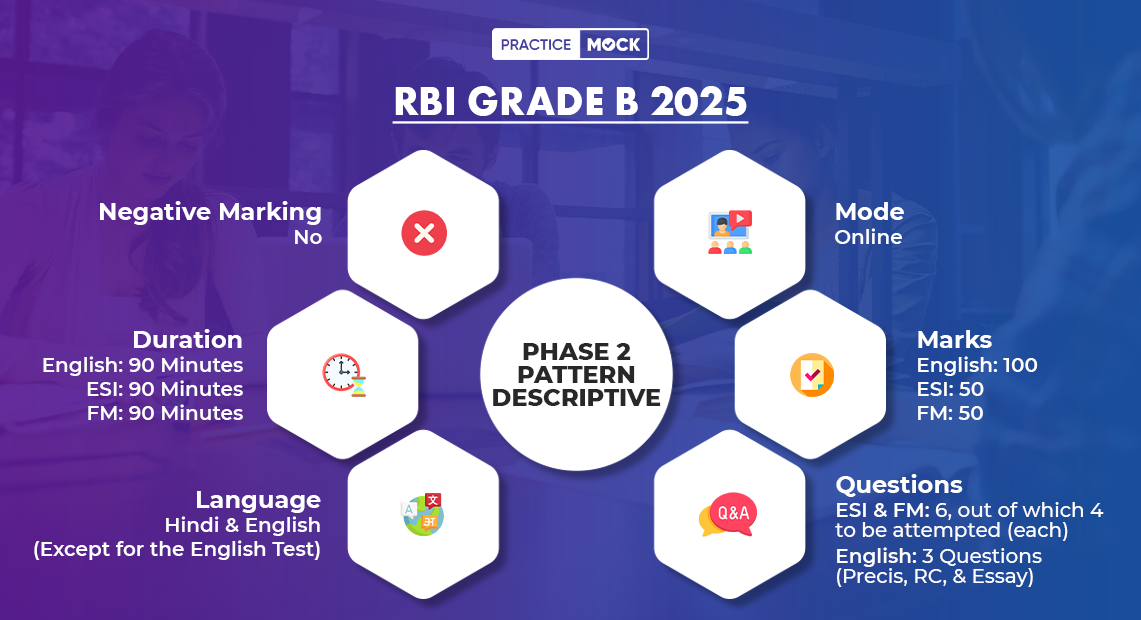
Phase 1 (Prelims)
- General Awareness
- English Language
- Quantitative Aptitude
- Reasoning Ability
Phase 2 (Mains)
- Economic & Social Issues (ESI)
- English (Descriptive Writing)
- Finance & Management (FM)
Phase 3
- Interview
Science graduates generally breeze through Reasoning in Phase 1. Your main work lies in mastering Quant, ESI and FM in Phase 1 and Phase 2.
Advantages for Science Graduates in the RBI Grade B Exam
Science graduates bring a unique set of skills that can be advantageous in the RBI Grade B exam:
- Analytical Skills: Strong problem-solving abilities are beneficial in Quantitative Aptitude and Reasoning sections.
- Data Interpretation: Experience with data analysis aids in understanding economic and financial concepts.
- Adaptability: The ability to grasp new concepts quickly is crucial for subjects like ESI and FM.
Where to Begin If You’re Starting From Scratch for RBI Grade B Exam
Week 1: Build Your Base
- Understand the exam pattern and syllabus.
- Pick up NCERT books for Indian Economy (Class XI & XII).
- Go through previous year papers.
- You can also attempt chapter wise quizzes, magazines for Phase 1.
Week 2 to 4: Strengthen Core Subjects
- Start with ESI basics (topics like GDP, poverty, inflation).
- Begin with management principles for FM.
- Read The Hindu or Indian Express daily.
- For Phase 2 you need to practice every topic and you should analyse your performance by attempting quizzes and tests.
Use the Right Resources for RBI Grade B Exam
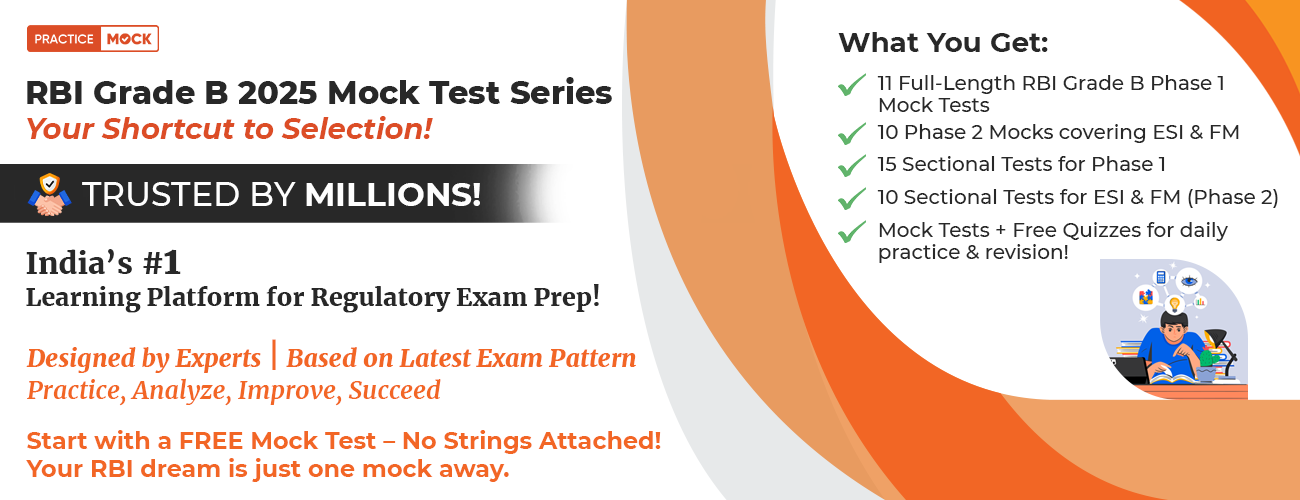
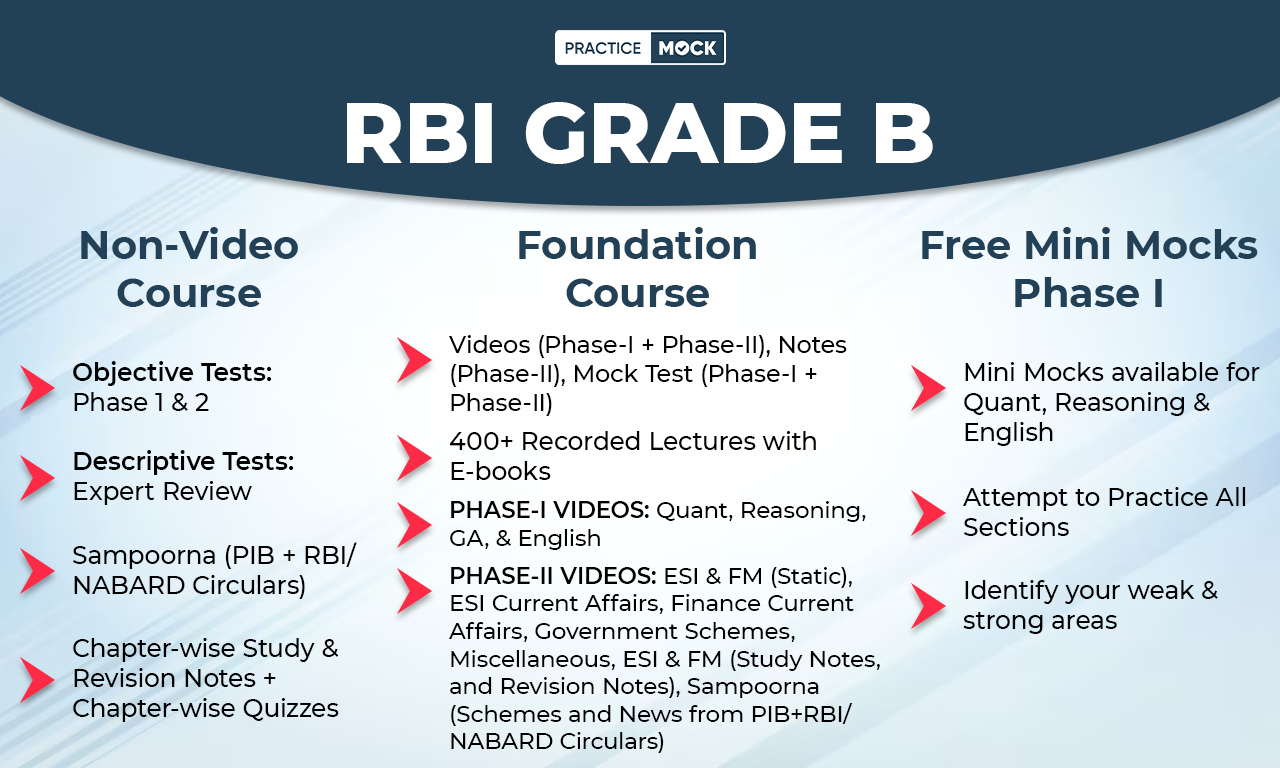
PracticeMock: Your All-in-One Preparation Companion
- Mock Tests: RBI Grade B-specific mocks for both Phase 1 and Phase 2. Real exam interface, detailed solutions, and percentile-based feedback.
- Online Courses: Topic-wise lectures for ESI, FM, and descriptive writing.
- Current Affairs Section: Updated with RBI and economy-related news.
- Descriptive Practice: Write answers, get feedback, improve.
When you’re coming from a non-commerce background, mock tests are your best friends. They help identify weaknesses and track your growth.
Make a Study Plan That Works for You for RBI Grade B Exam
Whether you’re a student or working professional, consistency > number of hours. Here’s a sample plan:
Daily (3-4 hours)
- 1 hour Current Affairs
- 1 hour ESI/FM concepts
- 1 hour English practice (Reading + Writing)
- 30 mins Quant/Reasoning (alternate days)
Weekly
- 1 Full-Length Mock Test (analyse it the same day)
- 1 Descriptive Essay Practice
Smart Tips for Science Aspirants
- Don’t ignore English writing– You may be good at grammar, but writing crisp, structured essays takes practice.
- Use YouTube wisely– Follow online videos who simplify economics/finance.
- Go through pdf courses– Especially for phase 1 preparation, course and notes are major components.
- Join RBI official website– You should go through the RBI official website time to time for updates and announcements.
Overcoming Challenges for RBI Grade B Exam
Lack of Background in Economics/Finance:
- Start with basic materials and gradually progress to advanced topics.
- Use online courses and video lectures for better understanding.
Time Constraints:
- Prioritise topics based on weightage and personal strengths.
- Maintain consistency in daily study routines.
Descriptive Writing Difficulties:
- Regular practice and feedback are key to improvement.
- Read editorials and opinion pieces to understand different writing styles.
FAQs Regarding RBI Grade B Exam
How many hours a day should I study for the RBI Grade B exam?
It is recommended to study for about 6-8 hours a day, balancing both quality and consistency. Make sure to focus on different sections and revise regularly.
What is the starting basic pay in the RBI Grade B 2025 Salary?
The pay scale of a Grade B Official is Rs. 35,600 per month in the scale of Rs. 35150-17 50(9)-50900-EB-17 50(2)- 54400-2000(4)-62400 (16 years), which applies to Officers in Grade B.
Can a final-year B.Tech student appear for RBI Grade B Exam?
Yes, a final-year B.Tech student can appear for the RBI Grade B exam, provided they can show proof of graduation by the time of joining.
Is RBI tougher than IAS?
The RBI Grade B exam is considered competitive and challenging, but it is generally perceived as less difficult than the IAS exam, which has a wider syllabus and more intense preparation requirements.
Can I find free RBI Grade B mock tests?
Yes, you can find free mock tests on PracticeMock.
Is the RBI Grade B syllabus the same every year?
The RBI Grade B syllabus remains largely the same each year, though there may be slight updates or changes in the pattern. It is important to keep up with any official notifications for specific changes.
Does the interview carry weight in final selection?
Yes, the interview stage plays an important role in the final selection process for the RBI Grade B exam, along with the marks obtained in the written exams.
- Sign Up on Practicemock for Updated Current Affairs, Topic Tests and Mini Mocks
- Sign Up Here to Download Free Study Material
Free Mock Tests for the Upcoming Exams
- IBPS PO Free Mock Test
- RBI Grade B Free Mock Test
- IBPS SO Free Mock Test
- NABARD Grade A Free Mock Test
- SSC CGL Free Mock Test
- IBPS Clerk Free Mock Test
- IBPS RRB PO Free Mock Test
- IBPS RRB Clerk Free Mock Test
- RRB NTPC Free Mock Test
- SSC MTS Free Mock Test
- SSC Stenographer Free Mock Test
- GATE Mechanical Free Mock Test
- GATE Civil Free Mock Test
- RRB ALP Free Mock Test
- SSC CPO Free Mock Test
- AFCAT Free Mock Test
- SEBI Grade A Free Mock Test
- IFSCA Grade A Free Mock Test
- RRB JE Free Mock Test
- Free Banking Live Test
- Free SSC Live Test