


Key Takeaways
- Mastering advanced grammar like inversion, ellipsis, and mixed conditionals gives you a strategic edge in SBI Clerk Mains.
- Practice through error spotting, sentence correction, and cloze tests to sharpen your skills.
- Use formal grammar patterns in speech and writing to build fluency and confidence.
If you are preparing for the SBI Clerk Mains exam, then the English section can be a game-changer, especially if you master the advanced grammar patterns, which most candidates ignore. English requires less time to prepare as compared to other sections. Also, learning these patterns will help you get more accuracy in the examination. This blog goes into depth about the hidden gems that can boost your score and set you apart from the competition.
Why is advanced grammar important for SBI Clerk Mains Exam?
While basic grammar helps you survive, advanced grammar helps you progress. The SBI Clerk Main English section tests your ability to understand subtle sentence structures, recognise subtle mistakes and interpret complex meanings. Candidates who go beyond the basics – tenses, articles, prepositions- have a strategic advantage over others.

Missed Grammar Patterns for SBI Clerk Mains
In this section, we are talking about the missed grammar patterns that often aspirants overlook or may not have enough knowledge about. Here are some high-impact grammar patterns that often appear in SBI Clerk Mains but are missed by most aspirants:
1. Ellipsis and Substitution
These patterns appear in sentence completion and error spotting questions.
Example: “He can play the guitar, and she can too.”
→ “can” substitutes for “play the guitar.”
2. Inversion for Emphasis
Inversion is used in sentence rearrangement and cloze tests to test your grasp of formal tone and structure.
Example: “Rarely have I seen such dedication.”
3. Parallelism
Parallel structure is a favourite in error detection questions.
Example: “She likes dancing, singing, and swimming.”
→ Correct: “She likes dancing, singing, and swimming.”
4. Conditional Sentences (Mixed Conditionals)
These test your understanding of tense logic and hypothetical reasoning.
Example: “If he had studied, he would be working here now.”
5. Reduced Relative Clauses
These appear in sentence improvement and reading comprehension.
Example: “The man who is standing there is my uncle.”
→ “The man standing there is my uncle.”
How to Practice These Patterns for SBI Clerk Exams
In this section, we are talking about the patterns and how to practice them for SBI Clerk Exams.
Spot the Error
This exercise sharpens your eye for grammar flaws. Focus on tricky areas like subject-verb agreement, misplaced modifiers, and parallel structure. For instance, “Each of the players has a jersey” is correct because “Each” is singular.
Sentence Improvement
Here, you refine awkward or incorrect sentences. Learn formal constructions like not only… but also, hardly… when, and as soon as. Example: “Not only did he win, but he also broke the record” uses inversion for emphasis.
Cloze Test Practice
Cloze tests assess grammar in context. You’ll fill blanks with correct prepositions, conjunctions, or verb forms. Example: “The manager was upset about the delay.” Reading the full passage helps you grasp tone and intent.
Learn Formal Patterns
Advanced structures like inversion (“Never had I seen such a view”), cleft sentences (“It was John who solved the puzzle”), and the subjunctive mood (“If I were you…”) add polish to your writing. Flashcards and spaced repetition help retain these.
Use Grammar in Speaking
Apply these patterns in speech and writing to build fluency. Try recording yourself or discussing topics with a friend using phrases like “Had I known…” or “Were I to choose…”
Spot the Error
This exercise sharpens your ability to catch grammatical errors. Pay attention to difficult areas such as subject-verb agreement, misplaced modifiers, and parallel structure. For example, “Each player has a jersey” is correct because “each” is singular.
Sentence Correction
Here, you identify sentences that are strange or incorrect. Learn formal constructions such as not only…but also, hardly…when, and as soon as possible. Example: “Not only did he win, but he also broke the record” uses inversion for emphasis on the latter part of the sentence.
Cloze test practice
Cloze tests assess grammar in context. You will fill in the blanks with the correct prepositions, conjunctions or verb forms. Example: “The manager was upset about the delay.” Reading the entire paragraph helps you understand the tone and intent of the writer, and hence, you can answer accordingly.
Learn formal patterns
Advanced structures like inversion (“I never saw such a sight”), truncated sentences (“It was John who solved the riddle”), and the subjunctive mood (“If I were you…”) make your writing better. Flashcards and spaced repetition help retain these rules for a longer period of time..
Use grammar when you speak
Use the above suggested grammar patterns in speaking and writing to build fluency. Try to record yourself or discuss topics with a friend using phrases like “Had I known…” or “Had I chosen…”. This will help you to accommodate this pattern in your daily routine and hence can be helpful in the exam hall as well.
Conclusion
In this blog, we have given the missed grammar patterns along with examples for better understanding and a strategy to practice them. To get a hold on them, you need to practice a lot of questions, and for these, you can take the subscription to our test series, where you’ll get to reattempt the full-length mock test. Get a Detailed Comparison with the Topper, compare your Time, Score, Accuracy, Correct/Wrong Answers, and even the Average Performance side-by-side.
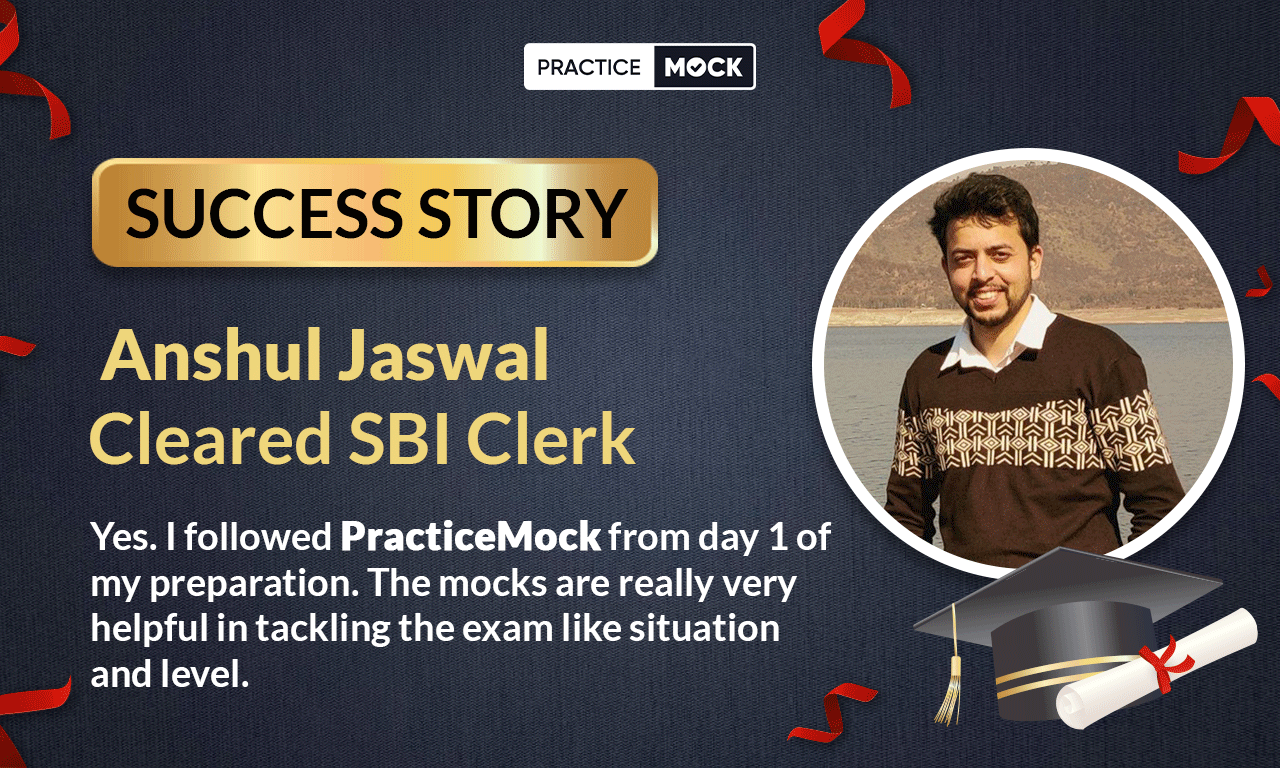
Here is what successful students say about practice mock. Have a look
Related Blogs on SBI Clerk 2025 Exam
| SBI Clerk Notification | SBI Clerk Exam Pattern |
| SBI Clerk Syllabus | SBI Clerk Salary |
| SBI Clerk Cut Off | SBI Clerk Previous Year Question Paper |
FAQs
Topics like parallelism, misplaced modifiers, ellipsis, and inversion are frequently tested but often ignored during preparation. These patterns appear in sentence correction and error spotting questions, requiring a deeper understanding of sentence structure.
Focus on reading complex sentence structures in editorials, practising advanced grammar exercises, and analysing explanations in mock tests. For inversion, understand how auxiliary verbs precede subjects in conditional or emphatic sentences (e.g., “Never have I seen…”). For ellipsis, learn how words are omitted without losing meaning (e.g., “He can play the guitar, and she the piano”)
Yes, grammar shortcuts like checking subject-verb agreement first, scanning for misplaced modifiers, and identifying tense consistency can help quickly eliminate wrong options. However, they should be used alongside a solid understanding of grammar rules to avoid misinterpretation.
Use expert-curated question banks, grammar rulebooks tailored for banking exams, and daily editorial analysis.
- Sign Up on Practicemock for Updated Current Affairs, Topic Tests and Mini Mocks
- Sign Up Here to Download Free Study Material
Free Mock Tests for the Upcoming Exams
- IBPS PO Free Mock Test
- RBI Grade B Free Mock Test
- IBPS SO Free Mock Test
- NABARD Grade A Free Mock Test
- SSC CGL Free Mock Test
- IBPS Clerk Free Mock Test
- IBPS RRB PO Free Mock Test
- IBPS RRB Clerk Free Mock Test
- RRB NTPC Free Mock Test
- SSC MTS Free Mock Test
- SSC Stenographer Free Mock Test
- GATE Mechanical Free Mock Test
- GATE Civil Free Mock Test
- RRB ALP Free Mock Test
- SSC CPO Free Mock Test
- AFCAT Free Mock Test
- SEBI Grade A Free Mock Test
- IFSCA Grade A Free Mock Test
- RRB JE Free Mock Test
- Free Banking Live Test
- Free SSC Live Test