


Preparing for competitive exams in India is never easy, especially when you want to target multiple exams like Banking and SSC exams. Aspirants often feel confused about this. They usually think, Is it possible to prepare for both together? The answer is yes, you can prepare for both Banking and SSC exams simultaneously, but for this preparation, you need the right strategy, time management, and smart study techniques. In this blog, we will give you a step-by-step beginner-friendly guide on how to prepare for both exams together. We will cover the exam pattern, similarities, differences, study plans, resources, and tips to help you achieve success in both exams.
Understanding the Demand of Banking and SSC Exams
A combined preparation for both banking and SSC exams requires dedication. The first step towards preparation is understanding the exam pattern for both exams. Before planning a combined preparation, you must know the exam structure of both the Banking and SSC exams.

Banking exams (clerk level) generally have two phases, which are the Prelims and the Mains exams, and PO-level exams include interviews. They test your knowledge, speed, accuracy, and proficiency in 4 to 5 subjects like Quantitative Aptitude, Reasoning Ability, English Language, General/Banking Awareness, and Current Affairs. There are sectional timings and negative marking (marks deducted for wrong answers) in almost all banking exams.
SSC (Staff Selection Commission) exams like CGL and CHSL are conducted in 2 phases, which are called Tier 1 and Tier 2 exams. Whereas other SSC Exams like CPO, Stenographer, and GD are conducted in only one phase, preceded by a skill test. There is no sectional timing in the Tier 1 exam. In the Tier 2 exam, 2 to 3 sections are divided into two parts, and each section has sectional timing. Negative marking applies in both Tier 1 and Tier 2 exams. SSC exams test the conceptual and theoretical knowledge of the candidates rather than their logical and analytical abilities.
Comparative Analysis of the Subjects Covered in the Exam Pattern of Common SSC and Banking Exams
| Stages of Exam | Banking Exams (IBPS PO, Clerk, RRB, SBI, etc.) | SSC Exams (CGL, CHSL, CPO, etc.) |
| Prelims/ Tier 1 | Quantitative Aptitude Reasoning Ability English Language | Quantitative Aptitude Reasoning Ability English Language General Awareness (Static GK + Current Affairs) |
| Sectional Timing and Negative Marking | Sectional Timing, along with Negative marking, applies in both Prelims and Mains. | Sectional Timing applies only in Tier 2. Negative Marking applies in both Tier 1 and Tier 2. |
| Sectional Cut-off | There is a sectional cut-off, which means you have to score well in each section. | There is no sectional cut-off, but the overall score improves only when you balance each section’s marks. |
| Mains/ Tier 2 | Quantitative Aptitude/Data Interpretation Reasoning English Language General Awareness (Banking Awareness + Current Affairs) | Section 1: Mathematics and Reasoning Section 2: English and General Awareness Section 3: Computer Knowledge Test |
| Interview | Most of the Banking exams, apart from clerical level exams, include an Interview as a part of the selection process. | Some Exams, like SSC CGL and SSC CHSL Tier 2, also include a Typing (Data Entry Speed) Test. And some exams, like SSC CPO, include a Physical Standard Test |
You can refer to the complete IBPS PO syllabus and exam pattern for your reference. Where you will get an insight about the similar and different topics asked in bank exams and how you can cover them in less time. You can also refer to the complete SSC CGL exam syllabus and exam pattern for knowing major variations in patterns, topics covered, and important topics that you need to focus on.
Similarities and Differences Between Banking and SSC Exams
There are many similarities between the Banking and SSC exams. There is an overlap in the syllabus of maths, reasoning, and English. Not only these, sometimes questions are also framed similarly. As a beginner, you will find relief knowing that many subjects and their topics overlap in both exams. For example, if you solve arithmetic based questions like simple interest, compound interest, profit and loss, averages, and partnership problems, it will be useful in both exams. In the English Language syllabus, if you focus on reading editorial vocabulary daily, and learning basic grammar rules, it will surely help you in preparing for both exams.
While there are similarities, beginners should also be aware of differences. There are some major changes in the syllabus, topic asked, level of questions asked, and type of questions asked in both exams. If you are well aware of the syllabus, you should also refer to the previous year’s papers to know the types of questions and the difficulty level of questions, which vary to an extent. Preparing for both exams becomes challenging if you do not know where to shift your focus according to the exams. But with the right strategy and right resources, you can prepare for both banking and ssc exams.
In Banking exams, Reasoning and Quant are of a higher difficulty level than the SSC exams. The level and types of questions vary drastically in all subjects. Take a mock test to know how they differ and then plan your preparation accordingly.
Why Prepare for Banking and SSC Exams Together?
Both Banking exams (IBPS, SBI, RRB, RBI, etc.) and SSC exams (SSC CGL, CHSL, CPO, etc.) are among the most popular government job options in India. Their syllabus in the common subjects overlaps with a few differentiating factors. Any banking aspirant who has focused on Quant and Reasoning can crack the SSC exam if they focus a little more on General Knowledge and General Science. The main reasons aspirants think of preparing for both are listed below.
- Common Subjects and Their Common Syllabus: Quantitative Aptitude, Reasoning, and English are important in both exams. Arithmetic word problems are asked in both exams. Missing and Wrong number series, odd one out, coding-decoding, and inequalities are asked in both exams but their difficulty level and types of questions vary. Reading Comprehension, Grammar, Vocabulary, Sentence Correction, Para Jumbles are an important part of both exams which makes a common ground to prepare for both exams. Arithmetic, word problems, simplification, Quadratic Equations, Algebra, and approximation are common in both exams with a variation in their question patterns.
- Multiple Opportunities: Attempting both exams increases your chances of securing a government job in this national-level competitive environment. It assures you will be able to make a suitable career in either the banking sector or a ministerial department. When you have numerous opportunities, you don’t feel much pressure and stress.
Is it Possible to Prepare for Both SSC and Banking Exams Together?
If you study smartly, 50 to 60% of preparation can overlap, saving most of your time. You should build a common foundation in Maths, English, and Reasoning first if you are aiming to prepare for both exams together. Then, add special preparation for Banking (Puzzles/DI + Banking Awareness) and SSC (GK + Advanced Maths). To effectively prepare for both of these exams, first prepare the common subjects and then prepare the remaining 50% of the syllabus which is different. For this, we have prepared a preparation strategy to guide you in covering the complete syllabus of both exams, which is covered in this blog. For this, you need to follow the right approach towards each exam focussing on mock test analysis and important topics.
How to Approach a Banking Exam if you are an SSC Aspirant?
If you are an SSC aspirant, you must have prepared the basics of Quantitative Aptitude, Reasoning Ability, General Awareness, and English Grammar. Now, if you want to prepare for the upcoming banking exam, you have to learn those topics which are not covered in the SSC Exam syllabus. For example, different types of puzzles, seating arrangement, and data interpretation questions are generally not asked in the SSC exams but are heavily asked in the banking exams. Types of questions of Reasoning Ability similar topics like coding-decoding, inequalities, syllogism vary drastically in banking exams as compared to the questions asked in SSC exams.
- Regular practice of 1 puzzle set: When you are aiming for a banking exam, you should solve 1 puzzle set daily to improve your analytical abilities. As puzzles form an important part of your reasoning ability preparation, it is essential to solve at least 1 puzzle daily. The puzzles are of different types like floor-based puzzle, seating arrangement based puzzle, order and ranking based puzzle, scheduling (day, month, and year-based) puzzles, and box-based puzzles.
- Data Interpretation Questions Practice: DI forms the core part in your quantitative Aptitude syllabus in the bank exams. If you want to increase your score in the quant sections, you have to practice different types of Data Interpretation questions like bar-graph based questions, pie-chart based questions, line-graph, caselet DI, and data analysis based questions.
- Banking Awareness Focussed Current Affairs: Banking Awareness Focussed Current Affairs: In bank exams, banking awareness covers recent RBI circulars, financial and economic trends, budget explanations, and major events related to banking in India. Solving Banking Awareness Questions daily can help you stay exam-ready.
- Important Banking Terms and Concepts: Learn about important banking terms that you have not previously studied and after that take topic tests to know what types of questions are framed from this topic.
- Bank exam specific mock tests: Banking question types and its patterns are very much different from the SSC exam level questions. Focus on taking mocks and know what areas you should focus on. Analyse your weak and strong areas and work on them accordingly.
- Practice Quizzes and Previous Year Paper sets: When you solve previous year paper sets, it gives you a complete idea of the types of questions asked in the exam which will ultimately help you in your preparation.
How to Approach the SSC Exam if You are a Banking Aspirant?
SSC Exams are more focussed on how speedily you can solve questions. You can acquire this speed through daily practice using mocks. Mock tests are one of the most recommended tools by toppers for excelling in any exam. The SSC exams are more about speed practice, even if you are well-versed with the concepts. And for this, you can’t rely only on the free PDFs. You should try to attempt mock tests from the top exam platforms. These tests are curated by experts, and you get a real exam-like experience when you attempt the test. Attempt Banking exam-specific mocks to improve speed and accuracy. Attempt SSC exam-specific mocks to strengthen concepts and GK. Don’t forget to analyze mistakes after every test.
- Major Government Schemes: SSC exams cover major government schemes and their time and year of implementation. You also have to remember the dates of important events to score well in this exam.
- Practice Using Mock Tests: Solve 400 to 500 question sets for each subject.
- Advance Maths: Topics like geometry, trigonometry, figure pattern, counting figures are covered in the Quantitative Aptitude syllabus of SSC exams. For this, you can practice using mock tests and increase your speed in solving these types of questions.
- Current Affairs: Read daily and weekly and monthly current affairs from free PDFs provided to you by PracticeMock.
- Static GK: For General Knowledge preparation, focus on learning and revising history, polity, geography, economy, and important events in history.
- General Science: For this subject, you can study from NCERTs and take topic tests on a regular basis for speed practice and to keep concepts fresh in your mind.
Best Resources to Prepare for Banking and SSC Exams
The best resources to prepare for banking and SSC exams are Previous Year Paper Tests, Topic Tests, Mock Tests, Quizzes, Self-made notes, newspaper editorials, current affairs magazines, and sectional tests. If you are only relying on books, then it is a big mistake. By solving questions only from books and not attempting time-bound practice sets, you are missing out on an important part of your preparation. Thus, you should practice more questions for the exam you are aiming for and improve your chances of selection in the exam.
Motivation for Beginners
Preparing for both Banking and SSC together may feel overwhelming at first. But remember: Thousands of aspirants crack both exams every year. Your efforts in one exam automatically support the other. For example, if you are preparing for Quantitative Aptitude, you can focus on clearing your basic calculations first, and then you can move to topics that are similar in both of your exams. When you are focusing on improving your grammar and vocabulary, it will be helpful in both exams. When you are learning to solve logical reasoning questions, it will ultimately help you with your preparation for both exams. Thus, it is not much harder to crack 2 to 3 exams together if you are well prepared. With dedication and discipline, you can crack at least one of them on the first attempt. Stay positive, avoid distractions, and focus on your goal.
Conclusion
If you are a beginner and want to prepare for both Banking and SSC exams together, the key is to use the overlapping syllabus smartly, focus on differences separately, and practice regularly. Start with common subjects like Quant, Reasoning, and English, and gradually add Banking Awareness and SSC GK. With a clear plan, the right resources, and consistent effort, you can confidently crack both exams. Remember, it’s not about studying more hours – it’s about studying smartly and regularly.
Know What Our Successful Aspirant Says…
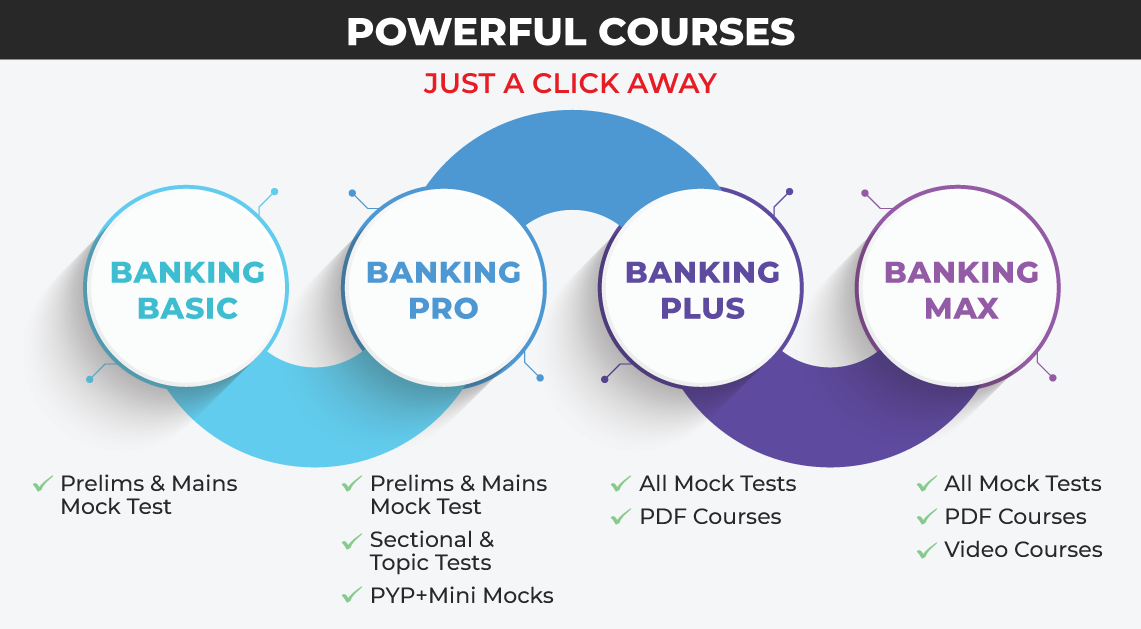
Our Banking Preparation Package includes topic tests, sectional tests, rank boosters for prelims, previous year paper tests, e-books, CA tests, Quizzes, live tests, PDF Course, and more. Discover our banking and insurance packages in detail from the link provided below!
Join our exclusive Telegram group, where our experts are ready to answer all your queries, guide you in banking exam preparation, and give personalised tips to boost your success. Get access to real-time solutions, expert advice, and valuable resources to improve your study journey.
FAQs
Both are challenging in their own ways. Banking exams test speed and accuracy with puzzles, DI, and sectional timing. SSC exams test deeper concepts in Arithmetic, Advanced Maths, and Static GK. Difficulty depends on your strengths.
Yes, for Quant, Reasoning, and English you can use the same basic books. However, for Banking Awareness you need banking-specific books, and for SSC you need GK/Advanced Maths resources.
Very important. Banking requires speed, so sectional and full-length mocks are essential. SSC needs accuracy and conceptual clarity, so practice topic-wise and full mocks regularly.
Yes, many beginners clear either Banking or SSC in their first attempt. Success depends on smart planning, consistent practice, and regular mock test analysis.
If you have enough time before exams, prepare for both together. But if one exam is very close (say, SSC CGL is 1 month away), then give priority to that while keeping light practice for the other.
Yes, you can. Both exams have common subjects like Quant, Reasoning, and English. With smart planning, you can cover overlapping topics and dedicate extra time to the unique sections of each exam.
- Sign Up on Practicemock for Updated Current Affairs, Topic Tests and Mini Mocks
- Sign Up Here to Download Free Study Material
Free Mock Tests for the Upcoming Exams
- IBPS PO Free Mock Test
- RBI Grade B Free Mock Test
- IBPS SO Free Mock Test
- NABARD Grade A Free Mock Test
- SSC CGL Free Mock Test
- IBPS Clerk Free Mock Test
- IBPS RRB PO Free Mock Test
- IBPS RRB Clerk Free Mock Test
- RRB NTPC Free Mock Test
- SSC MTS Free Mock Test
- SSC Stenographer Free Mock Test
- GATE Mechanical Free Mock Test
- GATE Civil Free Mock Test
- RRB ALP Free Mock Test
- SSC CPO Free Mock Test
- AFCAT Free Mock Test
- SEBI Grade A Free Mock Test
- IFSCA Grade A Free Mock Test
- RRB JE Free Mock Test
- Free Banking Live Test
- Free SSC Live Test