


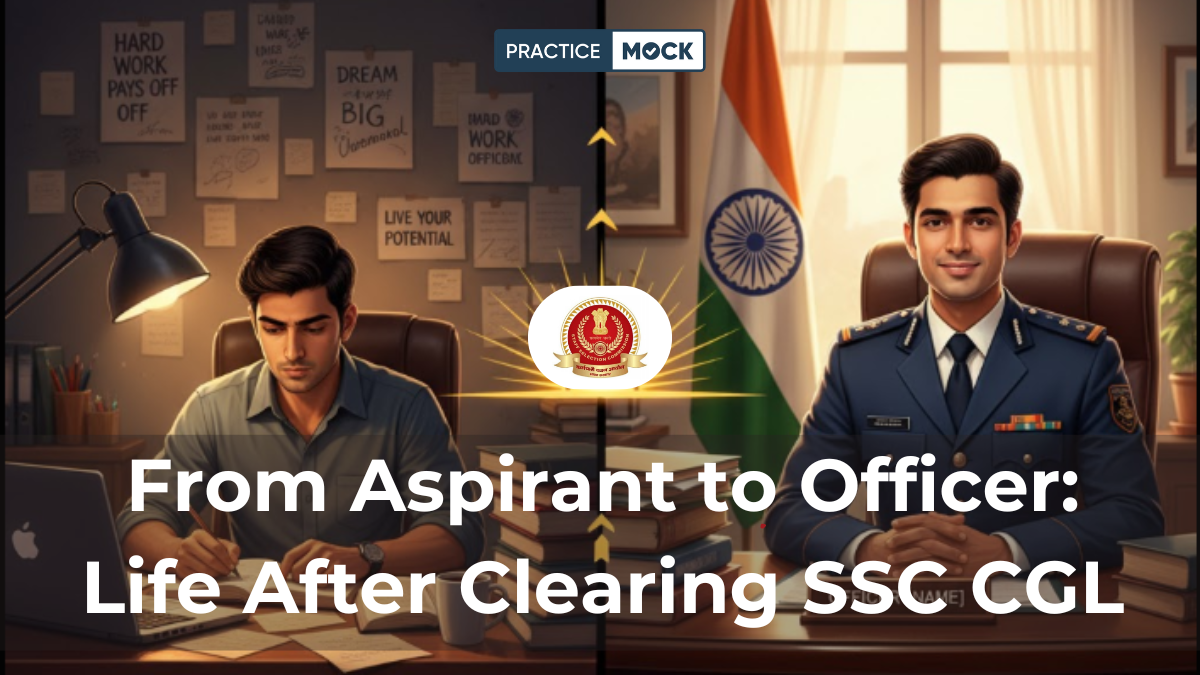
Clearing the SSC CGL itself is a big milestone. It is not just an exam; it’s a gateway to a stable government career, financial security, and a respected position in society. Have you ever thought what it feels like when someone gets the joining letter? Getting your joining letter is just the start of a whole new life chapter that involves a new routine, a new city, and new financial decisions. If you are an SSC CGL aspirant, then you might be thinking about what actually happens next, and how your life changes after the SSC CGL result. Let’s understand what life looks like after clearing SSC CGL in simple and practical terms.
Waiting Time From Results to Your First Day
You will always remember that day when you see your name in the SSC CGL result PDF. It means you are selected, but the waiting time remains until the joining day. After you see your name on the list, there’s an administrative process that takes time. Below, we have mentioned some processes that will take some time.

- Paperwork Time: Your allotted ministry or department will call you for Document Verification and a Medical Test. This is just to make sure everything on your application is correct and you’re fit for duty.
- The Big Wait: Depending on how quickly your department works, you might wait anywhere from three to six months before you get that official joining letter.
- Your Post is Decided: Where you go first, and which exact job you get, depends on two main things: your final rank on the merit list and the order of preference you gave during the process. A better rank usually means a better chance at your top choices.
Your First Few Months of Training After Joining
Once you join, your training will start immediately. This training will be different based on your job roles and responsibilities. There are two types of job roles: one is a desk job, and the second is a Field Job.
1. Desk Jobs: The Office Routine
If you get a role like Assistant Section Officer (ASO), especially in central ministries in Delhi (like CSS or MEA), your training will focus on office procedures.
- You’ll learn the ropes of government rules, how to write official notes, draft letters, and manage files.
- This training is usually a shorter, focused course, often in New Delhi. It’s about learning to be an efficient bureaucrat.
2. Field Jobs: Action and Rigor
If you are an Inspector (in Income Tax, Excise, or Narcotics), get ready for a much more intense start.
- Your training will be longer and tougher, lasting from three to nine months.
- You’ll spend time in classrooms learning about the laws you’ll enforce, but you’ll also get physical conditioning and, depending on the job, even training with firearms. It’s designed to prepare you for real-world enforcement action.
How Your Salary Works and Why Location Matters
SSC provides a decent package with a lot of benefits. Along with that, you also get job stability with a good reputation in society. But the amount that you actually receive in your bank account, that is, In-Hand Salary, depends on where you live.
The Pay Structure Basics
Your total pay is built from a few key blocks:
- Basic Pay: This is the foundation (e.g., ₹25,500 for entry-level Level 4, up to ₹47,600 for Level 8).
- Dearness Allowance (DA): This allowance changes with inflation to keep your salary’s value the same. It’s a large part of your pay, usually around 40% or more of your basic salary.
- House Rent Allowance (HRA) & Transport Allowance (TA): These are the other benefits that help you in paying your house rent and transportation or travelling.
The House Rent Allowances for X, Y, and Z Cities
HRA is a percentage of your Basic Pay meant to help cover rent, and it changes completely based on the city classification:
- X-Cities (Metros): Places like Mumbai, Delhi, Bangalore. You get the highest HRA (up to 30% of Basic Pay).
- Y-Cities (Big Towns): Cities like Pune or Lucknow. You get a middle-range HRA (around 16% to 20%).
- Z-Cities (Smaller Towns): Everywhere else. You get the lowest HRA (about 8% to 10%).
The Transport Allowance (TA) also follows this pattern, being higher in X-cities.
Work-Life Balance After SSC CGL
Your daily life will look completely different depending on whether you got a desk job or a field job.
The Desk Job Life
This is the life of stability and procedure.
- Schedule: It’s usually a strict 9 AM to 5 PM, five-day work week.
- The Work: You are the backbone of the government machinery. You focus on managing files, writing reports (drafting), and making sure government rules are followed when moving a file from one desk to the next.
- Work-Life Balance: It’s generally excellent. You know when you’ll be home, giving you plenty of time for family, hobbies, or even studying for the next big exam.
The Field Job Life
Work-life balance can be tough for a person who is getting a Field Job. This is the life of action and unpredictable hours.
- Field jobs often have two parts:
- Assessment Wing (Desk): This part is like a regular office job where you check tax returns for mistakes. It’s stable.
- Enforcement Wing (Field): This is the dynamic part! It involves gathering information, surveillance, and participating in raids (search and seizure operations).
- The Hours: When a raid is on, forget your 9-to-5. You might start before dawn, work late into the night, and possibly even sacrifice a weekend. You trade a predictable schedule for real executive authority and a visible public impact.
Life Management After Clearing SSC CGL: Transfers, Status, and Future Plans
Life after clearing SSC CGL means managing where you live and how others see you.
- Transfers: You usually stay in your first posting zone for a minimum of three years. Getting a transfer back to your home city is tough right away, but it becomes much easier once you get promoted and move up in rank. Requests for transfers due to marriage or serious illness are sometimes looked upon kindly.
- Social Standing: A CGL job brings instant respect and stability in Indian society. People see it as a mark of a reliable and secure career.
- Workplace Reality Check: Be ready for a potential mismatch. You might be very young and highly educated, but the office culture often values seniority over new ideas. You might find yourself doing high-level drafting for a senior officer who has less formal education but more years of service. Learning to navigate this is key.
Conclusion
Reaching this stage after clearing SSC CGL is a big achievement. Now, you have job security, good income, respect, and so on. Now, your next choices matter, whether you want a desk job that gives you study time or an active field job with more responsibility. You’ll also need to decide which city suits you better, one where you can save more or one that offers higher pay. Think carefully, because this stable job gives you the freedom to plan your future with confidence.
Join our exclusive Telegram group for expert guidance, personalized tips, and real-time solutions to boost your SSC exam prep. [Click here to join now!]
| Other Blogs of SSC CGL 2025 | |
| SSC CGL Notification | SSC CGL Syllabus |
| SSC CGL Study Plan | SSC CGL Exam Pattern |
| SSC CGL Cut Off | SSC CGL Preparation Strategy |
| SSC CGL Previous Year Question Papers | |
FAQs: Life After Clearing SSC CGL
Clearing SSC CGL means securing a stable government job, financial security, and a respected position in society with long-term career growth.
It usually takes about three to six months after document verification and medical tests before you receive your official joining letter.
There are mainly two types of jobs: Desk Jobs (administrative roles) and Field Jobs (inspection and enforcement roles).
Desk job training teaches office procedures, drafting, and government rules — usually a short, structured program held in Delhi.
Field officers undergo rigorous training involving classroom learning, physical fitness, and sometimes even weapon handling for enforcement duties.
- Sign Up on Practicemock for Updated Current Affairs, Topic Tests and Mini Mocks
- Sign Up Here to Download Free Study Material
Free Mock Tests for the Upcoming Exams
- IBPS PO Free Mock Test
- RBI Grade B Free Mock Test
- IBPS SO Free Mock Test
- NABARD Grade A Free Mock Test
- SSC CGL Free Mock Test
- IBPS Clerk Free Mock Test
- IBPS RRB PO Free Mock Test
- IBPS RRB Clerk Free Mock Test
- RRB NTPC Free Mock Test
- SSC MTS Free Mock Test
- SSC Stenographer Free Mock Test
- GATE Mechanical Free Mock Test
- GATE Civil Free Mock Test
- RRB ALP Free Mock Test
- SSC CPO Free Mock Test
- AFCAT Free Mock Test
- SEBI Grade A Free Mock Test
- IFSCA Grade A Free Mock Test
- RRB JE Free Mock Test
- Free Banking Live Test
- Free SSC Live Test