


The Hindu Editorial Vocabulary is highly useful for Bank and SSC exams, especially for the English section. Regular reading improves vocabulary, comprehension, and grammar. Editorials contain high-quality language, idioms, phrasal verbs, and advanced vocabulary frequently asked in exams. Learning 10–15 new words daily and reading the summary of the passage from editorials helps in scoring better in Cloze Tests, Reading Comprehension, Fill in the Blanks, and Synonyms-Antonyms. It also boosts your confidence in descriptive writing and interviews. Consistent practice with these words, along with usage in sentences, enhances retention. Hence, the Hindu editorials serve as a rich and reliable source for English preparation in competitive exams.
Reading Comprehension passages are an integral part of the English section of government exams. However, for beginners, such passages can seem difficult. The Hindu Editorial is an excellent tool to improve the reading and understanding of passages. The language is very similar to the passages that generally appear in the English section of government exams, and each paragraph is filled with exam-relevant vocabulary and real-world topics. First, go through the vocabulary section and read the meanings of the words, their Hindi translations, synonyms, and antonyms. Then read the summary of the passage provided to you. Once you know the meanings of the words, read the passage carefully, and you will feel that it is much easier to understand the main idea and tone of the passage. This method not only improves the understanding of reading comprehension passages but also builds a strong vocabulary base for cloze tests and sentence fillers in the exam. Doing this every day will boost your confidence in the English section and help improve your scores in sections such as Reading Comprehension, Cloze Tests, and Sentence Fillers.
The Hindu Editorial 23rd September 2025
Consumption conundrum: On the Indian economy’s predicament
Household spending can boost the economy, but it needs a jumpstart
The government’s push this year to spur consumption in the economy is a much-needed policy re-prioritisation at a time when several other engines of growth are either flagging or plateauing. The economy is a composite of household consumption, private investment, government expenditure and net exports. Of these, only government expenditure has witnessed robust growth over the past few years, thanks to the Modi government’s infrastructure push. It has also made available interest-free loans to States to do the same. However, as Finance Minister Nirmala Sitharaman has indicated in the last two Union Budgets, even though the Centre will increase its capital expenditure, it will not be at the blistering rate of 30%-35% that the early post-COVID-19 pandemic years saw. The government has other developmental and defence priorities that need funds too. It is time for the private sector to step up its investments. Private investment has grown, but not nearly at the rate needed to move India from 6%-6.5% growth to the more than 8% needed to meet the targets. Given that industrial capacity utilisation has not crossed 80% since March 2011, the only way to induce more private investment is to increase demand substantially. Net exports, especially merchandise, are struggling due to the global uncertainty around trade, and the U.S.’s 50% tariffs imposed on Indian imports. That is, demand from abroad is petering out, which leaves household consumption to do the heavy lifting.
There are two ways to encourage people to spend — increasing their incomes and lowering prices. The GST rate reforms, with effect from September 22, are a significant step in executing the latter. According to a study published by FICCI, more than three-fourths of rural monthly expenditure will attract either nil or 5% GST rates. This was previously 56%. For urban Indians, this proportion has been increased from half to two-thirds. On the income side, the government tried to put more money in people’s pockets by reducing income-tax rates in Budget 2025. This was a welcome and necessary step, although it is not enough to encourage a change in spending behaviour. People are more likely to save than spend that extra amount. The other way disposable income will rise substantially is if companies decide to increase wages. However, apart from a few niche sectors, India has an oversupply of labour, and wages will simply not grow fast enough. There is also a skill deficit that needs to be urgently addressed. This is the unfortunate predicament that the Indian economy finds itself in: consumption is the only driver of growth that is largely immune to global factors. But it also has high inertia, needing relatively more fiscal investment before it can get a jump-start.
The Hindu Editorial 23rd September 2025 Vocabulary
- Conundrum (noun)
• Meaning: A confusing and difficult problem
• Synonyms: dilemma, puzzle, enigma, quandary
• Antonyms: solution, clarity, answer, resolution - Predicament (noun)
• Meaning: A difficult, unpleasant, or challenging situation
• Synonyms: plight, hardship, crisis, impasse
• Antonyms: advantage, ease, breakthrough, opportunity - Boost (verb)
• Meaning: To increase or improve something
• Synonyms: enhance, strengthen, stimulate, augment
• Antonyms: reduce, weaken, diminish, curtail - Jumpstart (verb/noun)
• Meaning: To cause something to start quickly or more effectively
• Synonyms: revive, trigger, energise, reinvigorate
• Antonyms: stall, hinder, obstruct, delay - Push (noun)
• Meaning: An effort to promote or encourage something
• Synonyms: drive, initiative, campaign, thrust
• Antonyms: neglect, withdrawal, apathy, inaction - Spur (verb)
• Meaning: To encourage or stimulate action
• Synonyms: motivate, incite, prompt, propel
• Antonyms: discourage, hinder, deter, restrain - Flagging (adjective)
• Meaning: Becoming weaker, declining in strength
• Synonyms: weakening, dwindling, waning, deteriorating
• Antonyms: thriving, flourishing, vigorous, prospering - Plateauing (verb/gerund)
• Meaning: Reaching a stable but stagnant level after growth
• Synonyms: stabilising, stagnating, levelling off, steadying
• Antonyms: accelerating, advancing, surging, escalating - Composite (noun/adjective)
• Meaning: Made up of different parts or elements
• Synonyms: amalgam, blend, conglomerate, combination
• Antonyms: singular, simple, uniform, unalloyed - Robust (adjective)
• Meaning: Strong and healthy; showing resilience
• Synonyms: vigorous, sturdy, sound, resilient
• Antonyms: fragile, weak, feeble, delicate - Blistering (adjective)
• Meaning: Extremely fast, intense, or impressive
• Synonyms: scorching, fierce, rapid, searing
• Antonyms: mild, sluggish, slow, gentle - Step up (phrasal verb)
• Meaning: To increase effort or take responsibility
• Synonyms: intensify, escalate, enhance, accelerate
• Antonyms: slacken, diminish, withdraw, retreat - Induce (verb)
• Meaning: To cause or persuade something to happen
• Synonyms: prompt, stimulate, incite, engender
• Antonyms: deter, dissuade, prevent, inhibit - Substantially (adverb)
• Meaning: To a great or significant extent
• Synonyms: considerably, markedly, greatly, significantly
• Antonyms: slightly, marginally, negligibly, minimally - Petering out (phrasal verb)
• Meaning: Gradually fading or diminishing
• Synonyms: dwindling, fading, tapering off, withering
• Antonyms: surging, escalating, intensifying, multiplying - Do the heavy lifting (idiom)
• Meaning: To perform the most difficult or important tasks
• Synonyms: bear the burden, take responsibility, shoulder the load
• Antonyms: evade duty, avoid responsibility, pass the buck - Executing (verb)
• Meaning: Carrying out or putting into effect
• Synonyms: implementing, performing, enforcing, carrying out
• Antonyms: abandoning, neglecting, halting, ignoring - Welcome (adjective)
• Meaning: Received with approval or relief
• Synonyms: appreciated, pleasing, agreeable, gratifying
• Antonyms: unwelcome, unpleasant, undesirable, offensive - Deficit (noun)
• Meaning: A shortage or lack, especially of money or resources
• Synonyms: shortfall, insufficiency, scarcity, gap
• Antonyms: surplus, abundance, excess, plenty - Addressed (verb, past tense)
• Meaning: Dealt with or gave attention to a problem
• Synonyms: handled, confronted, resolved, tackled
• Antonyms: ignored, neglected, evaded, overlooked - Immune (adjective)
• Meaning: Not affected or influenced by something
• Synonyms: resistant, invulnerable, insusceptible, unaffected
• Antonyms: vulnerable, susceptible, exposed, prone - Inertia (noun)
• Meaning: Lack of movement or progress due to resistance to change
• Synonyms: inactivity, stagnation, passivity, apathy
• Antonyms: dynamism, momentum, energy, initiative
Formal Summary for Bank Mains Descriptive Practice:
India’s economic growth currently depends on four major components — household consumption, private investment, government expenditure, and net exports. Of these, only government spending has been expanding steadily in recent years, largely due to increased infrastructure investments and state support. However, this pace of public expenditure cannot be sustained indefinitely, as funds are also required for other developmental and defence priorities. Private investment has grown, but not at the rate needed to achieve higher growth levels, primarily because capacity utilisation remains below 80%. At the same time, global trade uncertainties and higher tariffs on Indian goods have weakened export prospects, leaving domestic consumption as the most reliable growth driver.
To boost consumption, the government has initiated tax reforms and GST rate cuts to reduce prices, particularly for rural households. While income tax reductions have also been introduced, the additional disposable income has not translated into higher spending, as saving tendencies dominate. Further, low wage growth and skill deficits restrict income expansion. Thus, while consumption has the potential to accelerate growth, it requires significant policy push and investment to overcome its inherent inertia.
Student-Friendly Summary for Understanding:
India’s economy depends on four things: people’s spending, private investment, government spending, and exports. Right now, government spending is strong because of big infrastructure projects, but this cannot continue at the same fast pace for long. Private investment is not growing enough since companies are not fully using their existing capacity, and exports are facing problems due to global uncertainty and higher U.S. tariffs. This leaves household consumption as the main way to boost growth.
The government has tried to encourage spending by cutting GST on many items and reducing income tax. However, people still prefer saving over spending, and wages are not rising quickly due to oversupply of labour and skill shortages. As a result, increasing household consumption will take more effort and support before it can truly push the economy forward.
The Hindu Editorial 23rd September 2025 – Tone Analysis
1. Analytical – The passage examines the four components of growth and explains why only consumption remains a reliable driver in the current situation.
2. Cautionary – It warns that depending too heavily on government expenditure is unsustainable and highlights risks from weak exports and limited wage growth.
3. Concerned – The discussion reflects unease over the economy’s predicament, especially the challenges of low consumption momentum, wage stagnation, and global trade uncertainties.
4. Prescriptive/Suggestive – It points to reforms like GST cuts, income tax reductions, and skill development as ways to encourage spending and boost demand.
5. Formal-Neutral – While it critiques existing limitations, the tone avoids emotional bias, maintaining an objective and factual stance suitable for policy discussion.
Most expected essays for 2025 descriptive exams:
Topic: The Role of Microfinance in Empowering Rural Communities in India
Microfinance has emerged as a powerful tool in driving financial inclusion and promoting socio-economic development in rural India. By providing small loans, savings facilities, and other financial services to low-income households, microfinance institutions (MFIs) have enabled rural communities to participate in economic activities that were earlier beyond their reach.
One of the most significant contributions of microfinance is the empowerment of women. Through Self-Help Groups (SHGs) and Joint Liability Groups (JLGs), women have gained access to credit for income-generating activities such as dairy farming, handicrafts, and small businesses. This has not only enhanced household income but also improved their decision-making power and social status.
Microfinance also helps reduce dependence on informal moneylenders who often charge exorbitant interest rates. By offering affordable credit, MFIs enable rural families to invest in agriculture, education, and healthcare, thus breaking the cycle of poverty. Moreover, access to savings and insurance products provides a financial cushion during emergencies, enhancing resilience in vulnerable communities.
However, microfinance is not without challenges. Over-indebtedness, high interest rates charged by some institutions, and inadequate financial literacy can weaken its impact. To address these concerns, there is a need for stricter regulation, better financial education, and integration of microfinance with government schemes to create sustainable livelihoods.
In conclusion, microfinance has the potential to be a transformative instrument for rural empowerment in India. If implemented responsibly and inclusively, it can act as a catalyst for poverty reduction, gender equality, and balanced rural development.
Exam Hall Approach For Descriptive Writing
1. Read the topic carefully – Understand what exactly is being asked (cause, effect, solution?).
2. Spend 3–4 mins planning – Jot down 3 key points for the body (intro → 3 points → conclusion).
3. Write 1–2 lines introduction – Direct, relevant, no quotes or fluff.
4. Develop each point in 3–4 lines – One idea per paragraph.
5. Conclude with a positive, forward-looking line – Shows analytical maturity.
Things to Keep in Mind
1. Stick to the word limit.
2. Use simple, formal English – No fancy vocabulary unless sure of meaning.
3. Stick to facts/examples briefly – Do not over-explain.
4. Maintain a neutral tone – IBPS expects analysis, not emotional or biased writing.
Banking Exams Free Mock Test
| IBPS RRB PO Free Mock Test | IBPS PO Free Mock Test |
| SBI PO Free Mock Test | IBPS SO Free Mock Test |
| IBPS RRB Clerk Free Mock Test | IBPS Clerk Free Mock Test |
Join our exclusive Telegram group, where our experts are ready to answer all your queries, guide you in banking exam preparation, and give personalised tips to boost your success. Get access to real-time solutions, expert advice, and valuable resources to improve your study journey.
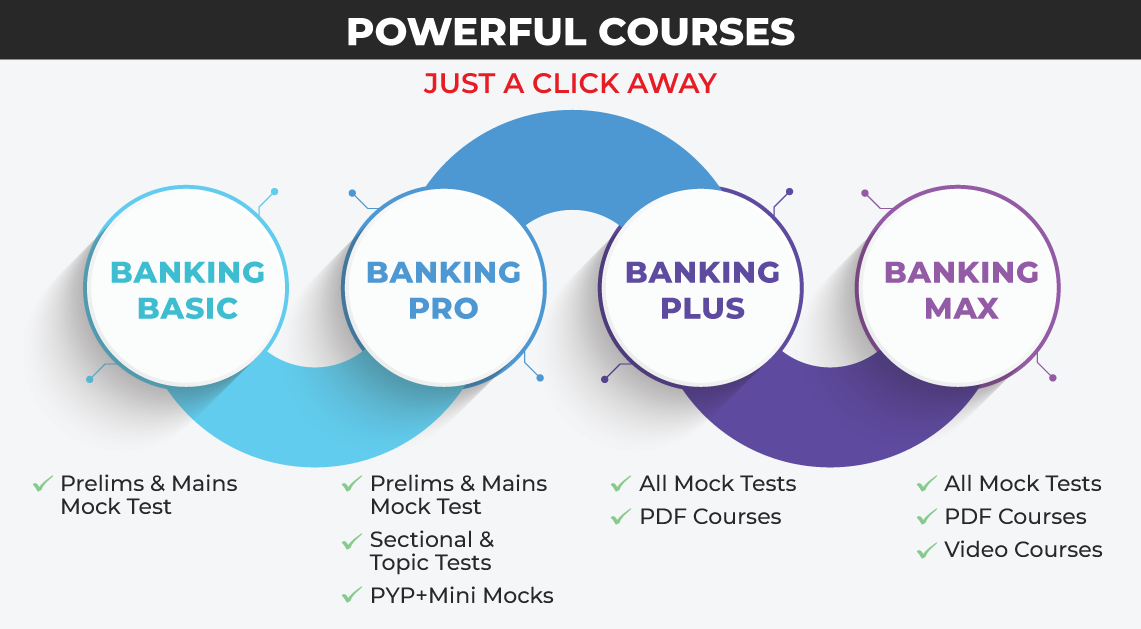
Our Banking Preparation Package includes topic tests, sectional tests, rank boosters for prelims, previous year paper tests, e-books, CA tests, Quizzes, live tests, PDF Course, and more. Discover our banking and insurance packages in detail from the link provided below!
- Sign Up on Practicemock for Updated Current Affairs, Topic Tests and Mini Mocks
- Sign Up Here to Download Free Study Material
Free Mock Tests for the Upcoming Exams
- IBPS PO Free Mock Test
- RBI Grade B Free Mock Test
- IBPS SO Free Mock Test
- NABARD Grade A Free Mock Test
- SSC CGL Free Mock Test
- IBPS Clerk Free Mock Test
- IBPS RRB PO Free Mock Test
- IBPS RRB Clerk Free Mock Test
- RRB NTPC Free Mock Test
- SSC MTS Free Mock Test
- SSC Stenographer Free Mock Test
- GATE Mechanical Free Mock Test
- GATE Civil Free Mock Test
- RRB ALP Free Mock Test
- SSC CPO Free Mock Test
- AFCAT Free Mock Test
- SEBI Grade A Free Mock Test
- IFSCA Grade A Free Mock Test
- RRB JE Free Mock Test
- Free Banking Live Test
- Free SSC Live Test