


The Union Public Service Commission (UPSC) has set the stage for the Civil Services Examination (CSE) 2026. For serious aspirants, the syllabus is not just a list of topics but the roadmap to success. Whether you are targeting the IAS, IPS, or IFS, understanding the minute details of the UPSC Syllabus 2026 is the first step toward your goal. In this blog, we break down the UPSC syllabus for Prelims and Mains stage-by-stage, using the official exam structure.
UPSC CSE 2026: Exam Overview
The UPSC Civil Services Exam is conducted in three phases:
- Preliminary Examination: Objective Type (Qualifying).
- Main Examination: Written/Descriptive (Merit-Deciding).
- Personality Test (Interview): Oral.
Phase 1: UPSC Prelims Syllabus 2026
The Preliminary Examination serves as a screening test. It consists of two papers held on the same day.
Paper I: General Studies (GS)
- Marks: 200
- Duration: 2 Hours
- Nature: Merit-deciding for Mains selection.
- Negative Marking: Yes (1/3rd marks deducted for wrong answers).
Syllabus:
- Current Events: Events of national and international importance.
- History: History of India and the Indian National Movement.
- Geography: Indian and World Geography—Physical, Social, Economic Geography of India and the World.
- Polity: Indian Polity and Governance—Constitution, Political System, Panchayati Raj, Public Policy, Rights Issues, etc..
- Economy: Economic and Social Development—Sustainable Development, Poverty, Inclusion, Demographics, Social Sector Initiatives, etc..
- Environment: General issues on Environmental Ecology, Bio-diversity, and Climate Change (subject specialization not required).
- Science: General Science.
Paper II: Civil Services Aptitude Test (CSAT)
- Marks: 200
- Duration: 2 Hours
- Nature: Qualifying (You must score at least 33% or ~66 marks).
Syllabus:
- Comprehension.
- Interpersonal skills including communication skills.
- Logical reasoning and analytical ability.
- Decision making and problem-solving.
- General mental ability.
- Basic Numeracy: Numbers and their relations, orders of magnitude, etc. (Class X level).
- Data Interpretation: Charts, graphs, tables, data sufficiency, etc. (Class X level).
Note: Marks obtained in the Prelims are not counted for the final ranking.
Phase 2: UPSC Mains Syllabus 2026
The Mains examination tests your depth of understanding and intellectual traits. It consists of 9 papers in total.
A. Qualifying Papers
These marks are not counted for ranking, but you must pass them to have your other papers evaluated.
- Paper A (Indian Language): Comprehension, Precis Writing, Usage & Vocabulary, Short Essays, Translation.
- Paper B (English): Comprehension, Precis Writing, Usage & Vocabulary, Short Essays.
B. Merit-Ranking Papers (Papers I to VII)
These marks determine your rank.
Paper I: Essay (250 Marks)
Candidates are required to write essays on multiple topics. You are expected to keep closely to the subject, arrange ideas in an orderly fashion, and write concisely.
Paper II: General Studies I (250 Marks)
Topics: Indian Heritage and Culture, History and Geography of the World and Society.
- Culture: Art forms, literature, and architecture from ancient to modern times.
- History: Modern Indian history (mid-18th century to present), The Freedom Struggle, Post-independence consolidation.
- World History: Events from the 18th century like industrial revolution, world wars, redrawal of national boundaries, colonization, decolonization, political philosophies (communism, capitalism, socialism).
- Society: Diversity of India, Role of women, Poverty, Urbanization, Globalization, Social empowerment, Communalism, Regionalism, Secularism.
- Geography: Physical geography, Distribution of key natural resources (world & India), Factors for location of industries, Important geophysical phenomena (Earthquakes, Tsunami, Cyclone).
Paper III: General Studies II (250 Marks)
Topics: Governance, Constitution, Polity, Social Justice, and International Relations.
- Constitution: Evolution, features, amendments, basic structure.
- Polity: Functions of Union and States, Separation of powers, Parliament and State legislatures, Executive and Judiciary structure, Representation of People’s Act.
- Governance: Appointment to constitutional posts, Government policies for development, Role of NGOs/SHGs, E-governance, Citizens charters, Role of civil services in democracy.
- Social Justice: Welfare schemes for vulnerable sections, Issues relating to Health, Education, Human Resources, Poverty, and Hunger.
- International Relations: India and its neighborhood, Bilateral/Regional/Global groupings affecting India’s interests, Indian diaspora, International institutions.
Paper IV: General Studies III (250 Marks)
Topics: Technology, Economic Development, Bio-diversity, Environment, Security, and Disaster Management.
- Economy: Planning, Resource mobilization, Inclusive growth, Government Budgeting.
- Agriculture: Major crops, Irrigation, E-technology for farmers, Farm subsidies, MSP, PDS, Food processing industries, Land reforms.
- Science & Tech: Developments in everyday life, Indigenization of technology, Awareness in IT, Space, Computers, Robotics, Nanotech, Biotech, IPR.
- Environment: Conservation, Pollution, EIA, Disaster Management.
- Security: Linkages between extremism and development, Role of external state/non-state actors, Cyber security, Money laundering, Border management, Organized crime.
Paper V: General Studies IV (250 Marks)
Topics: Ethics, Integrity, and Aptitude.
- Ethics: Human interface, Private and public relationships, Human values, Lessons from great leaders.
- Attitude: Structure, content, function, influence on thought and behavior.
- Aptitude: Integrity, impartiality, objectivity, empathy, tolerance for weaker sections.
- Public Service: Emotional intelligence, Ethics in public administration, conscience as a guide, Probity in governance, Right to Information, Codes of Ethics, Utilization of public funds.
- Case Studies: Application of the above issues.
Paper VI & VII: Optional Subjects (250 Marks Each)
Candidates must choose one optional subject (which comprises two papers). The scope is broadly of the Honours degree level.
List of Available Optional Subjects:
- Agriculture
- Animal Husbandry and Veterinary Science
- Anthropology
- Botany
- Chemistry
- Civil Engineering
- Commerce and Accountancy
- Economics
- Electrical Engineering
- Geography
- Geology
- History
- Law
- Management
- Mathematics
- Mechanical Engineering
- Medical Science
- Philosophy
- Physics
- Political Science and International Relations
- Psychology
- Public Administration
- Sociology
- Statistics
- Zoology
- Literature of one of the following languages: Assamese, Bengali, Bodo, Dogri, Gujarati, Hindi, Kannada, Kashmiri, Konkani, Maithili, Malayalam, Manipuri, Marathi, Nepali, Odia, Punjabi, Sanskrit, Santhali, Sindhi, Tamil, Telugu, Urdu, and English.
Phase 3: Interview
The final stage is the Personality Test (275 Marks). It assesses the candidate’s intellectual traits, social traits, and interest in current affairs.
UPSC Syllabus PDF
To ensure you don’t miss any topic, we have compiled the official syllabus into a clean PDF format. Download it and paste it on your study table so that you can easily go through the syllabus.
Download UPSC Syllabus & Pattern PDF
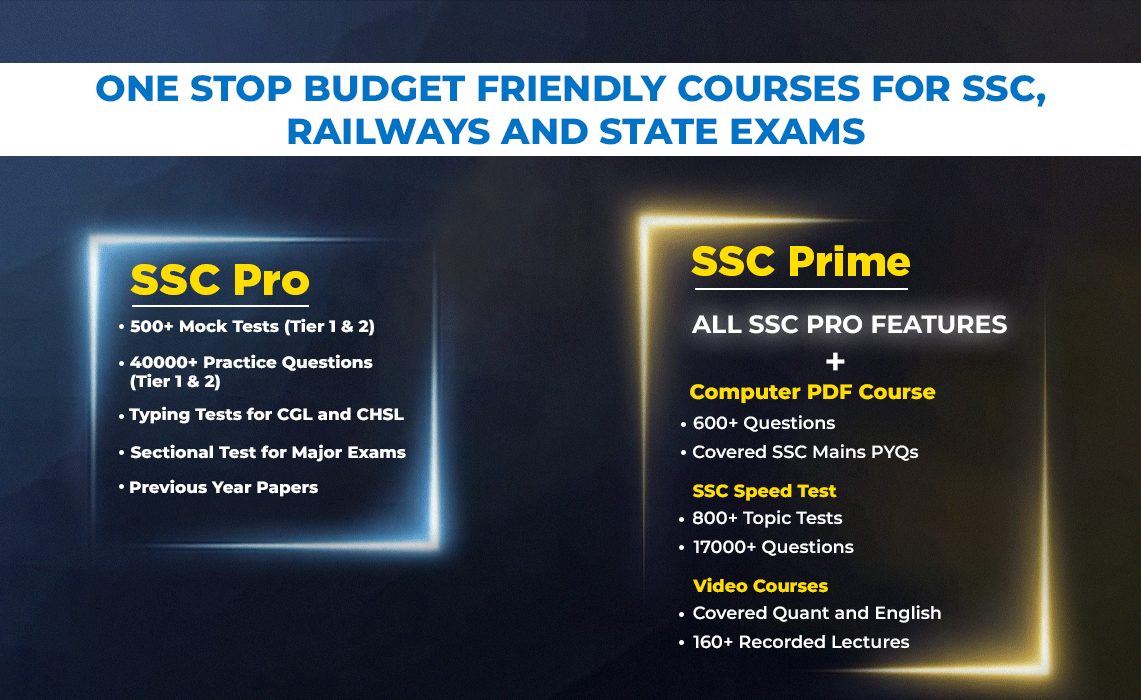
Join our exclusive Telegram group for expert guidance, personalized tips, and real-time solutions to boost your SSC exam prep. [Click here to join now!]
FAQs: UPSC Syllabus 2026
Yes, Paper II (CSAT) is qualifying. You must score at least 66 marks (33%). If you fail CSAT, your GS Paper I will not be checked, even if you score full marks in it.
No, Paper A (Indian Language) and Paper B (English) are qualifying in nature. You just need to score 25% to pass. Their marks are not added to your final total.
You only have to choose ONE optional subject, but there will be two papers (Paper VI and Paper VII) for that single subject.
No, there is no negative marking in the Mains (Descriptive) exam. Negative marking is only applicable in the Prelims (Objective) exam.
Yes, you can choose to write all your papers (General Studies, Essay, and Optional) in Hindi or English or any scheduled language, regardless of your medium in Prelims.
- Sign Up on Practicemock for Updated Current Affairs, Topic Tests and Mini Mocks
- Sign Up Here to Download Free Study Material
Free Mock Tests for the Upcoming Exams
- IBPS PO Free Mock Test
- RBI Grade B Free Mock Test
- IBPS SO Free Mock Test
- NABARD Grade A Free Mock Test
- SSC CGL Free Mock Test
- IBPS Clerk Free Mock Test
- IBPS RRB PO Free Mock Test
- IBPS RRB Clerk Free Mock Test
- RRB NTPC Free Mock Test
- SSC MTS Free Mock Test
- SSC Stenographer Free Mock Test
- GATE Mechanical Free Mock Test
- GATE Civil Free Mock Test
- RRB ALP Free Mock Test
- SSC CPO Free Mock Test
- AFCAT Free Mock Test
- SEBI Grade A Free Mock Test
- IFSCA Grade A Free Mock Test
- RRB JE Free Mock Test
- Free Banking Live Test
- Free SSC Live Test