


If you are preparing for the SSC GD Constable exam, you know that Mathematics is the key to getting a high score. Many students are scared of Math, but the truth is, the questions in the SSC GD exam are very basic. You don’t need to be a genius to solve these questions. The most important topic you must start with is the Number System. Why? Because it is the foundation of all math. If you understand numbers, you can easily solve problems on HCF, LCM, and Simplification. Questions on this topic are based on simple rules like divisibility and unit digits, which you can learn in just one day. To help you practice without getting confused, we have selected the most important Number System questions for SSC GD exam and provided them in a PDF. You can download it below from this blog for free.
Concept of Number System
Number System is a mathematical concept; it is the representation of numbers, or writing the numbers by using some set of digits or other symbols.

A number is a numerical value or mathematical value that is used for counting or measuring objects.
Type of Numbers:
- Rational Numbers (Q): A number that can be expressed as p/q is called a rational number. where p and q are integers and q ≠ 0 (Note: The denominator cannot be 0, but the numerator can be)
- For example 1/2, 3/4, 7/2,3/5,7
- Irrational Numbers:- The numbers that cannot be expressed in the form of p/q are called irrational numbers. where p and q are integers and q ≠ 0
- For example, √2, π, √3, √99, √11
- Natural Numbers (N):- Natural numbers are a part of the number system that includes all the positive integers from 1 to infinity.
- They are denoted by N.
- For example, N = {1, 2, 3, 4…..}
- Whole Numbers (W):- The whole numbers are a part of the number system that includes all the positive integers from 0 to infinity.
- They are denoted by W.
- For example, W = {0, 1, 2, 3, 4…..}
- Integers (Z):- Integers include all whole numbers and their negative counterpart. They are denoted by I.
- For example, I = {…-4,-3,-2,-1, 0, 1, 2, 3, 4…..}
- Real Numbers (R): Any number, such as positive integers, negative integers, fractional numbers or decimal numbers without imaginary numbers, is called a real number. Real numbers are denoted by R.
- For example √ 2, √ 3,8/5,6/2,-0.65, π, 8
Properties of Number System
- Divisibility Rules: Understand the divisibility rules for numbers like 2, 3, 5, 9, 11, etc.
- Example: 1. A number is divisible by 3 if the sum of its digits is divisible by 3.
- 2. If the last two digits of a number are divisible by 4, then the number is divisible by 4.
- LCM and HCF (Highest Common Factor) and (Least Common Multiple) respectively:
- LCM: The least common multiple (LCM) is defined as the smallest multiple that two or more numbers have in common.
- HCF: HCF is used to find the highest common factor of any two or more given integers
- Sequence: A sequence is an arrangement of numbers in a definite order according to some rule
- Remainder Theorem: The remainder is the value left after the division if the dividend is not completely divided by the divisor.
Download Free PDF of Number System Questions for SSC GD
We have prepared a comprehensive PDF containing exam-level questions. We have chosen questions that match the exact difficulty level of SSC GD (Matriculation level) – focusing on basic concepts rather than complex theorems. You are strongly advised to download this PDF, solve, and analyze these questions carefully.
Q1. Which of the following numbers is divisible by 9?
(a) 56782
(b) 45326
(c) 72549
(d) 12345
Answer: (c) 72549
Logic:
Add digits.
7 + 2 + 5 + 4 + 9 = 27.
Since 27 is divisible by 9, the number is also divisible by 9.
Q2. Find the unit digit in the product 432 x 567 x 891.
(a) 2
(b) 4
(c) 1
(d) 7
Answer: (b) 4
Logic:
Take only last digits.
2 x 7 = 14 → last digit is 4
4 x 1 = 4
Unit digit is 4.
Q3. On dividing a number by 56, we get 29 as the remainder. On dividing the same number by 8, what will be the remainder?
(a) 4
(b) 5
(c) 3
(d) 2
Answer: (b) 5
Logic:
Divide the remainder 29 by 8.
29 ÷ 8 leaves remainder 5.
Q4. The sum of the first 20 natural numbers is:
(a) 210
(b) 200
(c) 190
(d) 400
Answer: (a) 210
Logic:
Use formula n(n+1)/2.
20 x 21 = 420.
420 ÷ 2 = 210.
Q5. Which of the following is the smallest prime number?
(a) 0
(b) 1
(c) 2
(d) 3
Answer: (c) 2
Logic:
1 is neither prime nor composite.
2 is the smallest prime and the only even prime.
Q6. Find the value of x if the number 5×792 is divisible by 11.
(a) 4
(b) 6
(c) 7
(d) 9
Answer written earlier: (a) 4
Logic:
Sum of digits in odd positions minus sum of digits in even positions must be 0 or 11.
Odd positions: 2 + 7 + 5 = 14
Even positions: 9 + x
14 − (9 + x) = 5 − x
For divisibility, value should be 5.
So x = 5 (but this option is missing, so the question seems misprinted).
Q7. The product of the place value and face value of 5 in the number 6523 is:
(a) 2500
(b) 500
(c) 505
(d) 1000
Answer: (a) 2500
Logic:
Place value of 5 = 500
Face value of 5 = 5
500 x 5 = 2500
Q8. Which of the following fractions is the smallest?
3/4 , 4/5 , 5/6 , 6/7
(a) 3/4
(b) 4/5
(c) 5/6
(d) 6/7
Answer: (a) 3/4
Logic:
3/4 = 0.75
4/5 = 0.80
5/6 = 0.83
6/7 = 0.85
Smallest is 0.75.
Q9. Simplify:
12 – [ 26 – { 2 + 5 x (6 – 3) } ]
(a) 5
(b) 2
(c) 3
(d) 7
Answer: (c) 3
Logic:
6 − 3 = 3
5 x 3 = 15
2 + 15 = 17
26 − 17 = 9
12 − 9 = 3
Q10. How many numbers between 1 and 50 are divisible by both 2 and 3?
(a) 6
(b) 8
(c) 9
(d) 12
Answer: (b) 8
Logic:
Divisible by both 2 and 3 means divisible by 6.
Numbers:
6, 12, 18, 24, 30, 36, 42, 48
Total = 8.
Why is the Number System Important for SSC GD?
In the Elementary Mathematics section (20 questions), the Number System is your starting point.
- Guaranteed Questions: You will definitely find 2 to 3 questions from this topic in your shift.
- Easy Calculation: These questions often don’t need long calculations. You can solve them using tricks like “Unit Digit” or “Divisibility Rules.”
- Foundation: If your Number System concepts are strong, you will find Simplification and Average topics much easier.
5 Preparation Tips to Master the Number System
Math is not about memorizing; it is about practice. You need a smart strategy to solve these questions quickly. Here are 5 practical tips to help you master Number System questions for the SSC GD exam:
- Memorize Divisibility Rules: You must know the rules for 2, 3, 4, 5, 8, 9, and 11 by heart. Most SSC GD questions are simply testing if you know that a number is divisible by 9 if the sum of its digits is divisible by 9.
- Learn the Unit Digit Trick: For large multiplication problems, you never need to multiply the whole numbers. Just multiply the last digits to find the answer.
- Master BODMAS: In simplification questions, strictly follow B-O-D-M-A-S (Bracket, Order, Division, Multiplication, Addition, Subtraction). If you skip the order, your answer will be wrong.
- Use Options: For questions like “Which is the smallest number?”, don’t use long methods. Just look at the options and check them one by one. It is faster.
- Learn Squares and Cubes: Memorize squares up to 25 and cubes up to 15. This helps you recognize patterns in series and number system questions instantly.
Many aspirants preparing for SSC GD also prepare for other major SSC recruitment exams to increase their government job opportunities. Staying updated with the latest SSC CGL Notification can help candidates know important vacancies, exam dates, eligibility criteria, and recruitment updates.
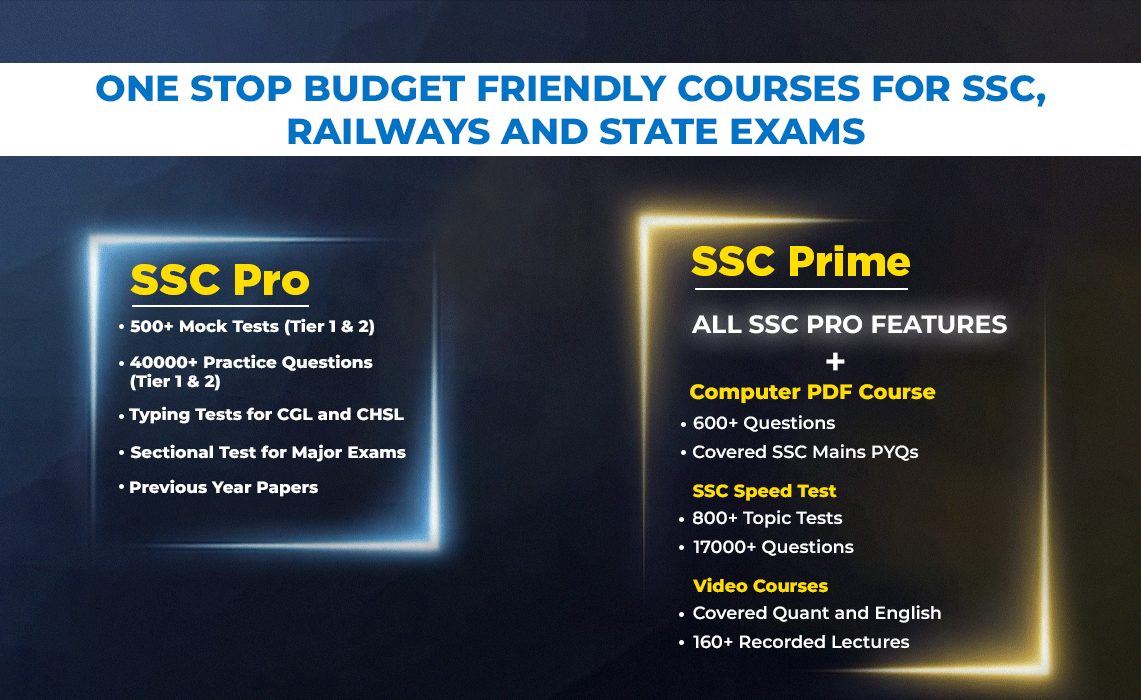
Join our exclusive Telegram group for expert guidance, personalized tips, and real-time solutions to boost your SSC exam prep. [Click here to join now!]
FAQs: Number System Questions for SSC GD
No. The level is matriculation (Class 10). The questions are very basic and conceptual.
You will definitely see 2 to 3 questions in the Elementary Mathematics section.
No. Just learn the basic remainder concept (like dividing by 9 or 11). Complex theorems like Fermat’s or Wilson’s are for higher-level exams (CGL), not GD.
Yes, simplification questions using BODMAS are often counted under the Number System in SSC GD.
You can download the free, exam-level PDF by clicking the link provided in the middle of this blog post.
- Sign Up on Practicemock for Updated Current Affairs, Topic Tests and Mini Mocks
- Sign Up Here to Download Free Study Material
Free Mock Tests for the Upcoming Exams
- IBPS PO Free Mock Test
- RBI Grade B Free Mock Test
- IBPS SO Free Mock Test
- NABARD Grade A Free Mock Test
- SSC CGL Free Mock Test
- IBPS Clerk Free Mock Test
- IBPS RRB PO Free Mock Test
- IBPS RRB Clerk Free Mock Test
- RRB NTPC Free Mock Test
- SSC MTS Free Mock Test
- SSC Stenographer Free Mock Test
- GATE Mechanical Free Mock Test
- GATE Civil Free Mock Test
- RRB ALP Free Mock Test
- SSC CPO Free Mock Test
- AFCAT Free Mock Test
- SEBI Grade A Free Mock Test
- IFSCA Grade A Free Mock Test
- RRB JE Free Mock Test
- Free Banking Live Test
- Free SSC Live Test