



NIACL AO 2025 is just around the corner. Hardly 20 days are left for the preliminary examination. In such a situation, one of the important sections that requires maximum time for your preparation is quantitative aptitude, and a strategic approach to cover all the important topics under the Quantitative Aptitude section. In this blog, we will cover the exam pattern, the most important quant topics to be covered on priority, and also the tips to solve questions quickly and with 90% accuracy. In the past, we have given strategies for the English and Reasoning sections, and here we are discussing the same for the Quant section.
NIACL AO Prelims Exam Pattern
The Preliminary Examinations, consisting of Objective Tests for 100 marks, will be conducted online. This would consist of 3 sections (with separate timings for each section) as follows:
| NIACL AO Prelims Exam Pattern 2025 | |||
| Name of Test/Section (not in sequence) | Type of test | Max. Marks | Duration for each test/ section (Separately timed) |
| English Language | Objective | 30 | 20 min |
| Reasoning Ability | Objective | 35 | 20 min |
| Quantitative Aptitude | Objective | 35 | 20 min |
| Total | 100 | 1 Hour | |
- There is a sectional cutoff decided by the conducting authority.
- There is sectional timing as well.
Most Important Topics of Quantitative Aptitude
Here is a list of topics of Quantitative Aptitude that you must cover on the first basis, then head towards other topics if the time permits. The list is made by our experts after thorough research and going through the past year’s trends. The topics are highly repetitive, and one can score high if prepared properly.
- Quadratic Equation
- Simplification/ Approximation
- Missing/ Wrong Number Series
- Pie Chart
- Table DI
- Arithmetic(Age, Partnership, Profit & Loss, Average, Boat & Stream, Time & Work)
Tips to prepare for Quantitative Aptitude
Here are a few tips to follow during your preparation, so that you can achieve maximum productivity and hence better scores.
Devote 8-10 hours every day
Hardly 20 days are left for the exam, in such a situation, you have to study for at least 8-10 hours. If you want to make up to the cutoff list, then you have to work hard, as the exam is quite tough and there are fewer vacancies, which makes it even more difficult. In such a case, to master quants, you have to practice rigorously.
Make a Ritual of practicing Simplification/Approximation on a daily basis
Practice at least 10 questions of Simplification and approximation daily in order to improve your calculation speed and accuracy. Also by solving these questions at the start of the day will set the rhythm for the whole day preparation.
Relate Arithmetic problems with daily life events
The arithmetic section includes topics such as percentage, ratio and proportion, conversion, mixture and alligation, time and speed, train, boat and stream, etc. These are those concepts that are used in our daily life events as well. So, for a better understanding of what a candidate can do is whenever you are doing some activity related to these concepts, like while making tea, proportion water and milk, and while driving, calculate speed manually without using the speedometers.
Solve DI sets in a Reverse manner
While solving DI sets, start with the tabular chart first, then head towards pie charts and caselets. Read the questions first and then understand the data as per the demand of the question. In this way, you will not take much time to solve data interpretation.
Make notes of Important formulas and conversions
Take a chart paper, note down all the important formulas and conversions, and paste this chart near your study area. Whenever you are solving questions, use this chart. This will help you in fastening your calculations and hence help you to use your time wisely during the examination.
Give as many mocks as you can and analyse properly
To master the quants section, practice is the only way. To practice, you need a huge question bank, and for this, you can take a mock test series where you can practice a lot of questions to practice. After giving mocks, analyse them as well. For the analysis part, what you can do is make a list of your mistakes and see how much time you have spent on those questions. Next, take a note of those questions that you’ve skipped or left unattempted. Why have you skipped those questions? Is it because you haven’t practiced enough, or do you not understand the concepts?
Conclusion
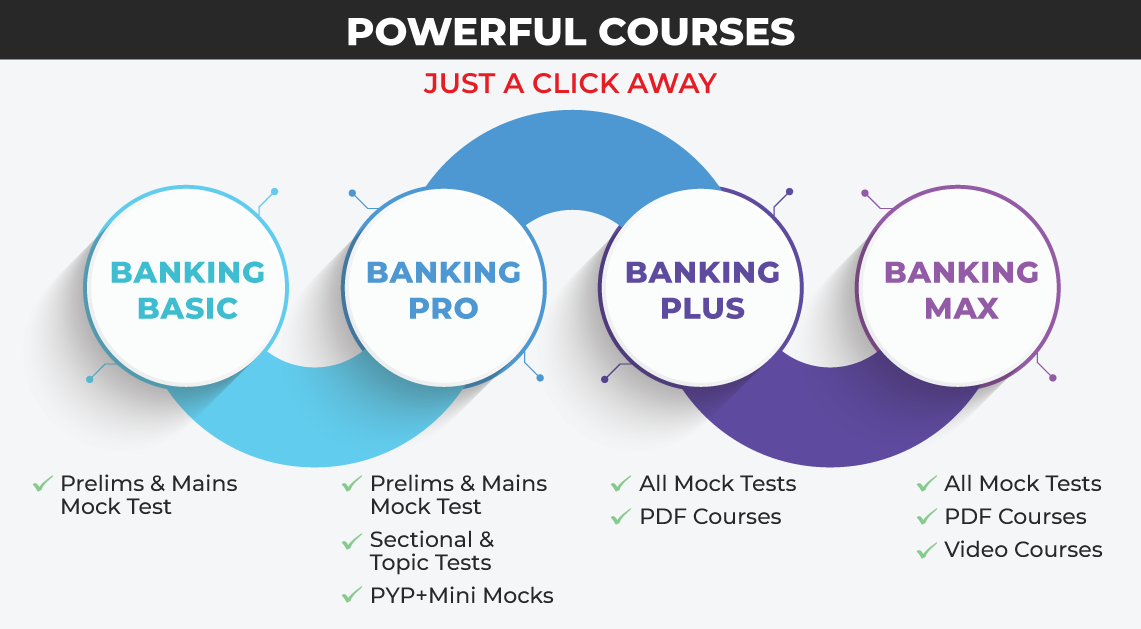
In this blog, we have given a master strategy to cover quantitative aptitude for NIACL AO 2025. We have also given a list of important topics based on previous year trends. To practice concepts by solving questions, you can take our mock test series and banking and insurance courses, where we provide video lectures and PDF courses along with mock tests and their analysis for 360-degree preparation. The link is given below.
Join our exclusive Telegram group where our experts are ready to answer all your queries, guide you in banking exam preparation, and give personalised tips to boost your success. Get access to real-time solutions, expert advice, and valuable resources to improve your study journey.
- Sign Up on Practicemock for Updated Current Affairs, Topic Tests and Mini Mocks
- Sign Up Here to Download Free Study Material
Free Mock Tests for the Upcoming Exams
- IBPS PO Free Mock Test
- RBI Grade B Free Mock Test
- IBPS SO Free Mock Test
- NABARD Grade A Free Mock Test
- SSC CGL Free Mock Test
- IBPS Clerk Free Mock Test
- IBPS RRB PO Free Mock Test
- IBPS RRB Clerk Free Mock Test
- RRB NTPC Free Mock Test
- SSC MTS Free Mock Test
- SSC Stenographer Free Mock Test
- GATE Mechanical Free Mock Test
- GATE Civil Free Mock Test
- RRB ALP Free Mock Test
- SSC CPO Free Mock Test
- AFCAT Free Mock Test
- SEBI Grade A Free Mock Test
- IFSCA Grade A Free Mock Test
- RRB JE Free Mock Test
- Free Banking Live Test
- Free SSC Live Test