


Banking exams like IBPS PO, SBI PO, IBPS Clerk, RRB PO, and RRB Clerk have transformed drastically over the last decade. This transformation is visible in terms of quest types asked in these exams. Earlier, questions were more direct, formula-based, and predictable, but with rising competition, exam bodies have shifted towards application-based, multi-concept, and time-intensive questions. Understanding this evolution is crucial for aspirants to plan preparation strategies effectively. In this blog, we have made a subject-wise complete analysis of Banking Exam Question Types and Difficulty Level Changes Over the Years.
Subject-wise Question Trends in Major Banking Exams
Banking exams have now become more demanding in terms of the difficulty level of the paper. Previously, the examiner focused on giving direct questions from topics mentioned in the syllabus. But now, indirect questions are asked, which consume more time to solve. Now, the number of questions from high-weightage topics has been increased, and the types of questions asked have also changed. To do a complete analysis of the types of questions asked of each subject now, you need to take a few of the latest updated mock test series. Based on what the exam demands, we have given a subject-wise analysis of question pattern trends for major banking exams below.

Quantitative Aptitude: From Basics to Data-Heavy Sets
A decade ago, Quantitative Aptitude questions revolved around simplification, quadratic equations, series, and arithmetic word problems. These were mostly formula-driven and scoring.
In recent years, the focus has shifted towards Data Interpretation (DI), where arithmetic, algebra, and number systems concepts are embedded inside lengthy DI sets. Caselets, missing tables, double pie charts, and arithmetic-based DI dominate Mains exams.
- Earlier Trend: Direct arithmetic and speed-based calculations.
- Now: Multi-layered DI, caselets, arithmetic-heavy sets, data sufficiency, and quantitative comparison.
- Impact: Students must prepare arithmetic from basic to advanced level, since Mains selection depends heavily on Quant DI scores.
Reasoning Ability: Shift Towards Puzzles & Critical Thinking
Reasoning used to focus on syllogisms, coding-decoding, inequalities, and seating arrangements in simple forms. With time, examiners raised the bar by introducing high-level puzzles, critical reasoning, and machine input-output patterns.
In Prelims, puzzles and seating arrangements now take up 60–70% of the section. In Mains, logical reasoning, cause-effect, statement-assumption, and strong/weak arguments play a major role.
- Earlier Trend: Small sets of syllogisms, easy blood relation, simple seating.
- Now: Complex puzzles (box, floor, uncertain, circular with conditions), critical reasoning, coded inequalities.
- Impact: Aspirants must practice puzzles regularly and improve accuracy + speed, since reasoning has become the most time-consuming section.
English Language: From Vocabulary to Comprehension & Analysis
Earlier, English questions were dominated by synonyms, antonyms, direct grammar rules, cloze tests, and error spotting. These were straightforward and could be memorized.
Today, banking exams have shifted focus to Reading Comprehension (RC) and application-based grammar. Vocabulary plays a smaller role, mostly within RCs. In Mains, para jumbles, inference-based RCs, connectors, word usage, and match-the-column are common.
- Earlier Trend: Direct vocab, grammar rules, fill in the blanks.
- Now: Inference-heavy RC, context-based grammar, new formats like word rearrangement.
- Impact: Candidates should focus on comprehension skills and grammar basics instead of rote memorization.
General Awareness: From Static GK to Current & Financial Awareness
Static GK questions (capitals, currencies, dams, rivers, books, etc.) dominated banking exams until 2015. With the rise of dynamic banking and financial reforms, the focus shifted to Current Affairs + Banking Awareness + Economy updates.
In recent years, questions on RBI circulars, government schemes, international summits, digital banking, and financial markets have become regular. Static GK still appears but in very limited numbers.
- Earlier Trend: Static GK-heavy (history, geography, general science).
- Now: Current affairs of last 4–6 months, banking & economy, RBI notifications.
- Impact: Daily newspaper reading and monthly CA capsules are now essential.
Descriptive Writing & Interview: Analytical & Opinion-Based
Earlier, descriptive tests were basic essay or letter writing on general topics. Over time, exams like SBI PO and IBPS PO have raised the difficulty, asking analytical essays on digital banking, the economy, and financial inclusion. They have also changed the syllabus of descriptive paper. Now, report writing, email writing, precis writing, and situational analysis writing are asked in SBI PO instead of essay and letter writing.
Similarly, interviews earlier focused on personal background. Today, they are more banking & economy-focused, testing awareness of digital finance, monetary policy, and the role of banks.
- Earlier Trend: General essays and HR-style interviews.
- Now: Economy & banking-focused essays, opinion-based questions, situational interviews. The Descriptive Writing syllabus has been shifted to Email Writing, Report Writing, Precis Writing, and Situational Analysis writing in major banking exams like SBI PO.
- Impact: Aspirants must follow banking awareness + current economy updates for strong performance in the interview.
Preparation Guidance Based on Overall Changes
The overall change across banking exams shows a shift from memory-based to application-based questions. Exams now demand conceptual clarity, practice of complex problem types, and strong analytical ability.
Preparation Strategy Based on Trends:
- Strengthen arithmetic basics, then move to advanced DI for Mains.
- Practice all types of puzzles & critical reasoning.
- Build Speed and Accuracy through mock tests, topic tests, and sectional tests.
- Focus on the analysis of mock tests so that you know what type of questions you are not able to solve in less time. With practice, your speed will eventually improve.
- Focus on RC and grammar application, not rote learning vocabulary.
- Prepare current + banking awareness, not just static GK.
- Work on your descriptive writing + interview skills.
Evolution of Question Types in Banking Exams (2010 – 2025)
Check complete analysis of question pattern changes in major banking exams.
| Exam | Earlier Question Types (2010–2014) | Recent Question Types (2018–2025) |
| IBPS Clerk | – Simplification & Approximation – Direct Arithmetic (SI/CI, Profit-Loss) – Simple Puzzles & Seating Arrangements – Direct Error Spotting, Fill in the Blanks- Static GK (Capitals, Currencies) | – DI-based Arithmetic (Tabular, Caselet) – Complex Seating & Floor Puzzles – Para Jumbles, RC-based Inference – Match-the-Column, Word Usage – Current Affairs + Banking Awareness |
| SBI Clerk | – Similar to IBPS Clerk but slightly tougher – Basic RC & Cloze Tests – Static GK heavy – Simple Coding-Decoding | – Puzzle-dominant Reasoning (Box, Floor, Circular) – Arithmetic-heavy DI – Inference & Connector-based English – Dynamic Current Affairs, Economy & RBI Updates |
| IBPS PO | – Arithmetic + Simplification heavy – Linear Seating, Inequalities, Syllogisms – Direct Vocabulary (Synonyms, Antonyms) – Static GK & Banking Terms | – High-level DI (Caselets, Missing Tables) – Multi-condition Seating, Machine Input -Output- RC with Critical Reasoning, Cloze Test Variations- Banking Awareness + Economy Updates – Descriptive Essay/Comprehension on Financial Topics |
| SBI PO | – Similar to IBPS PO but with descriptive writing – Essay/Letter on General Topics – GK: More static than dynamic | – Analytical DI (Double Pie, Radar Graphs) – Critical Reasoning & Statement-based Questions- Contextual Grammar, Word Rearrangement – Economy-focused GA (Digital Banking, RBI Circulars) – Descriptive Writing (Email, Report, Precis, and situation analysis) on Banking/Economy topics |
| RRB Clerk | – Simplification, Number Series, Easy Arithmetic – Blood Relation, Direction Sense – Cloze Test, Spotting Errors – Static GK (Rivers, Capitals, Books) | – Arithmetic-based DI (Table, Graphs) – Puzzle-based Reasoning (Seating, Scheduling) – RC-based English, Match-the-Column – Current Affairs (Govt Schemes, Rural Economy, Digital Finance) |
| RRB PO | – Arithmetic (Time & Work, SI/CI, Profit-Loss) – Easy Puzzles, Coding-Decoding – Vocabulary-based English – Static GK + Banking Basics | – Caselet DI with Arithmetic Mix – High-level Puzzles, Coded Inequalities – RC with Inference & Para Completion – Current Affairs + Financial Awareness (Schemes, NABARD, Rural Banking) |
Insights from the Table
- Reasoning has shifted from direct questions (syllogisms, coding-decoding) to complex puzzles & critical reasoning.
- Quant has evolved from simplification & direct arithmetic to data-heavy DI and caselets.
- English has reduced vocabulary-based Qs and increased RC + inference-based formats.
- GA moved from static GK to dynamic current affairs, banking awareness, and financial economy.
- Descriptive Writing now focuses more on banking/economy topics than general essays.
Conclusion
Banking exam question patterns have evolved to identify candidates with speed, accuracy, adaptability, and analytical skills which are the qualities needed in modern banking jobs. Aspirants should not rely on old preparation styles but adapt to new-age exam demands. Preparing common topics from basic to advanced levels is crucial, since Mains scores ultimately decide final selection in the merit list.
Know What Our Successful Aspirant Says…

Disclaimer: The analysis of banking exam question types and difficulty levels is for informational and practice purposes only. It is not official or exhaustive. Actual exam patterns may vary. Aspirants should always verify details through official IBPS, SBI, and RRB notices for authentic guidance.
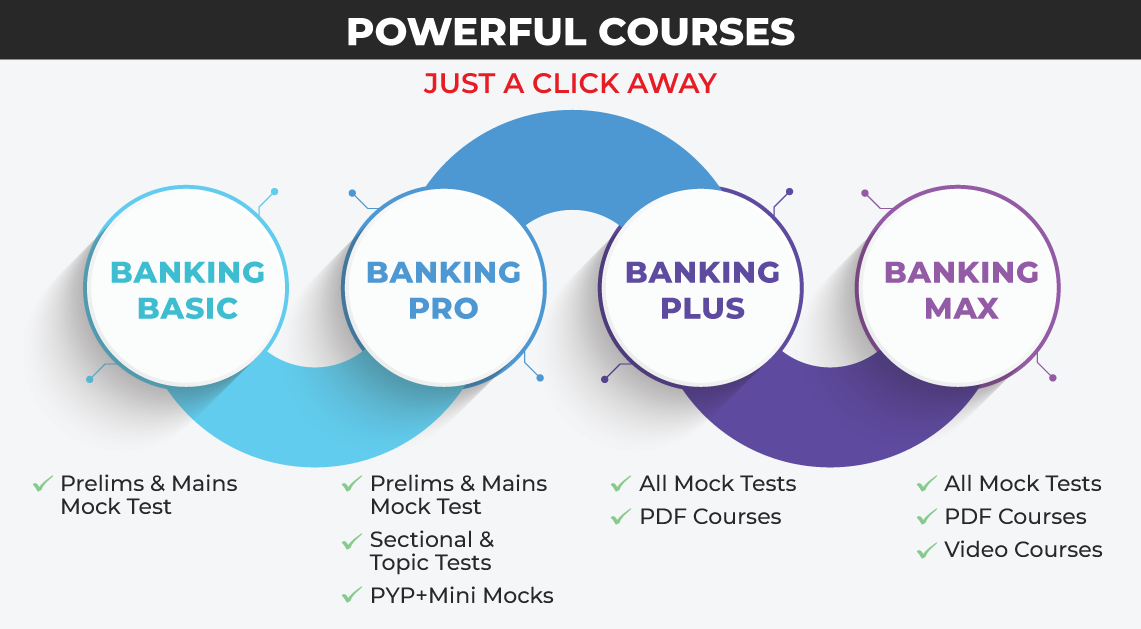
Our Banking Preparation Package includes topic tests, sectional tests, rank boosters for prelims, previous year paper tests, e-books, CA tests, Quizzes, live tests, PDF Course, and more. Discover our banking and insurance packages in detail from the link provided below!
Join our exclusive Telegram group, where our experts are ready to answer all your queries, guide you in banking exam preparation, and give personalised tips to boost your success. Get access to real-time solutions, expert advice, and valuable resources to improve your study journey.
FAQs
The Reasoning Ability and Quantitative Aptitude sections have changed the most. Earlier, direct questions like syllogisms or simplification were common. Today, the focus is on high-level puzzles, data interpretation, and multi-concept problems, making them more challenging and time-consuming.
English used to be dominated by vocabulary-based questions, such as synonyms, antonyms, and direct grammar rules. In recent years, it has shifted towards reading comprehension, inference, and context-based grammar, requiring a deeper understanding instead of memorization.
Yes. IBPS Clerk and SBI Clerk exams, which earlier focused on direct simplification, easy reasoning, and static GK, now include mini DI sets, high-level seating arrangements, inference-based RCs, and dynamic GA, making them more competitive.
Descriptive tests earlier asked general essays or letter writing. Now, topics are banking and economy-focused (digital payments, financial inclusion, RBI policies, inflation). This shift checks not only writing skills but also awareness of current issues.
- Sign Up on Practicemock for Updated Current Affairs, Topic Tests and Mini Mocks
- Sign Up Here to Download Free Study Material
Free Mock Tests for the Upcoming Exams
- IBPS PO Free Mock Test
- RBI Grade B Free Mock Test
- IBPS SO Free Mock Test
- NABARD Grade A Free Mock Test
- SSC CGL Free Mock Test
- IBPS Clerk Free Mock Test
- IBPS RRB PO Free Mock Test
- IBPS RRB Clerk Free Mock Test
- RRB NTPC Free Mock Test
- SSC MTS Free Mock Test
- SSC Stenographer Free Mock Test
- GATE Mechanical Free Mock Test
- GATE Civil Free Mock Test
- RRB ALP Free Mock Test
- SSC CPO Free Mock Test
- AFCAT Free Mock Test
- SEBI Grade A Free Mock Test
- IFSCA Grade A Free Mock Test
- RRB JE Free Mock Test
- Free Banking Live Test
- Free SSC Live Test