


Mixture and Alligation is one of the complex topics in the RRB Clerk 2025 Numerical Ability Section. Usually, the students get confused in understanding this concept. But if you understand the key concepts well, this can be considered as one of the scoring segments under the numerical ability section. To help you build accuracy and speed in this topic, we have compiled a high-quality practice set you can download as a free PDF. This blog covers the exam, important concepts, shortcuts, and mistakes to avoid.
Download Mixture and Alligation Questions for RRB Clerk Exam 2025
In this section, we are providing Mixture and Alligation Questions for the RRB Clerk Exam 2025. Our experts curate these after analysing previous years’ patterns. Download Now and practice as many questions as you can.

Key Concepts of Mixture and Alligation
In this section, we are discussing some key concepts regarding mixture and alligation.
1. Weighted Average
Before learning alligation, understanding the weighted average is essential.
Formula:

Example:
The milk solution has 70% milk initially. If 20 litres are added to 10 litres of another solution with 40% milk—
Weighted average = (20×70 + 10×40) / 30 = 60%
This acts as the base for mixture calculations.
2. Alligation Rule
The alligation method helps compare the values of two mixtures to achieve a mean.
Formula:
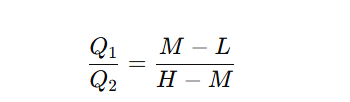
Where:
- L = Lower quantity value
- H = Higher quantity value
- M = Mean value required
- Q1/Q2 = Ratio of quantities to be mixed
Example:
Mix 30% alcohol with pure alcohol (100%) to get 50%.
Ratio = (50−30) : (100−50) = 20 : 50 = 2 : 5
3. Replacement Concept
When a certain amount of solution is removed and replaced, the concentration reduces gradually.
Formula for k replacements:

Where:
- V = Total volume
- x = Removed volume
This is frequently asked in RRB exams.
Types of Mixture & Alligation Questions Asked in RRB Clerk
Two Mixtures Mixed to Achieve a Desired Value
Very standard and easiest to score, here two mixtures are given, and by mixing them, you get the desired mix.
Example:
Mix tea costing ₹120/kg and ₹200/kg to get tea worth ₹160/kg.
Ratio = (200–160) : (160–120) = 40 : 40 = 1 : 1
Questions on Concentration (Milk/Water Ratio)
Another commonly asked category. Use alligation or direct proportion to get the answer quickly.
Example:
The milk solution has 70% milk. How much water should be added to 30 litres give 50% milk?
Replacement-Based Problems
These appear tricky but are conceptually simple.
Example:
A 40-litre mixture has 25% alcohol. 10 litres are removed and replaced with water. Find a new concentration?
Remaining alcohol = 0.25 × 40 × (30/40) = 7.5 litres
Profit-Loss + Mixture Combination
Shopkeeper mixes two items to maintain the cost price or earn a profit.
Example:
Mix two sugar varieties costing ₹20/kg and ₹30/kg so that the final cost is ₹25/kg.
Ratio = (30−25) : (25−20) = 5 : 5 = 1 : 1
How to Solve Mixture & Alligation Questions in RRB PO Exam?
Always Compare Similar Units before solving the question
In mixture questions, RRB exams often mix terms like percentage, cost price, concentration, and quantity. The first rule is simple: compare only similar units.
If one value is in %, the other must also be in %. If one is in rupees/kg, the other must be in the same unit. This prevents incorrect allocation setups and avoids unnecessary re-calculation during the exam.
Attempt Alligation Only When the Mean Lies Between Two Values
The alligation method works only when the required mean lies between the lower (L) and higher (H) values. If the mean is outside this range, the mixture is not possible. Checking this one condition saves both time and mistakes, especially when options look confusing.
Use the Alligation Diagram for Speed
The alligation diagram is the fastest approach for prelims.
A simple cross-subtraction of values gives the ratio directly without writing any formula. This visual method helps you solve mixture questions in 10–15 seconds, making it ideal for speed-based papers like RRB Clerk.
Memorise Common Pairs
Some percentage combinations appear repeatedly across shifts. These ready-made pairs save time and reduce unnecessary calculations in the heat of the exam. Having these ratios memorised helps in quick elimination:
- 25%–75% → 1 : 1
- 20%–40% → 1 : 1
- 30%–60% → 1 : 2
Replace Step-by-Step in Replacement Questions
Replacement-based problems become tricky only when students skip steps.
Always reduce the quantity first, apply the concentration change, and then calculate the new amount.
A step-by-step flow ensures accuracy and prevents small errors that can cost marks in prelims.
Common Mistakes to Avoid while solving questions
Here we are discussing the common mistakes to avoid while solving questions.
Mixing Percentage with Quantity
One of the most common mistakes is comparing two different units, for example:
10% milk + 20 litres of water.
This comparison is invalid because percentages and litres are not the same unit. Always convert both values into either a percentage or an actual quantity before solving. This single step prevents most calculation errors in mixture questions.
Using Alligation When the Mean Is Outside the Range
The rule of alligation works only when: [ L < M < H ]
If the mean does not lie between the lower and higher values, the ratio becomes negative or meaningless. This means the mixture is simply not possible. Quickly check this condition before applying the alligation diagram, as this saves time and avoids wrong ratios.
Incorrect Ratio Simplification
Under exam pressure, students often divide incorrectly or simplify ratios too fast. Always take a moment to check the LCM and reduce the ratio properly. A small simplification mistake can change the entire final answer, so stay accurate even in easy questions.
Wrong Application of the Replacement Formula
Replacement questions are tricky because removing and adding is NOT the same as direct subtraction. Every time a portion is removed, the concentration changes, so you must apply the percentage reduction correctly. Following the step-by-step process ensures you track the mixture accurately after each replacement.
Overcomplicating Simple Questions
Not every mixture question requires a formula. Some can be solved using simple logic or proportionality, especially in prelims. Choose the quickest method, not the longest one.
This helps save time for DI and arithmetic sets later.
Conclusion
To solve questions from more such topics, you can buy our test series, where you can reattempt the full-length mock tests and get a Detailed Comparison with the Topper, compare your Time, Score, Accuracy, Correct/Wrong Answers, and even the Average Performance side-by-side.
Join our exclusive Telegram group where our experts are ready to answer all your queries, guide you in banking exam preparation, and give personalised tips to boost your success. Get access to real-time solutions, expert advice, and valuable resources to improve your study journey. [Click here to join now
IBPS RRB PO 2025 Related Link
| IBPS RRB PO Salary | IBPS RRB PO Exam Pattern |
| IBPS RRB PO Cut Off | IBPS RRB PO Previous Year Question Papers |
FAQs
Usually, 1–2 questions appear in prelims, often from a simple mixture or replacement type.
No. Weighted average often works. But alligation is faster and preferred for prelims.
Yes, at least one question in some shifts involves the replacement concept.
Not really. Most questions are direct and solvable in under 30 seconds.
Absolutely. With basic percentage knowledge and 1–2 days of practice, students can master this easily.
- Sign Up on Practicemock for Updated Current Affairs, Topic Tests and Mini Mocks
- Sign Up Here to Download Free Study Material
Free Mock Tests for the Upcoming Exams
- IBPS PO Free Mock Test
- RBI Grade B Free Mock Test
- IBPS SO Free Mock Test
- NABARD Grade A Free Mock Test
- SSC CGL Free Mock Test
- IBPS Clerk Free Mock Test
- IBPS RRB PO Free Mock Test
- IBPS RRB Clerk Free Mock Test
- RRB NTPC Free Mock Test
- SSC MTS Free Mock Test
- SSC Stenographer Free Mock Test
- GATE Mechanical Free Mock Test
- GATE Civil Free Mock Test
- RRB ALP Free Mock Test
- SSC CPO Free Mock Test
- AFCAT Free Mock Test
- SEBI Grade A Free Mock Test
- IFSCA Grade A Free Mock Test
- RRB JE Free Mock Test
- Free Banking Live Test
- Free SSC Live Test