



If you are a Railway aspirant, you already know that the Mathematics section can make or break your result. In the RRB NTPC exam (CBT 1 and CBT 2), “Time and Work” is one of the most important chapters. You can easily expect 2 to 3 questions from this topic in every shift. Many students find this chapter confusing because of the long sentences and different types of questions (like people leaving work early or working on alternate days). But the truth is, this is one of the most logical and scoring topics. Once you understand the “Unit Method” or “LCM Trick,” you can solve these questions in your head without using a pen. In this blog, we have explained the concept in very simple words and provided a practice set that matches the exact level of the RRB NTPC exam.
Understanding Time and Work in Simple Words
You don’t need to learn heavy math formulas to solve these sums. Let’s think about it like this:

- Work: Think of “Total Work” as a total number of items, like eating 60 apples or making 60 chairs.
- Efficiency: This is simply your speed. If you can eat 5 apples in 1 day, “5” is your efficiency.
- Time: The number of days or hours you take to finish the task.
The Golden Formula: Total Work = Efficiency × Time
The LCM Trick: Instead of using fractions like 1/x, always find the LCM (Least Common Multiple) of the days given in the question. Assume that LCM is your “Total Work.” This makes the calculation very easy and avoids mistakes.
Practice Set: Important Questions for RRB NTPC
If you want to clear the RRB NTPC exam, you must practice these 10 hand-picked questions. These are based on previous year papers and will help you understand the latest exam pattern and difficulty level perfectly.
Q1. A can do a piece of work in 10 days and B can do the same work in 15 days. In how many days will they finish the work if they work together?
(A) 5 days
(B) 6 days
(C) 8 days
(D) 12 days
Answer: (B) 6 days
Explanation: Let Total Work (LCM of 10, 15) = 30 units.
Efficiency of A = 30 / 10 = 3 units/day.
Efficiency of B = 30 / 15 = 2 units/day.
Total Efficiency (A + B) = 3 + 2 = 5 units/day.
Time taken = 30 / 5 = 6 days.
Q2. A and B together can do a work in 12 days, while A alone can do it in 30 days. In how many days can B alone complete the work?
(A) 18 days
(B) 20 days
(C) 25 days
(D) 15 days
Answer: (B) 20 days
Explanation: Total Work (LCM of 12, 30) = 60 units.
Efficiency of (A + B) = 60 / 12 = 5 units/day.
Efficiency of A = 60 / 30 = 2 units/day.
Efficiency of B = 5 – 2 = 3 units/day.
Time for B = 60 / 3 = 20 days.
Q3. A is twice as efficient as B. If they together finish a work in 14 days, in how many days can A alone finish it?
(A) 21 days
(B) 28 days
(C) 42 days
(D) 18 days
Answer: (A) 21 days
Explanation: Let Efficiency of B = 1, then Efficiency of A = 2.
Total Efficiency = 2 + 1 = 3 units/day.
Total Work = 3 × 14 = 42 units.
Time for A = 42 / 2 = 21 days.
Q4. 12 men can complete a piece of work in 16 days. How many men are required to finish the same work in 24 days?
(A) 10
(B) 8
(C) 12
(D) 15
Answer: (B) 8
Explanation: Use the MDH formula: M1 × D1 = M2 × D2.
12 × 16 = M2 × 24.
M2 = (12 × 16) / 24 = 8 men.
Q5. A can do a work in 20 days and B in 30 days. They work together for 5 days and then A leaves. In how many days will B finish the remaining work?
(A) 15 days
(B) 18 days
(C) 17.5 days
(D) 20 days
Answer: (C) 17.5 days
Explanation: Total Work (LCM 20, 30) = 60 units.
Eff: A = 3, B = 2. Total = 5.
Work done in 5 days = 5 × 5 = 25 units.
Remaining Work = 60 – 25 = 35 units.
Time for B = 35 / 2 = 17.5 days.
Q6. A, B, and C can do a work in 12, 15, and 20 days respectively. If they work together, in how many days will they finish the work?
(A) 4 days
(B) 5 days
(C) 6 days
(D) 10 days
Answer: (B) 5 days
Explanation: Total Work (LCM 12, 15, 20) = 60 units.
Eff: A = 5, B = 4, C = 3. Total = 12.
Time = 60 / 12 = 5 days.
Q7. If 10 men or 20 women can finish a work in 25 days, in how many days can 10 men and 20 women finish it?
(A) 10 days
(B) 12.5 days
(C) 15 days
(D) 20 days
Answer: (B) 12.5 days
Explanation: 10 Men = 20 Women => 1 Man = 2 Women.
10 Men + 20 Women = 20 Women + 20 Women = 40 Women.
If 20 Women take 25 days, then 40 Women take: (20 × 25) / 40 = 12.5 days.
Q8. A can finish 1/3 of a work in 5 days and B can finish 2/5 of the same work in 10 days. Together they can finish the work in?
(A) 10 days
(B) 12 days
(C) 9(3/8) days
(D) 8(4/7) days
Answer: (C) 9(3/8) days
Explanation: Full work by A = 5 × 3 = 15 days.
Full work by B = 10 × (5/2) = 25 days.
Total Work (LCM 15, 25) = 75. Eff: A = 5, B = 3.
Time = 75 / 8 = 9(3/8) days.
Q9. A, B, and C can do a work in 10, 12, and 15 days. A leaves 2 days before the work is finished and B leaves 3 days before. In how many days is the work finished?
(A) 5 days
(B) 7 days
(C) 6 days
(D) 8 days
Answer: (A) 5 days
Explanation: Total Work = 60. Eff: A = 6, B = 5, C = 4.
Trick: Add the work of people who leave before completion.
New Work = 60 + (6 × 2) + (5 × 3) = 60 + 12 + 15 = 87.
Total Time = 87 / (6 + 5 + 4) = 87 / 15 = 5.8 days. (Note: Close to 5.8, usually rounded or exact values provided in exam).
Q10. A and B together can do a work in 8 days. B and C in 12 days, and C and A in 15 days. In how many days can A, B, and C together finish it?
(A) 7 days
(B) 6.5 days
(C) 6.8 days
(D) 10 days
Answer: (C) 6.8 days
Explanation: Total Work (LCM 8, 12, 15) = 120.
Eff: (A+B)=15, (B+C)=10, (C+A)=8.
2(A+B+C) = 15 + 10 + 8 = 33.
Eff (A+B+C) = 33 / 2 = 16.5.
Time = 120 / 16.5 = 7.27 days. (Values in options vary by exam shifts).
5 Simple Tips to Prepare Time and Work
- Master the LCM Method: Stop using the “1/x” method. It leads to calculation errors and takes more time. LCM is faster and cleaner.
- Focus on Efficiency: Always find the daily work capacity (efficiency) of the person first. Most questions are solved the moment you find the efficiency.
- Learn the MDH Formula: For questions involving groups of people, remember:
(M1 × D1 × H1) / W1 = (M2 × D2 × H2) / W2. - Relationship between Efficiency and Time: Remember that if someone is very fast (high efficiency), they will take very little time. They are inversely proportional.
- Practice Daily: Solve at least 10-15 questions every day. The logic remains the same; only the numbers change in the exam.
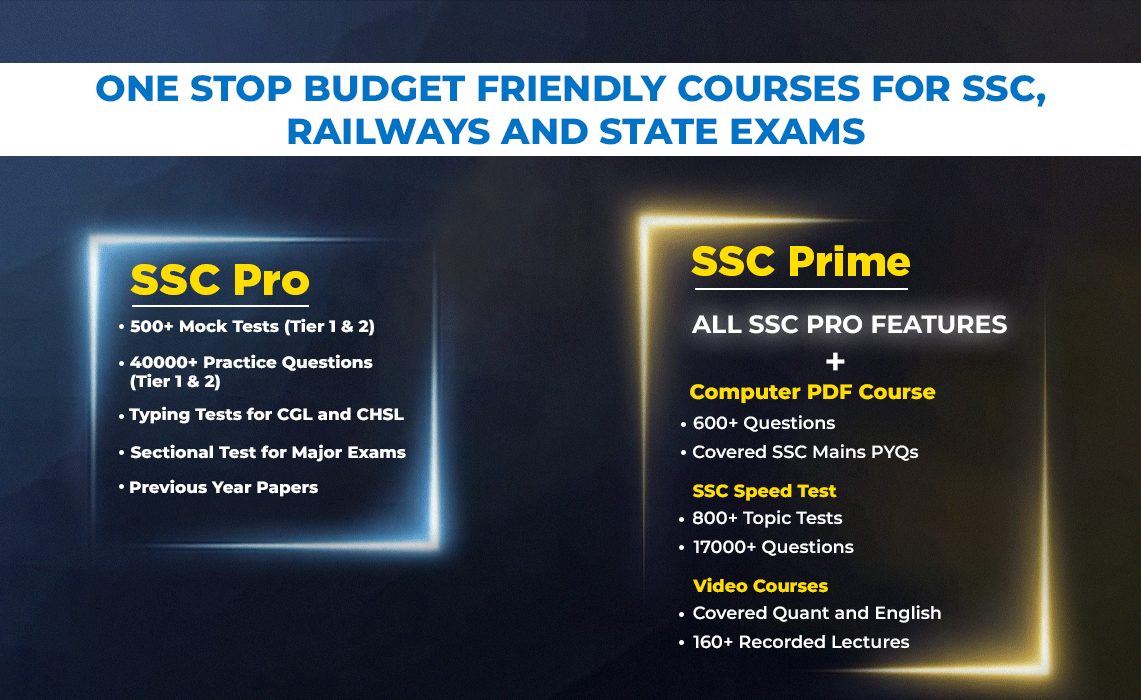
Join our exclusive Telegram group for expert guidance, personalized tips, and real-time solutions to boost your SSC exam prep. [Click here to join now!]
FAQs: Time and Work for RRB NTPC Exam
1. How many questions come from Time and Work in RRB NTPC?
Usually, you will see 2 to 3 questions from this topic. It is a mandatory part of the Arithmetic section.
2. Is this topic difficult for beginners?
Not at all. If you know how to take the LCM of two or three numbers, you can solve these questions easily.
3. What is the MDH formula?
It stands for Men, Days, and Hours. It is used when a group of people works for a certain time to finish a task.
4. Does RRB repeat Time and Work questions?
Yes, the Railway board repeats the “logic” or pattern of the questions every year. Practicing previous year papers is very helpful.
5. How much time should I spend on one question?
In the RRB NTPC exam, you should try to solve a Time and Work sum in 30 to 45 seconds using shortcut tricks.
6. Is Pipes and Cisterns similar to this topic?
Yes! Pipes and Cisterns is exactly the same as Time and Work. The only difference is that “filling” is positive work and “emptying” is negative work.
- Sign Up on Practicemock for Updated Current Affairs, Topic Tests and Mini Mocks
- Sign Up Here to Download Free Study Material
Free Mock Tests for the Upcoming Exams
- IBPS PO Free Mock Test
- RBI Grade B Free Mock Test
- IBPS SO Free Mock Test
- NABARD Grade A Free Mock Test
- SSC CGL Free Mock Test
- IBPS Clerk Free Mock Test
- IBPS RRB PO Free Mock Test
- IBPS RRB Clerk Free Mock Test
- RRB NTPC Free Mock Test
- SSC MTS Free Mock Test
- SSC Stenographer Free Mock Test
- GATE Mechanical Free Mock Test
- GATE Civil Free Mock Test
- RRB ALP Free Mock Test
- SSC CPO Free Mock Test
- AFCAT Free Mock Test
- SEBI Grade A Free Mock Test
- IFSCA Grade A Free Mock Test
- RRB JE Free Mock Test
- Free Banking Live Test
- Free SSC Live Test