


The Hindu Editorial Vocabulary is highly useful for Bank and SSC exams, especially for the English section. Regular reading improves vocabulary, comprehension, and grammar. Editorials contain high-quality language, idioms, phrasal verbs, and advanced vocabulary frequently asked in exams. Learning 10–15 new words daily and reading the summary of the passage from editorials helps in scoring better in Cloze Tests, Reading Comprehension, Fill in the Blanks, and Synonyms-Antonyms. It also boosts your confidence in descriptive writing and interviews. Consistent practice with these words, along with usage in sentences, enhances retention. Hence, the Hindu editorials serve as a rich and reliable source for English preparation in competitive exams.
Reading Comprehension passages are an integral part of the English section of government exams. However, for beginners, such passages can seem difficult. The Hindu Editorial is an excellent tool to improve the reading and understanding of passages. The language is very similar to the passages that generally appear in the English section of government exams, and each paragraph is filled with exam-relevant vocabulary and real-world topics. First, go through the vocabulary section and read the meanings of the words, their Hindi translations, synonyms, and antonyms. Then read the summary of the passage provided to you. Once you know the meanings of the words, read the passage carefully, and you will feel that it is much easier to understand the main idea and tone of the passage. This method not only improves the understanding of reading comprehension passages but also builds a strong vocabulary base for cloze tests and sentence fillers in the exam. Doing this every day will boost your confidence in the English section and help improve your scores in sections such as Reading Comprehension, Cloze Tests, and Sentence Fillers.
The Hindu Editorial 2nd September 2025
Questionable cheer: On GDP growth numbers
The government might find it difficult to meet its fiscal deficit targets
The GDP growth numbers released on Friday (August 29, 2025), showing that growth in Q1 of this financial year stood at 7.8%, came as a pleasant surprise at a time when most of the commentary has been about the factors holding growth back. For instance, even the Reserve Bank of India, as recently as August 6, 2025, had predicted that growth would be at 6.5% in Q1. It was off by a significant 1.3 percentage points less than a month before the data came out, something it must introspect about. Within the data, the strong manufacturing sector growth, of 7.7%, was especially heartening given that it came on a relatively high base of 7.6% in Q1 of last year. Some commentators have said that this is because companies were ramping up production and exports ahead of the August tariff deadline by the U.S. However, given that merchandise exports grew just 1.6% in Q1, the more likely reason is that companies were catering to domestic demand. However, the numbers released by the government do not provide much clarity here. The manufacturing sector, as measured by the Index of Industrial Production, grew at 3.3% in Q1, slower than the 4.3% seen in Q1 last year. Steel consumption was drastically slower in Q1 this year than last year. Both private and commercial vehicle sales actually contracted 5.4% and 0.6%, respectively, in Q1. Railway freight traffic grew by 2.5% versus 5% last year, while air freight grew at 5.4% compared to 13.9% last year. Two-wheeler vehicle sales contracted 6.2% while three-wheeler sales were flat at 0.1% growth. Diverse data show that the core and consumer sectors were slowing, and so the pickup in the manufacturing sector is worth a deep examination. The strong performance by the services sector is welcome, and shows how dependent the Indian economy is on this sector.
Chief Economic Adviser V. Anantha Nageswaran has said that the government was retaining its 6.3%-6.8% growth prediction for the year. This means that, with 7.8% in Q1, the government expects growth to significantly slow down in the remaining three quarters, despite its statements about the limited impact of the U.S. tariffs. The data also call into question the robustness of the statistical system, since a nominal GDP growth of 8.8% assumes that inflation was just 1% in Q1. Clearly, price levels are not being captured adequately. A relatively low nominal growth rate also makes it more challenging for the government to meet its fiscal deficit targets, especially at a time when it expects a revenue hit due to the upcoming GST rate cuts. Overall, the GDP numbers have brought cheer, but also several questions.
The Hindu Editorial 2nd September 2025 Vocabulary
- Questionable(adjective)
- Meaning: Doubtful, open to suspicion or challenge.
- Synonyms: doubtful, uncertain, disputable, debatable
- Antonyms: certain, reliable, unquestionable, valid
- Cheer(noun, in context)
- Meaning: A feeling of happiness or encouragement.
- Synonyms: joy, encouragement, optimism, relief
- Antonyms: gloom, discouragement, despair, sadness
- Pleasant surprise(noun phrase)
- Meaning: An unexpected positive outcome.
- Synonyms: delight, good shock, unexpected joy, boon
- Antonyms: disappointment, shock, setback, letdown
- Commentary(noun)
- Meaning: Opinions or analysis about an event or situation.
- Synonyms: analysis, explanation, discussion, opinion
- Antonyms: silence, neglect, ignorance
- Predicted(verb – past tense)
- Meaning: Estimated or forecast something in advance.
- Synonyms: forecast, anticipated, projected, expected
- Antonyms: ignored, overlooked, miscalculated
- Off(adjective/adverb, in context)
- Meaning: Incorrect or not accurate (e.g., prediction was off).
- Synonyms: inaccurate, wrong, mistaken, erroneous
- Antonyms: correct, accurate, precise, exact
- Introspect(verb)
- Meaning: To reflect or examine one’s own actions or thoughts.
- Synonyms: reflect, self-examine, contemplate, reconsider
- Antonyms: ignore, overlook, disregard
- Heartening(adjective)
- Meaning: Encouraging, giving hope.
- Synonyms: encouraging, reassuring, uplifting, inspiring
- Antonyms: discouraging, depressing, disappointing, disheartening
- Relatively(adverb)
- Meaning: In comparison; to a certain degree.
- Synonyms: comparatively, somewhat, proportionately
- Antonyms: absolutely, totally, completely
- Base (noun, in context)
- Meaning: The starting level or reference point used for comparison.
- Synonyms: foundation, benchmark, reference point
- Antonyms: peak, result, outcome
- Ramping up (phrasal verb)
- Meaning: Increasing or intensifying efforts.
- Synonyms: boosting, accelerating, stepping up, scaling up
- Antonyms: slowing down, reducing, cutting back, scaling down
- Deadline (noun)
- Meaning: A fixed date or time by which something must be done.
- Synonyms: due date, cutoff, time limit, target date
- Antonyms: extension, delay, postponement
- Catering to (phrasal verb)
- Meaning: Providing for or serving the needs of someone/something.
- Synonyms: serving, supplying, accommodating, fulfilling
- Antonyms: neglecting, ignoring, refusing
- Drastically (adverb)
- Meaning: Severely, extremely, or to a great degree.
- Synonyms: severely, intensely, profoundly, sharply
- Antonyms: mildly, slightly, gradually, gently
- Contracted (verb – past tense)
- Meaning: Reduced in size, number, or volume.
- Synonyms: shrank, declined, reduced, diminished
- Antonyms: expanded, grew, increased, rose
- Diverse (adjective)
- Meaning: Varied; showing different kinds or forms.
- Synonyms: varied, assorted, heterogeneous, multifarious
- Antonyms: uniform, similar, identical, homogeneous
- Welcome (adjective, in context)
- Meaning: Pleasing or gladly received.
- Synonyms: pleasing, appreciated, agreeable, desirable
- Antonyms: unwelcome, unpleasant, undesirable, discouraging
- Retaining (verb – present participle)
- Meaning: Keeping or continuing to hold.
- Synonyms: holding, maintaining, preserving, sustaining
- Antonyms: releasing, abandoning, surrendering, discarding
- Call into question (idiom/verb phrase)
- Meaning: To raise doubts about something’s validity or reliability.
- Synonyms: doubt, challenge, dispute, contest
- Antonyms: confirm, affirm, validate, support
- Robustness (noun)
- Meaning: The strength, reliability, or sturdiness of something.
- Synonyms: strength, resilience, solidity, soundness
- Antonyms: weakness, fragility, instability, vulnerability
Formal Summary for Bank Mains Descriptive Practice:
India’s GDP growth for the first quarter of the financial year 2025–26 was reported at 7.8%, exceeding expectations and surprising analysts. The Reserve Bank of India, earlier in August, had projected growth at 6.5%, highlighting a significant gap between forecasts and actual outcomes. Strong growth in the manufacturing sector was recorded at 7.7% despite a high base, though conflicting indicators such as lower vehicle sales, weaker steel consumption, and slowing freight traffic raise questions about the sector’s sustainability. Some experts attribute the rise to domestic demand, while others note companies may have increased production ahead of tariff changes in the United States. The services sector showed robust performance, reinforcing its importance to the economy. Despite the high Q1 growth, the government continues to project overall growth of 6.3%–6.8% for the year, implying a slowdown in subsequent quarters. Concerns have also been raised about statistical robustness, as the nominal growth figure assumes inflation of just 1%, which appears understated. A relatively lower nominal growth rate could make achieving fiscal deficit targets more difficult, especially with upcoming GST rate cuts. The data, while encouraging, also present uncertainties.
Student-Friendly Summary for understanding:
India’s economy grew by 7.8% in the first quarter of 2025–26, higher than expected and above the Reserve Bank of India’s forecast of 6.5%. Manufacturing showed growth of 7.7%, but this was puzzling because other related data did not look as strong. For example, vehicle sales, steel use, and freight traffic were all weaker compared to the previous year. This raised doubts about whether the growth came from domestic demand or temporary factors such as companies preparing for U.S. tariffs. The services sector, however, performed well and remained a major driver of the economy. The government has kept its overall growth forecast at 6.3%–6.8%, which suggests that growth may slow down in the coming quarters. Another concern is the accuracy of the data, since the nominal GDP figure assumes inflation of only 1%, which seems unrealistic. Lower nominal growth could make it harder for the government to meet its fiscal deficit target, especially with expected GST rate cuts. The numbers brought optimism but also left many open questions.
The Hindu Editorial 2nd September 2025 – Tone Analysis
The tone of the passage is analytical, cautious, and questioning, with an undercurrent of scepticism.
Analytical: The passage examines GDP growth data by comparing different indicators — manufacturing output, vehicle sales, freight movement, and inflation assumptions. It dissects the numbers instead of accepting them at face value.
Cautious: While acknowledging the strong 7.8% growth, the narrative carefully points out contradictions in supporting data, signalling that optimism should be tempered with careful scrutiny.
Questioning/Sceptical: The growth figures are treated with doubt, especially due to inconsistencies in inflation measurement and sectoral performance. Phrases such as “call into question the robustness of the statistical system” highlight this scepticism.
Concerned/Pragmatic: The passage raises concerns about the fiscal deficit targets and reliability of data, reflecting a practical worry about long-term sustainability.
Most expected essays for 2025 Descriptive exams:
Topic: The Double-Edged Sword of Social Media
Social media has become an inseparable part of modern life, influencing how people communicate, access information, and shape opinions. While it offers several advantages, it also carries significant drawbacks that cannot be ignored.
On the positive side, social media provides a powerful platform for connectivity. It bridges geographical barriers, enabling people to stay in touch with friends, family, and professional networks. For businesses, it acts as a cost-effective tool for marketing and customer engagement. Moreover, it has democratised access to information, giving voice to marginalised communities and allowing social movements to gain visibility at a global level. Educational content, motivational talks, and skill-building resources are also widely shared, making social media an informal learning space.
However, the negative aspects are equally concerning. Excessive use of social media is linked with reduced productivity, addiction, and mental health challenges such as anxiety and depression. The spread of misinformation, fake news, and hate speech has emerged as a serious threat to social harmony and democracy. Privacy violations and data misuse further highlight the risks of overdependence.
In conclusion, social media is a double-edged sword. Its benefits can be maximised and harms minimised only through responsible usage, digital literacy, and effective regulation. Striking the right balance is essential for ensuring that this powerful tool contributes positively to personal growth and societal development.
Topic: The Future of eLearning in India
The rapid growth of digital technology has revolutionised education worldwide, and India is no exception. The COVID-19 pandemic accelerated the adoption of online learning, highlighting both its potential and its challenges. The future of eLearning in India looks promising, provided certain gaps are addressed.
One of the greatest advantages of eLearning is accessibility. Students in remote areas can now attend lectures from top institutions without relocating. Digital platforms also allow flexible and self-paced learning, enabling professionals to upskill alongside their jobs. With the rise of Artificial Intelligence, Virtual Reality, and gamified content, online education is expected to become more interactive and engaging in the years ahead. Government initiatives like Digital India and PM eVIDYA are also strengthening the infrastructure needed for large-scale adoption.
However, the path is not without obstacles. Unequal access to devices and stable internet creates a digital divide, leaving rural and economically weaker sections at a disadvantage. Lack of personal interaction and over-reliance on screens may also affect social and emotional development. Ensuring content quality and standardised assessments is another challenge that must be addressed.
Looking ahead, a hybrid model that combines traditional classroom methods with eLearning tools may emerge as the most effective approach. With focused investment in digital infrastructure and teacher training, India can harness eLearning to democratize education and empower its youth for the future.
Exam Hall Approach For Descriptive Writing
1. Read the topic carefully – Understand what exactly is being asked (cause, effect, solution?).
2. Spend 3–4 mins planning – Jot down 3 key points for the body (intro → 3 points → conclusion).
3. Write 1–2 lines introduction – Direct, relevant, no quotes or fluff.
4. Develop each point in 3–4 lines – One idea per paragraph.
5. Conclude with a positive, forward-looking line – Shows analytical maturity.
Things to Keep in Mind
1. Stick to the word limit.
2. Use simple, formal English – No fancy vocabulary unless sure of meaning.
3. Stick to facts/examples briefly – Do not over-explain.
4. Maintain a neutral tone – IBPS expects analysis, not emotional or biased writing.
Banking Exams Free Mock Test
| IBPS RRB PO Free Mock Test | IBPS PO Free Mock Test |
| SBI PO Free Mock Test | IBPS SO Free Mock Test |
| IBPS RRB Clerk Free Mock Test | IBPS Clerk Free Mock Test |
Join our exclusive Telegram group, where our experts are ready to answer all your queries, guide you in banking exam preparation, and give personalised tips to boost your success. Get access to real-time solutions, expert advice, and valuable resources to improve your study journey.
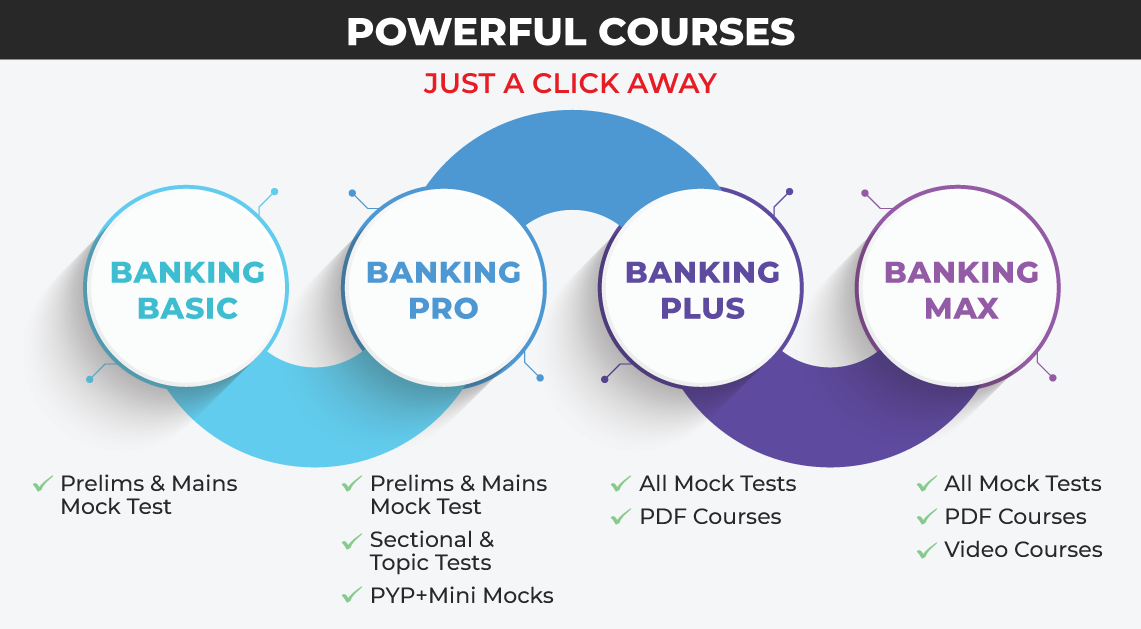
Our Banking Preparation Package includes topic tests, sectional tests, rank boosters for prelims, previous year paper tests, e-books, CA tests, Quizzes, live tests, PDF Course, and more. Discover our banking and insurance packages in detail from the link provided below!
- Sign Up on Practicemock for Updated Current Affairs, Topic Tests and Mini Mocks
- Sign Up Here to Download Free Study Material
Free Mock Tests for the Upcoming Exams
- IBPS PO Free Mock Test
- RBI Grade B Free Mock Test
- IBPS SO Free Mock Test
- NABARD Grade A Free Mock Test
- SSC CGL Free Mock Test
- IBPS Clerk Free Mock Test
- IBPS RRB PO Free Mock Test
- IBPS RRB Clerk Free Mock Test
- RRB NTPC Free Mock Test
- SSC MTS Free Mock Test
- SSC Stenographer Free Mock Test
- GATE Mechanical Free Mock Test
- GATE Civil Free Mock Test
- RRB ALP Free Mock Test
- SSC CPO Free Mock Test
- AFCAT Free Mock Test
- SEBI Grade A Free Mock Test
- IFSCA Grade A Free Mock Test
- RRB JE Free Mock Test
- Free Banking Live Test
- Free SSC Live Test