


The SBI Clerk Mains exam is a crucial step for aspirants aiming to secure a Junior Associate position in India’s largest public sector bank. Among the five sections in the Mains paper, Reasoning Ability stands out for testing logical thinking, pattern recognition, and decision-making skills. In the reasoning section, 50 questions of 60 marks are asked, which include questions from various topics like puzzles, syllogism, inequality, coding-decoding, blood relation, and direction sense. Let’s break down the updated syllabus and share smart strategies to help students master this section.
SBI Clerk Mains Pattern for Reasoning Section
The Reasoning Ability section in SBI Clerk Mains is designed to test a candidate’s analytical thinking, logical deduction, and decision-making skills under time constraints. It comprises 50 questions carrying a total of 60 marks, with a time limit of 45 minutes. The section includes a mix of high-level puzzles, seating arrangements, and logical reasoning formats. Each question carries equal weight, and there is a negative marking of 0.25 marks for every incorrect answer. Speed and accuracy are crucial, as many questions are interlinked and require careful interpretation.

| Section Name | Number of Questions | Maximum Marks | Duration |
| Reasoning Ability | 50 | 60 | 45 minutes |
- Total Questions: 50
- Maximum Marks: 60
- Time Allotted: 45 minutes
- Negative Marking: 0.25 marks for each wrong answer
This section is designed to evaluate a candidate’s analytical aptitude and problem-solving ability under time pressure.

SBI Clerk Mains Reasoning Syllabus Topic-Wise Breakdown
The syllabus for Reasoning Ability in SBI Clerk Mains includes both traditional and advanced topics. Students can expect questions from Puzzles, Seating Arrangements, Syllogisms, Inequalities, Coding-Decoding, Blood Relations, Direction Sense, Data Sufficiency, Input-Output, Order and Ranking, Alphanumeric Series, and Logical Reasoning. These topics are designed to assess a candidate’s ability to process information, identify patterns, and draw logical conclusions. Regular practice across all formats is essential to tackle the variety and complexity of questions in this section.
Here’s a detailed list of topics covered under Reasoning Ability for SBI Clerk Mains:
| Topic | Subtopics / Focus Areas |
| Puzzles & Seating Arrangement | Linear, Circular, Floor-based, Box-based, Day/Month-based |
| Syllogism | Venn diagram logic, possibility cases |
| Inequality | Direct and coded inequalities |
| Coding-Decoding | Old and new pattern, Chinese coding |
| Blood Relations | Family tree, coded relations |
| Direction Sense | Distance, angles, orientation |
| Data Sufficiency | 2-statement and 3-statement formats |
| Input-Output | Machine-based rearrangement |
| Logical Reasoning | Cause-effect, statement-assumption, conclusion |
| Order & Ranking | Position-based and comparison-based questions |
| Alphanumeric Series | Mixed series, number-letter-symbol combinations |
Preparation Tips for SBI Clerk Reasoning
Follow the Preparation Tips listed below if you want to master reasoning for the SBI Clerk exam:
Start with basics:
Before diving into complex puzzles or logical reasoning, students should build a strong foundation in basic reasoning topics like syllogisms, inequalities, and direction sense. These areas are rule-based and relatively easier to master with consistent practice. Understanding core concepts, such as Venn diagrams for syllogisms or left-right orientation in direction sense, helps students gain confidence and accuracy. Beginners should start with topic-wise practice sets and gradually move to mixed questions.
Practice puzzles daily:
Puzzles and seating arrangements form the bulk of the reasoning section, often accounting for 20–25 marks. To tackle these efficiently, students must develop a habit of solving moderate to high-level puzzles every day. Focus on different formats, linear, circular, floor-based, and box-based, to build versatility. Use previous year papers and mock tests to identify recurring patterns. Time yourself while solving to simulate exam pressure and improve speed.
Take Time-bound mocks:
Practicing reasoning questions in isolation is helpful, but time-bound mock tests are essential to replicate real exam conditions. Allocate exactly 45 minutes for the reasoning section and attempt full-length mocks regularly. This helps students manage time across topics, avoid overthinking, and build exam temperament. After each mock, analyze which topics consumed more time and adjust your strategy accordingly.
Analyze errors:
Every incorrect answer is an opportunity to improve. Maintain a dedicated error log where students record the type of mistake (conceptual, calculation, misreading) and the topic it occurred in. Review this log weekly to spot patterns, like frequent errors in blood relations or confusion in coded inequalities. This reflective practice ensures that the same mistakes aren’t repeated and helps in targeted revision.
Use bilingual resources:
For Hindi-medium aspirants, reasoning questions must be accessible in both English and Hindi. This ensures clarity in understanding instructions, especially in complex puzzles or logical reasoning. Use bilingual mock tests and books that preserve key terms in English (like “North”, “Left”, “Only a few”) while translating the rest accurately. This dual-language approach boosts comprehension and confidence during the actual exam.
Know What Our Successful Aspirant Says…
Related Blogs:
| SBI Clerk Notification | SBI Clerk Exam Pattern |
| SBI Clerk Syllabus | SBI Clerk Salary |
| SBI Clerk Cut Off | SBI Clerk Previous Year Question Paper |
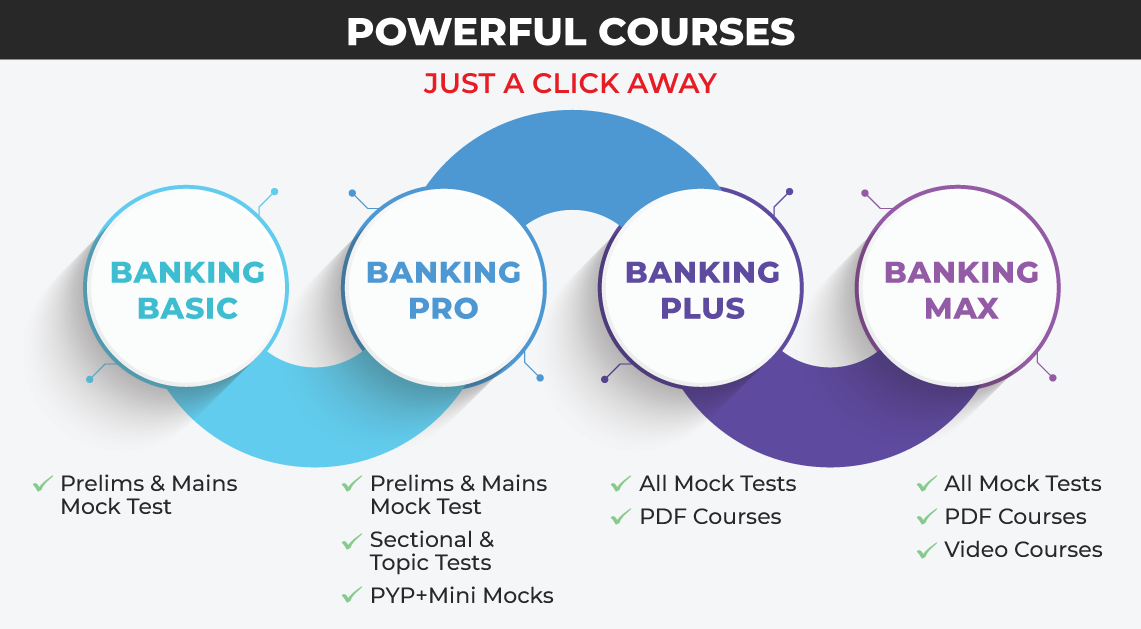
Our Banking Preparation Package includes topic tests, sectional tests, rank boosters for prelims, previous year paper tests, e-books, CA tests, Quizzes, live tests, PDF Course, and more. Discover our banking and insurance packages in detail from the link provided below!
Join our exclusive Telegram group, where our experts are ready to answer all your queries, guide you in banking exam preparation, and give personalised tips to boost your success. Get access to real-time solutions, expert advice, and valuable resources to improve your study journey.
FAQs
Yes, the Mains paper includes high-level puzzles, logical reasoning, and data sufficiency which are not part of the Prelims.
Typically, 3–5 puzzle sets appear, covering various formats like seating, floor-based, and scheduling.
It’s not advisable. Even 2–3 correct logical reasoning questions can boost your score significantly.
No, SBI Clerk Mains does not have a sectional cutoff. However, scoring well in Reasoning is crucial for overall merit and final selection.
Beginners should start with syllogisms, inequalities, and direction sense, as these are rule-based and easier to master before moving on to puzzles and logical reasoning.
- Sign Up on Practicemock for Updated Current Affairs, Topic Tests and Mini Mocks
- Sign Up Here to Download Free Study Material
Free Mock Tests for the Upcoming Exams
- IBPS PO Free Mock Test
- RBI Grade B Free Mock Test
- IBPS SO Free Mock Test
- NABARD Grade A Free Mock Test
- SSC CGL Free Mock Test
- IBPS Clerk Free Mock Test
- IBPS RRB PO Free Mock Test
- IBPS RRB Clerk Free Mock Test
- RRB NTPC Free Mock Test
- SSC MTS Free Mock Test
- SSC Stenographer Free Mock Test
- GATE Mechanical Free Mock Test
- GATE Civil Free Mock Test
- RRB ALP Free Mock Test
- SSC CPO Free Mock Test
- AFCAT Free Mock Test
- SEBI Grade A Free Mock Test
- IFSCA Grade A Free Mock Test
- RRB JE Free Mock Test
- Free Banking Live Test
- Free SSC Live Test