


The Regional Rural Bank clerk prelims exam is scheduled to be held on 6th, 7th, 13th, and 14th December 2025. This is a very competitive exam where you need more practice. You still have a few months remaining to prepare for the RRB Clerk exam. In the Prelims exam, 40 questions each from the Numerical Ability and Reasoning sections are asked. If you have already learned basic concepts of Quant and reasoning, you can focus on speed practice now. You can also take a full-length mock test to know your weak and strong areas first. Mock Tests are non-negotiable if you want to clear this exam. To use mock tests effectively for RRB clerk exam, you should maintain an error log, track progress, pick up easy questions first, and focus on accuracy over speed. In this blog, we are guiding you on How to Use Mock tests effectively for RRB Clerk Preparation.
Why Mock Tests Matter for RRB Clerk Preparation
Mock tests do far more than check your current level of readiness. They expose gaps in knowledge, familiarize you with exam patterns, and build the mental endurance required for a competitive, timed test. By regularly simulating real exam conditions, you train your brain to perform under pressure, turning each mock into a stepping stone toward your goal. Let’s know the exam pattern of RRB Clerk Prelims and Mains as given below:

IBPS RRB Office Assistant Prelims Exam Pattern
| Section | No. of Questions | Marks | Medium | Duration |
| Reasoning Aptitude | 40 | 40 | English/ Hindi/ Regional Language | 25 minutes |
| Numerical Ability | 40 | 40 | English/ Hindi/ Regional Language | 20 minutes |
| Total | 80 | 80 | 45 minutes |
As you can see, attempting 40 questions in just 25 minutes requires a lot of dedicated practice sessions.
RRB Office Assistant Mains Exam Pattern
| Name of Tests | Medium of Exam | No. of Questions | Maximum Marks | Duration |
| Reasoning | English/ Hindi/ Regional language | 40 | 50 | 30 minutes |
| Computer Knowledge | English/ Hindi/ Regional language | 40 | 20 | 15 minutes |
| General Awareness | English/ Hindi/ Regional language | 40 | 40 | 15 minutes |
| Either English or Hindi Language | English/ Hindi | 40 | 40 | 30 minutes |
| Numerical Ability | English/ Hindi/ Regional language | 40 | 50 | 30 minutes |
| Total | 200 | 200 | 120 minutes |
Note: Sectional timing and negative marking of 1/4th of the allotted marks apply in both prelims and mains exams. Check the Complete RRB Clerk exam pattern along with the syllabus here!
Top 10 Mock Test Strategies to Follow for RRB Clerk Exam
The RRB Clerk Prelims exam is all about speed and accuracy in solving quant and reasoning questions. Thus, mock tests here play a very important role. Attempting a few mock tests before the exam helps you build confidence. Below, a detailed guide on how you can use mock tests effectively to prepare for the RRB Officer Assistant exam is given. Take note of these top 10 mock test strategies and boost your overall performance.
Attempt Full-Length Mocks Weekly
Scheduling one full-length mock test each week during your early preparation phase allows you to understand the complete exam structure. These tests mirror the real 45-minute timeframe and help you develop the stamina needed to maintain concentration across both Reasoning and Numerical Ability sections.
- Increase frequency to 3 to 4 mocks per week when the exam date approaches.
- Use a desktop or laptop to experience the same exam-day conditions.
- Note down the time spent on each question and learn how to solve those in seconds.
Practice Sectional Tests for Speed Building
Breaking your preparation into sectional mock tests of 20 to 25 minutes each for Reasoning and Numerical Ability enables focused speed drills. Sectional practice will surely help you cover the complete exam within a time limit. By isolating one section at a time, you can identify specific question types that slow you down and work on targeted shortcuts or shortcuts for puzzles, simplifications, and number series.
- Use a stopwatch to track the time spent on each question when solving questions from a book or PDFs.
- Rotate topics daily (e.g., seating arrangement, simplification) to remain focused and interested in solving questions.
- Maintain an error log to revisit tricky questions and try to reduce errors thereafter.
Analyze Every Mock Test in Detail
Analysis is where real progress happens. After each mock, spend at least 1.5 times the test duration reviewing your performance. Identify not just the wrong answers, but also the questions you skipped or guessed. This deep dive helps you recognize patterns, whether it’s time-consuming puzzles or repeated errors in arithmetic. These errors must be eliminated.
- Highlight weak areas and take a session of mini practice drills. This will ensure you have mastered your weak topics.
- Compare mocks weekly to spot upward trends, and this will eventually help you score more in mocks.
Avoid Guesswork – Use Smart Elimination
Blind guessing can erode accuracy and confidence. Instead, employ elimination techniques: rule out one or two wrong options to boost the probability of a correct guess. Only attempt questions when you’re at least 70 to 80% sure of the answer, and mark others for review if time allows. Prioritizing accuracy over a larger number of attempts will yield higher overall scores.
- Eliminate options based on quick logic checks. Learning the elimination technique for solving numerical and logical questions requires more practice.
- Flag questions for review instead of random guessing. This reduces negative marking probabilities and increases your score.
Track Your Progress with a Score Graph
A visual representation of your mock test journey brings clarity. Use the mock test performance analysis given to you to track your progress. This constant feedback loop not only highlights where you’ve grown but also pinpoints stages when you might need to adjust your study tactics or increase intensity.
- Note down your mistakes, sudden drops, and sudden changes in scores.
- Use insights to reallocate study hours to topics where you are lagging behind.
Master Puzzle and DI Sets Separately
Puzzles and Data Interpretation questions are high-scoring if approached correctly. Dedicating daily practice to one puzzle set and one DI set enables you to get familiar with question patterns, whether it’s a seating arrangement layout or interpreting bar graphs. Over time, you’ll solve these sets with greater speed and reduced errors.
- Alternate between puzzle and DI topics each day to avoid burnout.
- Time yourself while solving each practice set to build pressure-handling.
- Review shortcut methods after every practice session. Use the traditional method to solve a question if applying a shortcut doesn’t save you time.
Attempt Tests in an Exam-like Environment
Replicating the official exam environment is crucial for mental conditioning. Choose a quiet room, use a desktop or laptop, keep only essential materials on your desk, and refrain from pausing timers. This disciplined approach reduces surprises on test day and helps you develop the focus needed to sail through challenging sections.
- Disable notifications on your device during mocks to avoid distraction.
- Take mock tests from reputed platforms that provide an exam-like experience.
- Practice under the same time slot as the actual exam, if possible. This will ensure you are mentally ready for taking the test on real exam day.
Use Mixed-Level Mocks (Easy, Moderate, Difficult)
Variety in difficulty levels ensures you’re battle-ready for any scenario. While easy mocks build morale, moderate mocks help you adapt to steady progress, and tough mocks test your resilience. Regularly including previous year’s papers in this mix adds another layer of familiarity and strategy refinement.
- Rotate difficulty levels across the week. For example, if this week you have practice easy level mocks, then next week, practice moderate level mocks, and then move to difficult level mocks.
- Compare your performance on different difficulty levels.
- Adjust the study focus based on which level challenges you most.
Pick and Attempt Easy Questions First
Scanning the entire question paper at the start and marking the easiest questions builds both momentum and confidence. By quickly identifying and solving low-difficulty questions such as straightforward simplifications or factual reasoning, you secure quick marks and free up time for tougher puzzles and DI sets. This approach reduces pressure later in the exam, prevents time wastage on complex problems, and helps maintain a steady pace throughout the 45-minute window. Remember to flag medium or high-difficulty questions for a second pass once the “easy wins” are in your scorecard.
Initially Focus on Accuracy Over Speed
In the early stages of your mock test journey, prioritize answering each question correctly rather than racing against the clock. By concentrating on accuracy first, you solidify your understanding of core concepts, minimize negative marking, and build a reliable performance baseline. Once you consistently achieve high accuracy in sectional and full-length mocks, gradually introduce time targets to boost your speed. This two-phase approach, accuracy first, speed later, ensures that as you ramp up your attempt rate, your score doesn’t suffer due to careless mistakes.
Conclusion
Mock tests are not mere practice, they are your performance mirror. By adopting these strategies, you’ll not only elevate your mock scores but also build the unshakeable confidence you need for exam day. Stay disciplined, analyze consistently, and view each mock as an opportunity to fine-tune your path to success.
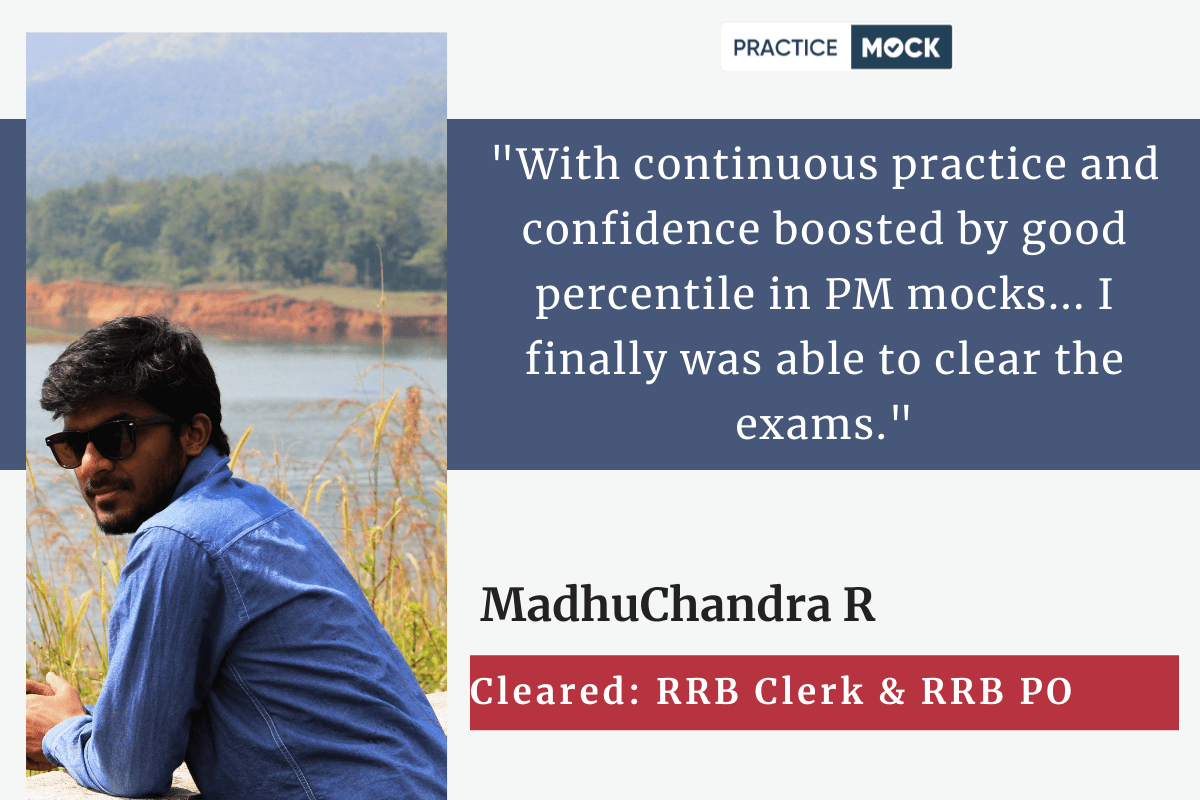
Know What Our Successful Aspirant Says…
Related Blogs:
| IBPS RRB Clerk Cut Off 2025 | IBPS RRB Clerk Syllabus 2025 |
| IBPS RRB Clerk Salary 2025 | IBPS RRB Clerk Previous Year Paper |
Join our exclusive Telegram group where our experts are ready to answer all your queries, guide you in banking exam preparation, and give personalised tips to boost your success. Get access to real-time solutions, expert advice, and valuable resources to improve your study journey. [Click here to join now!]
FAQs
You should attempt only 1 full-length free mock test now and focus on working on your weak areas.
When only 30 days remain for the exam, you can shift your focus to speed practice.
You can analyse your mock test performance by revisiting that mock test that you attempted and note down where you are lacking.
You can get RRB Clerk free mock test at PracticeMock platform.
- Sign Up on Practicemock for Updated Current Affairs, Topic Tests and Mini Mocks
- Sign Up Here to Download Free Study Material
Free Mock Tests for the Upcoming Exams
- IBPS PO Free Mock Test
- RBI Grade B Free Mock Test
- IBPS SO Free Mock Test
- NABARD Grade A Free Mock Test
- SSC CGL Free Mock Test
- IBPS Clerk Free Mock Test
- IBPS RRB PO Free Mock Test
- IBPS RRB Clerk Free Mock Test
- RRB NTPC Free Mock Test
- SSC MTS Free Mock Test
- SSC Stenographer Free Mock Test
- GATE Mechanical Free Mock Test
- GATE Civil Free Mock Test
- RRB ALP Free Mock Test
- SSC CPO Free Mock Test
- AFCAT Free Mock Test
- SEBI Grade A Free Mock Test
- IFSCA Grade A Free Mock Test
- RRB JE Free Mock Test
- Free Banking Live Test
- Free SSC Live Test