


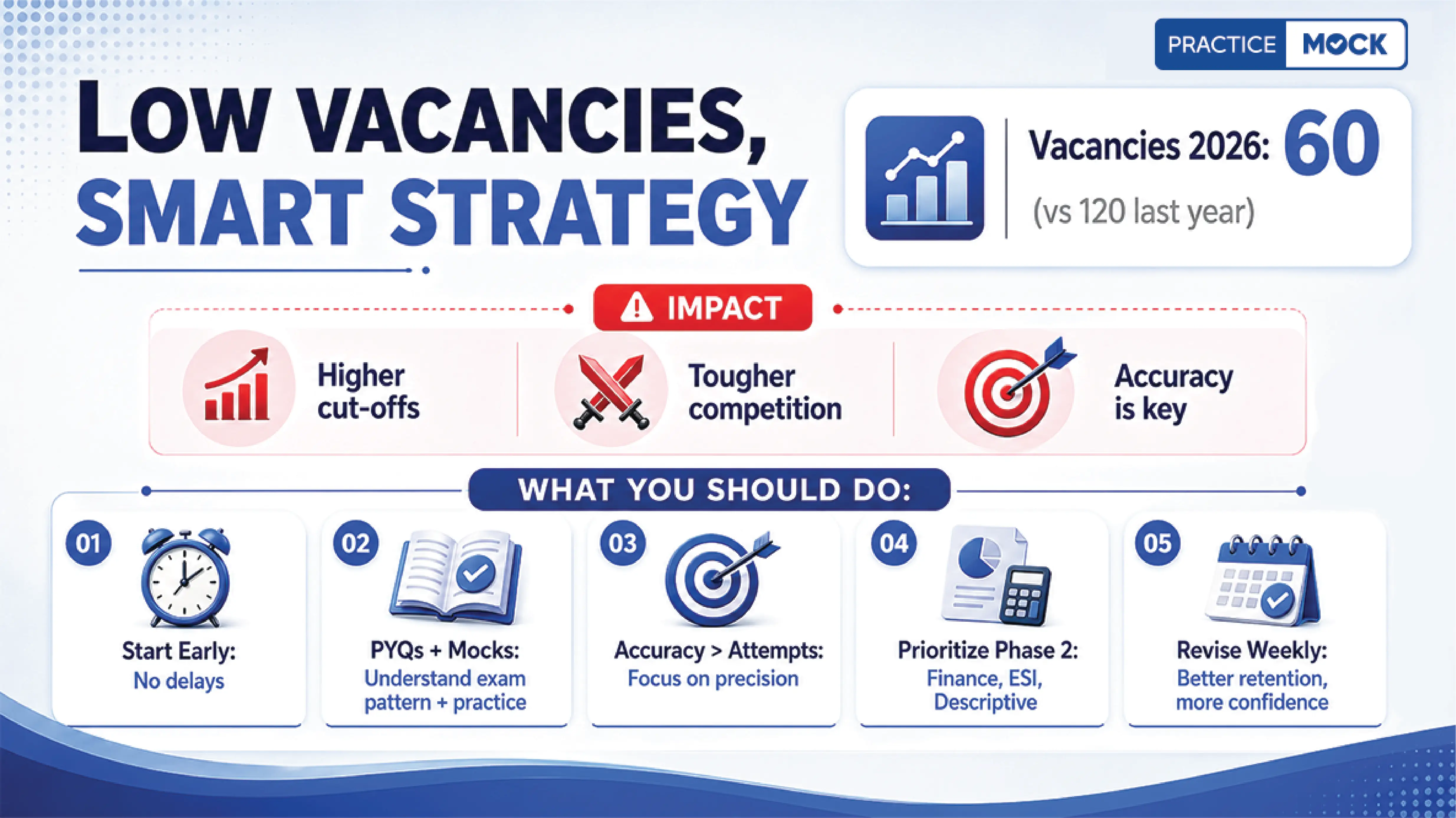
The RBI Grade B notification for 2026 has confirmed what aspirants feared: vacancies have dropped sharply. With just 60 posts compared to last year’s 120, competition is set to intensify. For every aspirant, working or not, this is not just a number but a signal. Fewer seats mean higher cut‑offs, tighter margins, and a race where every mark counts. But here’s the truth: low vacancies do not mean low chances. Smart strategy, early preparation, and the right mindset can still secure success.
Why Did Vacancies Drop?
Vacancy fluctuations in RBI Grade B are not unusual. They depend on:

- Organizational needs: RBI recruits based on internal manpower planning.
- Hiring cycles: Some years see bulk retirements; others don’t.
- Economic factors: Fiscal discipline and restructuring often reduce intake.
This year’s dip reflects a lean cycle. But aspirants should treat it as a challenge, not a setback. After all, the exam remains the same — only the competition has intensified.
What It Means for Aspirants
When vacancies fall, the exam dynamics change. Aspirants must understand what this means for their preparation and mindset before diving into strategy. Here are the key implications:
- Higher Cut‑offs: With fewer seats, cut‑offs will rise. Accuracy matters more than attempts.
- Tighter Competition: Every candidate will push harder, making Phase 2 the real decider.
- No Margin for Error: Sloppy preparation or late starts will cost dearly.
In short, the exam has shifted from being a test of knowledge to a test of precision and discipline.
What To Do: Core Strategy
Low vacancies demand sharper preparation. Instead of spreading yourself thin, focus on the essentials that maximize your score and minimize mistakes. Here’s what you should do:
1. Start Early, No Delays
Do not wait for the exam dates to be near. Begin now. Every day counts when vacancies are low. Early starters build momentum and confidence.
2. Focus on PYQs + Mock Tests
Previous Year Questions (PYQs) reveal the exam’s DNA. Combine them with RBI Grade B Mock Tests, which simulate the real exam environment. This dual approach ensures familiarity with patterns and readiness for surprises.
3. Improve Accuracy > Attempts
In high‑competition years, accuracy is king. Attempting 80 questions with 60 correct is better than 100 with 60 correct. Train yourself to minimize silly mistakes.
4. Strengthen Phase 2 (The Deciding Stage)
Phase 2 is where merit lists are made. Finance, ESI, and descriptive answers carry weight. Use structured resources like Phase 2 Preparation Resources to build depth and clarity. Learn how to choose smartly here: How to Choose the Right Course for RBI Grade B Exam Preparation.
5. Revise Consistently
Revision is not optional. With fewer seats, you cannot afford to forget concepts. Weekly revision cycles ensure retention and confidence.
Smart Strategy: Quality Over Quantity
In a low‑vacancy year, piling up hours of study is not enough. What matters is how effectively you use your time. Adopt this smart approach:
- Daily Mock Analysis: Attempt a mock, then spend time dissecting mistakes.
- Conceptual Clarity: Focus on understanding, not memorization.
- Targeted Practice: Work on weak areas revealed by mocks.
Start with a free RBI Grade B 2026 mock test to benchmark yourself. It will show your strengths and weaknesses early, allowing you to prepare strategically.
Mindset Shift: From Preparation to Selection
Vacancy drops test not just knowledge but resilience. To succeed, aspirants must reframe their mindset. Think beyond preparation — think selection. Here’s how:
- Think Like a Toppers’ Club: Only the most disciplined aspirants will clear.
- Stay Motivated: Low vacancies can demoralize, but remember — every year, hundreds still succeed.
- Focus on Control: You cannot control vacancies, but you can control your preparation quality.
This shift from “exam attempt” to “selection mission” keeps you sharp and resilient.
Practical Tips for Low Vacancy Years
When competition is fierce, practical adjustments make all the difference. These tips connect directly to the challenges of a low‑vacancy year and help you stay ahead:
- Micro‑Planning: Break your study plan into weekly targets.
- Balanced Prep: Don’t neglect Phase 1 while focusing on Phase 2.
- Descriptive Practice: Write essays regularly. Low vacancies mean examiners will reward clarity and depth.
- Stay Updated: RBI circulars and current affairs are non‑negotiable.
- Peer Learning: Discuss with serious aspirants. Avoid distractions.
Why Smart Aspirants Still Win
Vacancies may be fewer, but opportunities remain. The exam rewards discipline, not luck. Smart aspirants succeed because they:
- Start early.
- Focus on accuracy.
- Treat Phase 2 as the real battleground.
- Revise relentlessly.
- Use mocks to sharpen performance.
History shows that even in lean years, those who prepare strategically make it through.
Conclusion: Vacancies May Be Low, But Your Chances Aren’t
RBI Grade B 2026 is tougher, no doubt. With only 60 seats, competition will be fierce. But this is not a reason to give up. It is a reason to prepare smarter.
Start today. Use PYQs, mocks, and structured resources to guide your journey. Build accuracy, strengthen Phase 2, and revise consistently. Treat the exam as a selection game, not just preparation.
Remember: low vacancies do not mean low chances. They mean only the most prepared will succeed. Be one of them.
- Sign Up on Practicemock for Updated Current Affairs, Topic Tests and Mini Mocks
- Sign Up Here to Download Free Study Material
Free Mock Tests for the Upcoming Exams
- IBPS PO Free Mock Test
- RBI Grade B Free Mock Test
- IBPS SO Free Mock Test
- NABARD Grade A Free Mock Test
- SSC CGL Free Mock Test
- IBPS Clerk Free Mock Test
- IBPS RRB PO Free Mock Test
- IBPS RRB Clerk Free Mock Test
- RRB NTPC Free Mock Test
- SSC MTS Free Mock Test
- SSC Stenographer Free Mock Test
- GATE Mechanical Free Mock Test
- GATE Civil Free Mock Test
- RRB ALP Free Mock Test
- SSC CPO Free Mock Test
- AFCAT Free Mock Test
- SEBI Grade A Free Mock Test
- IFSCA Grade A Free Mock Test
- RRB JE Free Mock Test
- Free Banking Live Test
- Free SSC Live Test