


Are you preparing for the SSC CHSL exam to secure a government job as an LDC or DEO? We know that for many students, the Quantitative Aptitude is a tough section. You might feel confident in English or GK, but when it comes to Math, you get nervous. But there is a topic which simple, easy, and scoring, which is the number system. It tests your speed and basic logic. If you master it, you automatically get better at Algebra and Arithmetic. The questions are straightforward, usually about remainders, divisibility, or unit digits. To help you practice the right questions, we have compiled the most important Number System questions for SSC CHSL into a free PDF. You can download it from this blog.
Why is the Number System Important for SSC CHSL?
In the Tier 1 exam (25 Math questions), Number System is a critical area.

- Consistent Marks: You can expect 2-3 questions in every shift. These are often the first few questions in the paper.
- Foundation for Algebra: Concepts like “Rationalization” or “Surds and Indices” learned here are directly used in Algebra.
- Option Elimination: Number System teaches you divisibility rules. You can use these rules to eliminate wrong options in topics like Mensuration and Profit & Loss without solving the whole problem.
Download Free PDF of Number System Questions for SSC CHSL
We have prepared a comprehensive PDF containing exam-level questions. We have chosen questions that match the exact difficulty level of SSC CHSL—tricky yet solvable in under 40 seconds. Download it, save it, and practice these questions to sharpen your logic.
Q1. If the 8-digit number 789x531y is divisible by 72, then the value of (5x − 3y) is:
(a) 0
(b) 1
(c) 2
(d) −1
Answer: (d) −1
Logic:
For 72 → check divisibility by 8 and 9.
Divisible by 8:
Last three digits 31y must be divisible by 8.
312 works → y = 2
Divisible by 9:
7 + 8 + 9 + x + 5 + 3 + 1 + 2 = 35 + x
Next multiple of 9 is 36 → x = 1
So,
5x − 3y = 5(1) − 3(2) = 5 − 6 = −1
Q2. What is the remainder when 67⁶⁷ + 67 is divided by 68?
(a) 1
(b) 63
(c) 66
(d) 67
Answer: (c) 66
Logic:
67 ≡ −1 (mod 68)
(−1)⁶⁷ + (−1) = −1 − 1 = −2
Remainder cannot be negative → 68 − 2 = 66
Q3. The sum of three consecutive odd natural numbers is 87. What is the smallest number?
(a) 29
(b) 27
(c) 31
(d) 25
Answer: (b) 27
Logic:
Average = middle number
87 ÷ 3 = 29
So numbers: 27, 29, 31
Smallest = 27
Q4. Find the unit digit of (4387)²⁴⁵ × (621)⁷²
(a) 1
(b) 7
(c) 9
(d) 3
Answer: (b) 7
Logic:
Last digit of 4387 → 7
Cycle of 7 repeats every 4.
245 ÷ 4 leaves remainder 1 → unit digit = 7
621 ends with 1 → always gives 1
7 × 1 = 7
Q5. Which of the following numbers is divisible by 11?
(a) 4823718
(b) 8423718
(c) 8432718
(d) 4832718
Answer: (d) 4832718
Logic:
(4 + 3 + 7 + 8) − (8 + 2 + 1) = 22 − 11 = 11
Since 11 is divisible by 11 → number is divisible.
Q6. If a positive integer n is divided by 7, the remainder is 2. Which gives remainder 0 when divided by 7?
(a) n + 2
(b) n + 1
(c) n + 5
(d) n − 5
Answer: (c) n + 5
Logic:
Take n = 9 (because 9 ÷ 7 leaves remainder 2)
9 + 5 = 14 → divisible by 7
Q7. How many numbers between 200 and 800 are divisible by both 5 and 7?
(a) 15
(b) 16
(c) 17
(d) 18
Answer: (c) 17
Logic:
LCM of 5 and 7 = 35
200 ÷ 35 ≈ 5.7 → start from 6th multiple
800 ÷ 35 ≈ 22.8 → up to 22nd multiple
22 − 5 = 17
Q8. The value of 0.4(23 repeating) is:
(a) 419/990
(b) 423/1000
(c) 423/990
(d) 419/999
Answer: (a) 419/990
Logic:
(423 − 4) / 990 = 419 / 990
Q9. If √x + 1/√x = √6, then find x² + 1/x²
(a) 18
(b) 14
(c) 16
(d) 12
Answer: (b) 14
Logic:
Square both sides:
x + 1/x + 2 = 6
x + 1/x = 4
Square again:
x² + 1/x² + 2 = 16
x² + 1/x² = 14
Q10. The HCF of two numbers is 23 and the other two factors of their LCM are 13 and 14. The larger number is:
(a) 299
(b) 322
(c) 345
(d) 325
Answer: (b) 322
Logic:
Numbers = 23 × 13 and 23 × 14
Larger = 23 × 14 = 322
5 Preparation Tips to Master the Number System
Number System is the art of playing with digits. You don’t always need long division or multiplication. You need smart methods. To help you score full marks in this section, here are 5 practical tips designed specifically for the SSC CHSL exam pattern:
- Master Divisibility Rules (7, 11, 13, 72, 88): SSC CHSL mostly asks, “Is this number divisible by 88?” Don’t divide by 88. Check divisibility by 8 and 11. Similarly, for 72, check 8 and 9. This trick solves 50% of the questions.
- Learn the “Cyclicity” of Unit Digits: Don’t multiply huge numbers. Learn that the unit digit of numbers ending in 2, 3, 7, 8 repeats every 4 times (Cycle 4). This helps you solve questions like 235 in seconds.
- Use Option Elimination: If a question asks “Which number is divisible by X?”, start by eliminating options using the unit digit or digital sum. Often, you can find the answer without solving.
- Practice Remainder Theorem: Learn the basics of positive and negative remainders. For example, 17 divided by 18 gives a remainder of -1 (which is 17). This concept is crucial for power-based questions.
- Attempt Topic Tests: Reading formulas is passive. Applying them is active. Attempt our free Topic Tests to train your brain to spot the logic in under 30 seconds.
Aspirants preparing for quantitative aptitude should also regularly solve Simplification for SSC CGL exam questions to improve calculation speed, strengthen BODMAS concepts, and reduce the time taken in Number System and arithmetic-based problems.
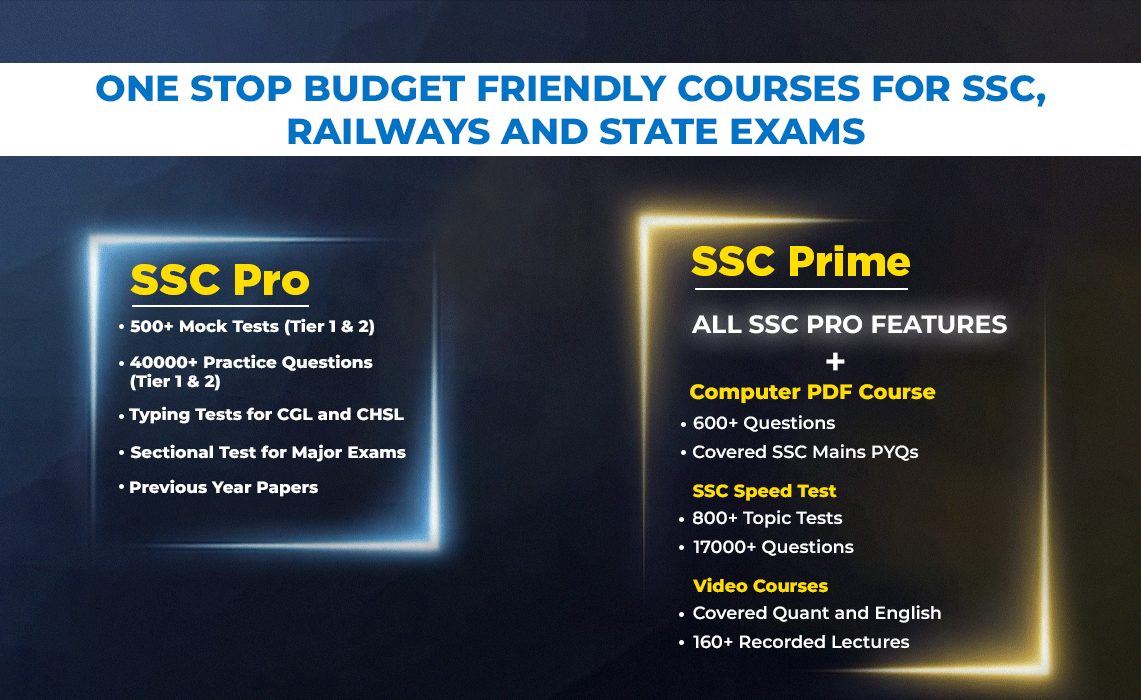
Join our exclusive Telegram group for expert guidance, personalized tips, and real-time solutions to boost your SSC exam prep. [Click here to join now!]
| Other Related Article SSC CHSL | |
| SSC CHSL Notification | SSC CHSL Study Plan |
| SSC CHSL Previous Year Question Paper | SSC CHSL Salary |
| SSC CHSL Cut Off | SSC CHSL Selection Process |
| SSC CHSL Syllabus | |
FAQs: Number System Questions for SSC CHSL
No, but you can expect the difficulty level of number system questions in SSC CHSL to range from easy to moderate. One can solve these questions easily if he/she has done good practice on them.
After an in-depth analysis of the exam, you can expect at least 2 to 3 questions in the Tier 1 Quantitative Aptitude section.
Divisibility Rules (especially for composite numbers like 72, 88) and Remainder Theorem are the most frequently asked concepts.
Yes! DI calculation speeds up if you are good at Number System (approximations and divisibility).
- Sign Up on Practicemock for Updated Current Affairs, Topic Tests and Mini Mocks
- Sign Up Here to Download Free Study Material
Free Mock Tests for the Upcoming Exams
- IBPS PO Free Mock Test
- RBI Grade B Free Mock Test
- IBPS SO Free Mock Test
- NABARD Grade A Free Mock Test
- SSC CGL Free Mock Test
- IBPS Clerk Free Mock Test
- IBPS RRB PO Free Mock Test
- IBPS RRB Clerk Free Mock Test
- RRB NTPC Free Mock Test
- SSC MTS Free Mock Test
- SSC Stenographer Free Mock Test
- GATE Mechanical Free Mock Test
- GATE Civil Free Mock Test
- RRB ALP Free Mock Test
- SSC CPO Free Mock Test
- AFCAT Free Mock Test
- SEBI Grade A Free Mock Test
- IFSCA Grade A Free Mock Test
- RRB JE Free Mock Test
- Free Banking Live Test
- Free SSC Live Test